AI in Manufacturing: How Artificial Intelligence Is Transforming Industrial Maintenance
Discover why manufacturers are investing in artificial intelligence to improve equipment reliability, reduce unplanned downtime, enhance maintenance decisions, and strengthen industrial operations through predictive maintenance, root cause diagnosis, and equipment failure analysis.
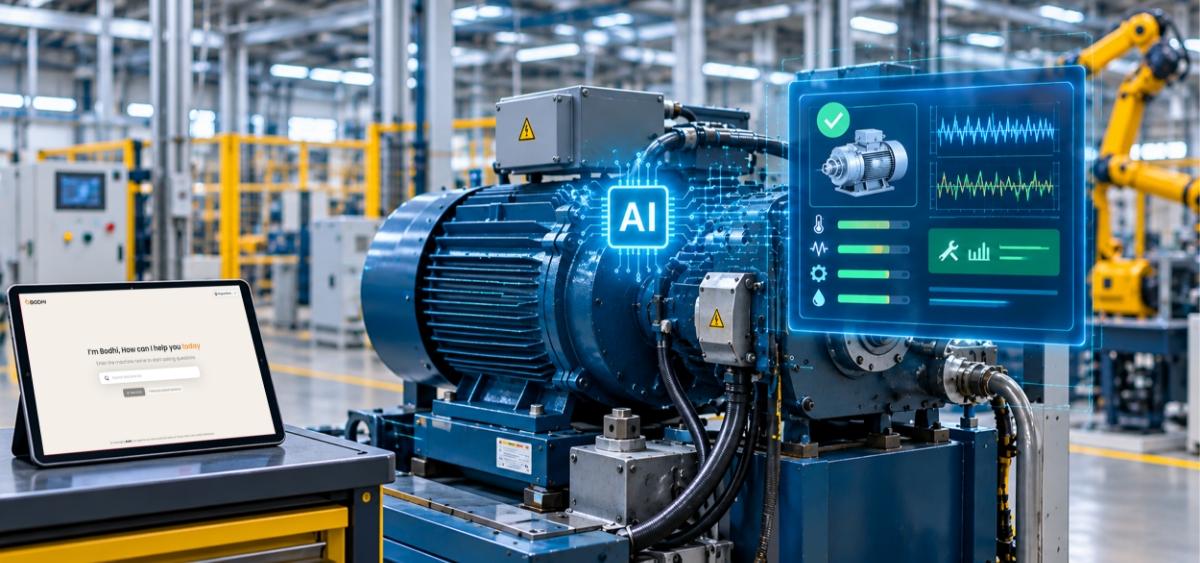

Why Manufacturers Are Investing in Artificial Intelligence
Manufacturing businesses depend on reliable machinery, efficient production processes, and effective maintenance practices. Whether a company operates an automotive assembly line, a steel manufacturing plant, a chemical processing facility, or a food production unit, equipment performance directly influences operational efficiency.
When machines operate reliably, production teams can follow planned schedules, maintenance engineers can focus on preventive activities, and businesses can meet customer commitments more consistently.
However, industrial equipment does not always perform as expected.
A motor may unexpectedly overheat. A compressor may repeatedly shut down. A pump may experience recurring seal failures. A conveyor may stop several times without an immediately identifiable cause.
Each of these problems creates challenges beyond the maintenance department.
Unexpected equipment failures can affect production schedules, maintenance expenditure, spare-parts availability, and overall business performance.
For many manufacturers, the challenge is not simply repairing machinery. It is understanding why equipment fails, identifying recurring problems, and making better maintenance decisions.
This is where AI in Manufacturing is becoming increasingly relevant.
Artificial intelligence offers manufacturers new ways to analyze equipment information, investigate historical failures, and support maintenance planning.
Technologies such as AI-Powered Predictive Maintenance, AI Root Cause Diagnosis, and intelligent Equipment Failure Diagnosis are helping shape a more information-driven approach to industrial maintenance.
Instead of relying exclusively on scheduled servicing and repairs after breakdowns, manufacturers can use appropriate AI tools to examine equipment behavior, identify patterns, and support engineering investigations.
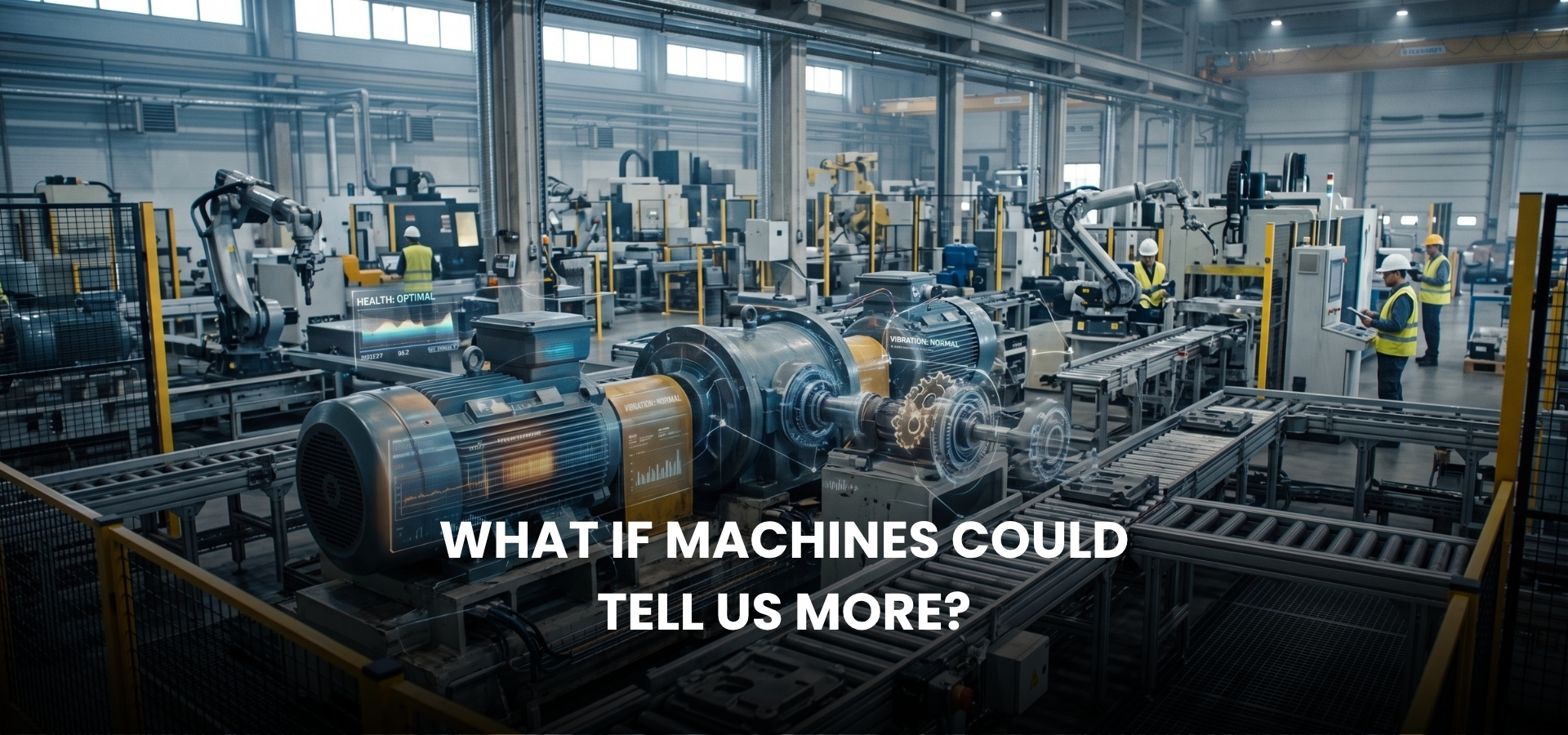
Why AI Is Becoming Important for Manufacturing Businesses
Manufacturers are exploring artificial intelligence for several practical reasons.
Reducing unplanned downtime: Unexpected breakdowns interrupt production and can create additional costs.
Improving equipment reliability: Understanding recurring failures can help organizations identify opportunities for long-term improvement.
Controlling maintenance expenditure: Better information can support more effective maintenance planning and corrective decisions.
Improving troubleshooting: Engineers can benefit from faster access to relevant maintenance histories and technical records.
Preserving maintenance knowledge: Historical work orders and technician observations can become useful sources of organizational knowledge.
Supporting operational decisions: AI-assisted analysis can help maintenance and production teams evaluate equipment problems more systematically.
However, AI should not be viewed as a replacement for engineering experience.
Industrial equipment operates under complex mechanical, electrical, environmental, and process conditions. A software-generated suggestion cannot automatically establish the cause of every fault.
The greatest value comes when artificial intelligence supports qualified maintenance professionals with relevant information.
For business owners, this means exploring technologies that address genuine operational challenges.
For plant managers, it means improving visibility into equipment-related problems.
For maintenance engineers, it means having better access to information when investigating failures.
This article explores how artificial intelligence is transforming industrial maintenance, where different technologies can create value, and how manufacturers can evaluate modern Industrial Maintenance Solutions.
What Is AI in Manufacturing?
Artificial intelligence in manufacturing refers to the use of computational systems capable of analyzing information, identifying patterns, and supporting decisions across industrial operations.
Manufacturing applications extend beyond equipment maintenance.
AI can be used in areas such as quality inspection, production planning, process optimization, energy management, and supply chain analysis.
Within industrial maintenance, AI primarily supports the analysis of equipment condition, historical failures, and technical information.
How Artificial Intelligence Differs from Traditional Manufacturing Software
Traditional manufacturing software generally follows predefined instructions.
For example, a maintenance management system can schedule servicing every three months, record a repair, or generate a work order.
These functions are essential for organizing maintenance activities.
However, the system may not independently examine thousands of historical records to identify recurring fault patterns.
AI introduces additional analytical capabilities.
Depending on its design, an AI system may help:
Identify unusual equipment operating patterns.
Retrieve maintenance records describing similar failures.
Recognize relationships between historical incidents.
Classify certain known equipment faults.
Summarize technical maintenance information.
Support engineers in investigating possible failure causes.
The distinction is between storing information and analyzing it for practical use.
AI Does Not Always Require Advanced Factory Automation
A common misconception is that manufacturers must operate fully automated factories before they can benefit from AI.
AI applications have different requirements.
A system designed for real-time equipment monitoring may require sensors, reliable connectivity, and suitable operating data.
A system focused on historical maintenance analysis may begin with existing work orders, failure reports, and technical documentation.
This distinction is important for manufacturing facilities operating a combination of modern and legacy machinery.
The Role of Human Expertise
AI can recognize patterns within available information, but industrial maintenance decisions require technical judgment.
For example, a model may identify abnormal vibration in a motor.
That finding does not automatically establish whether the problem is caused by misalignment, imbalance, bearing deterioration, or another condition.
A maintenance engineer must evaluate the evidence and determine the appropriate next steps.
The most useful AI systems make engineering information easier to understand and verify.
What Are the Biggest Challenges in Industrial Maintenance?
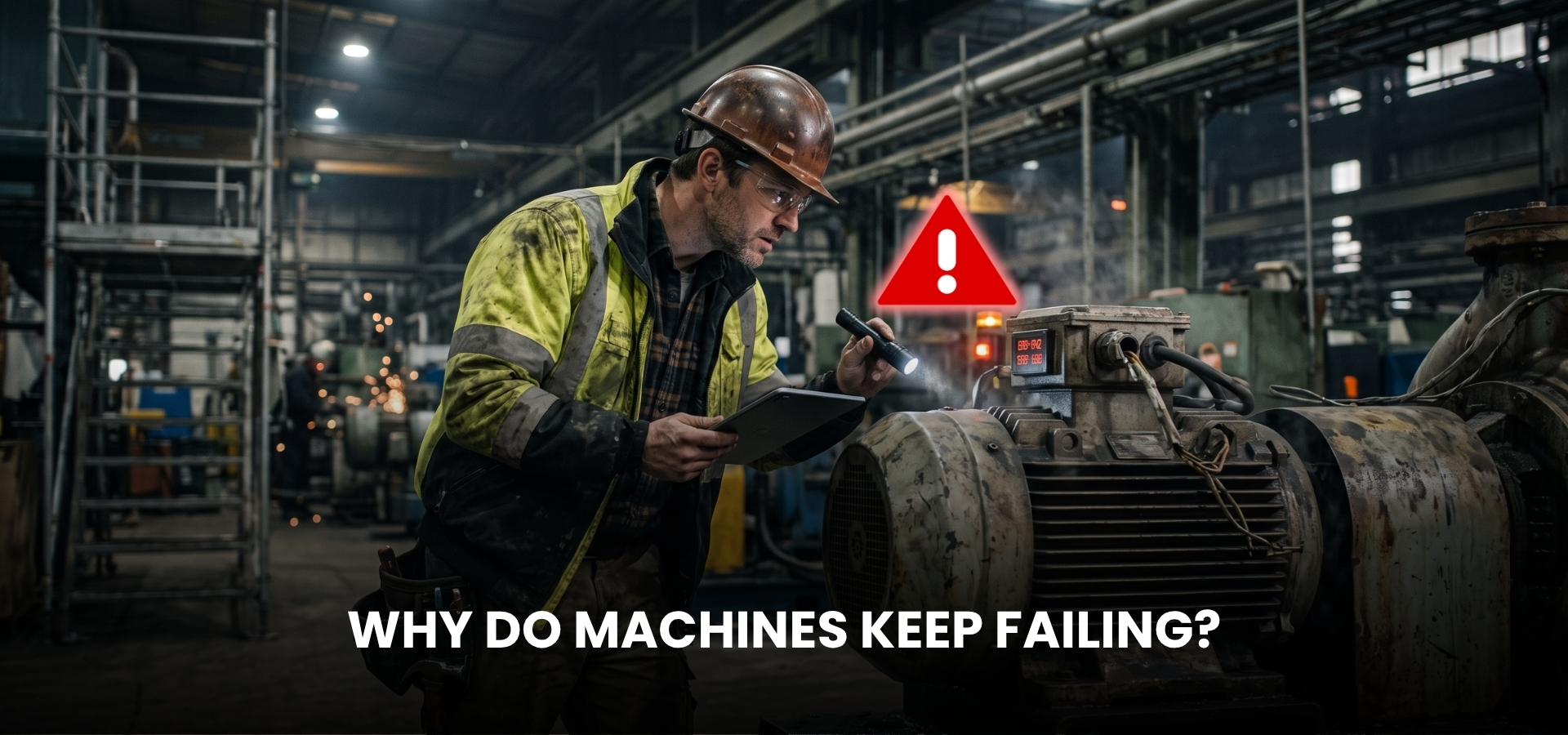
Industrial maintenance involves inspecting, servicing, monitoring, troubleshooting, and repairing equipment to keep manufacturing operations running safely and reliably.
Although maintenance practices vary across industries, several challenges are common.
1. Unexpected Equipment Breakdowns
Unexpected failures can interrupt production with little warning.
Consider a critical compressor supplying compressed air to several production machines.
If the compressor unexpectedly shuts down, multiple operations may be affected.
The maintenance team must diagnose the problem, determine whether replacement parts are required, and restore the equipment safely.
Meanwhile, production managers may need to revise schedules.
The consequences can extend beyond the failed asset itself.
This is why manufacturers increasingly seek ways to identify equipment problems earlier and improve failure investigations.
2. Recurring Failures Without a Confirmed Cause
A machine may experience repeated failures even after repairs are completed.
For example, a pump may require frequent mechanical seal replacement.
The immediate repair restores operation, but the same problem returns.
Possible causes might include improper alignment, cavitation, inappropriate operating conditions, or seal support problems.
Unless the underlying cause is identified and addressed, repeated component replacement may become an ongoing maintenance activity.
AI Root Cause Diagnosis can support investigations by helping engineers examine relevant historical maintenance information.
However, the actual cause must still be verified through appropriate technical investigation.
3. Maintenance Records That Are Difficult to Access
Manufacturing facilities may have years of maintenance history stored across multiple systems.
Information may exist in:
Computerized maintenance management systems.
Enterprise resource planning software.
Spreadsheets.
Inspection reports.
Technician notes.
Equipment manuals.
Failure investigation documents.
When a problem occurs, locating relevant information can require significant effort.
An engineer may need to search multiple records to determine whether the same fault occurred previously.
AI-assisted information retrieval can help address this challenge.
4. Dependence on Experienced Technicians
Experienced maintenance professionals often possess detailed knowledge about equipment.
They may know which machines have recurring problems, which repairs were previously attempted, and which operating conditions contribute to failures.
However, this knowledge is not always documented consistently.
When employees retire, change roles, or leave an organization, valuable maintenance experience may become less accessible.
Manufacturers therefore need better methods of preserving and retrieving technical knowledge.
5. Increasing Maintenance Expenditure
Repeated breakdowns can increase expenditure through emergency repairs, replacement components, and additional maintenance labor.
However, simply reducing maintenance activities is not a reliable solution.
Insufficient maintenance can increase the risk of equipment deterioration and unexpected failure.
The objective should be to improve the effectiveness of maintenance activities while protecting equipment reliability.
6. Limited Visibility Into Equipment Condition
Some facilities have extensive monitoring systems.
Others rely primarily on periodic inspections and technician observations.
Without suitable condition information, it can be difficult to recognize developing equipment problems.
This is one reason manufacturers evaluate condition monitoring and predictive maintenance technologies.
7. Difficulty Prioritizing Maintenance Work
Maintenance teams often manage many assets with limited time and resources.
A minor problem affecting a noncritical machine may require less immediate attention than an abnormal condition involving critical production equipment.
Effective prioritization requires understanding equipment criticality, failure consequences, and available evidence.
AI can support the analysis, but maintenance priorities must remain aligned with operational and safety requirements.
Types of Industrial Maintenance: Reactive, Preventive, Condition-Based, and Predictive
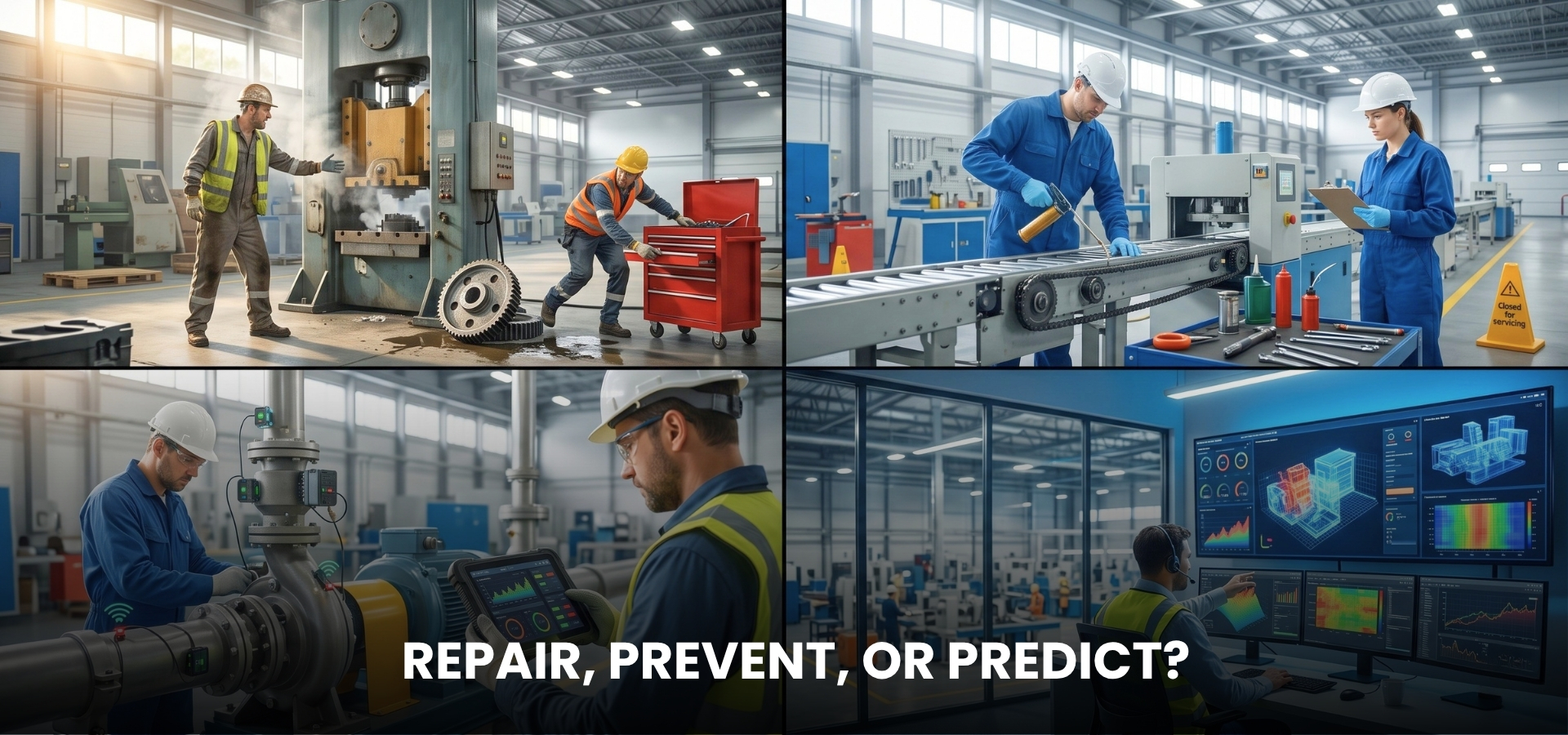
Manufacturers use different maintenance strategies depending on equipment characteristics, operating requirements, and the consequences of failure.
Understanding these strategies helps organizations determine where AI can provide value.
Reactive Maintenance: Repairing Equipment After Failure
Reactive maintenance involves repairing equipment once a failure has occurred.
For example, a small auxiliary motor stops working, and the maintenance team replaces it.
This approach can be appropriate for certain noncritical assets when the consequences of failure are limited.
However, reactive maintenance becomes more challenging when applied to critical production equipment.
Potential disadvantages include:
Unexpected downtime.
Emergency maintenance work.
Unplanned component purchases.
Disruption to production schedules.
Limited opportunities to investigate developing problems.
Reactive maintenance is not inherently wrong. Its suitability depends on the asset and the consequences of failure.
Preventive Maintenance: Following Scheduled Activities
Preventive maintenance involves performing planned servicing and inspections at predetermined intervals.
Activities may include lubrication, cleaning, alignment checks, filter replacement, and electrical inspections.
These activities are often based on operating hours, calendar periods, manufacturer recommendations, or established maintenance procedures.
Preventive maintenance helps organizations maintain structured maintenance programs.
However, fixed schedules cannot always account for changing equipment conditions.
A bearing operating under severe contamination may deteriorate faster than expected.
Another bearing operating under favorable conditions may remain serviceable beyond a typical inspection interval.
This creates opportunities for maintenance decisions informed by actual equipment condition.
Condition-Based Maintenance: Monitoring Equipment Health
Condition-based maintenance uses equipment measurements and observations to determine whether maintenance intervention is required.
Common methods include:
Vibration analysis.
Temperature monitoring.
Lubricant analysis.
Ultrasound inspection.
Electrical testing.
Pressure monitoring.
Flow analysis.
For example, a maintenance team may monitor vibration trends in a critical pump.
If the measurements indicate abnormal behavior, engineers can investigate the equipment.
Condition-based maintenance connects maintenance activities more closely to observed operating conditions.
Predictive Maintenance: Identifying Developing Problems
Predictive maintenance uses equipment information, trends, and analytical models to identify potential future problems.
AI-Powered Predictive Maintenance applies artificial intelligence to recognize patterns associated with developing equipment conditions.
For example, a model may identify a gradual change in vibration characteristics that warrants inspection.
This can support earlier investigation of certain equipment problems.
However, predictive maintenance cannot anticipate every breakdown.
Some failures develop without measurable warning signs. Others occur suddenly.
The effectiveness of predictive maintenance depends on the failure mechanism, monitoring approach, data quality, and maintenance response.
Prescriptive Maintenance: Supporting Corrective Decisions
Prescriptive maintenance aims to go beyond identifying a problem by supporting decisions about possible interventions.
For example, a system might combine condition information with maintenance history to suggest areas for investigation.
However, recommendations must be validated against equipment requirements and engineering procedures.
Prescriptive outputs should not automatically authorize repairs or operational changes.
Comparison of Industrial Maintenance Strategies
Maintenance Strategy | Primary Approach | Main Advantage | Main Consideration |
Reactive Maintenance | Repair after failure | Simple for selected noncritical assets | Unexpected breakdowns |
Preventive Maintenance | Maintain at planned intervals | Structured maintenance activities | May not reflect actual condition |
Condition-Based Maintenance | Monitor equipment condition | Decisions based on observations | Requires reliable measurements |
Predictive Maintenance | Analyze trends and patterns | Earlier investigation of certain problems | Requires suitable data and validation |
Prescriptive Maintenance | Support intervention decisions | More informed planning | Recommendations require verification |
Which Maintenance Strategy Should Manufacturers Choose?
There is no single strategy suitable for every machine.
Manufacturers should consider:
Equipment criticality.
Safety consequences.
Production impacts.
Failure characteristics.
Availability of condition data.
Maintenance expenditure.
Spare-parts requirements.
Technical resources.
A practical maintenance program often combines multiple strategies.
The objective is to apply the most appropriate approach to each asset.
How Is AI Used in Industrial Maintenance?
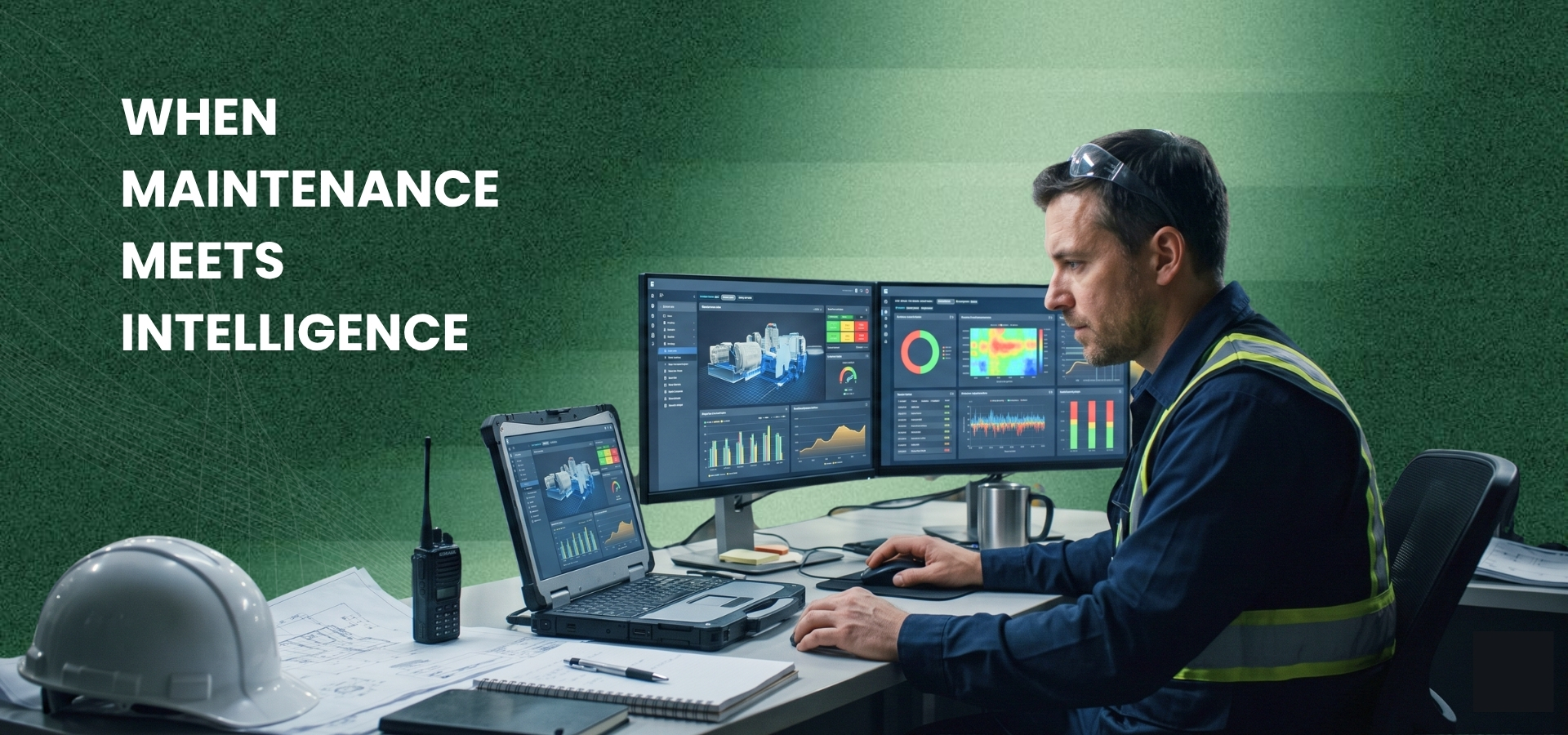
Artificial intelligence can support industrial maintenance in several ways, from equipment condition monitoring to historical failure investigations.
The specific application depends on the problem being addressed.
Analyzing Historical Maintenance Records
Manufacturing facilities accumulate substantial maintenance of information over time.
Each work order may contain equipment details, fault descriptions, technician observations, and corrective activities.
AI can help organize and retrieve relevant information from these records.
For example, an engineer investigating repeated motor overheating may want to review similar incidents involving the same machine.
An AI-assisted system may help locate relevant records even when different technicians used different terminology.
This can make existing maintenance knowledge more accessible.
Identifying Recurring Equipment Problems
Repeated failures may indicate an unresolved reliability issue.
AI can help analyze historical incidents and identify patterns that deserve investigation.
For example, several pumps may experience similar failures under comparable operating conditions.
The pattern may suggest a need for further engineering analysis.
However, correlation does not establish the actual cause.
Supporting Equipment Failure Diagnosis
When equipment fails, engineers need to determine what happened and why.
AI-assisted Equipment Failure Diagnosis can support this process by retrieving relevant maintenance records and technical information.
This may help engineers identify possible failure mechanisms for further verification.
Monitoring Equipment Conditions
AI models can analyze suitable sensor measurements to identify unusual equipment behavior.
For example, a monitoring system may detect a change in motor vibration characteristics.
The maintenance team can investigate whether the change indicates a developing problem.
Improving Maintenance Planning
Historical analysis can help identify assets experiencing frequent failures.
Condition monitoring can highlight equipment requiring attention.
These insights may support more informed maintenance planning.
Making Maintenance Knowledge More Accessible
Maintenance information becomes valuable when engineers can retrieve and apply it.
AI-assisted search and summarization can help organizations use documented technical experience more effectively.
This is particularly useful when maintenance histories span multiple years, teams, or facilities.
What Is AI-Powered Predictive Maintenance and How Does It Work?
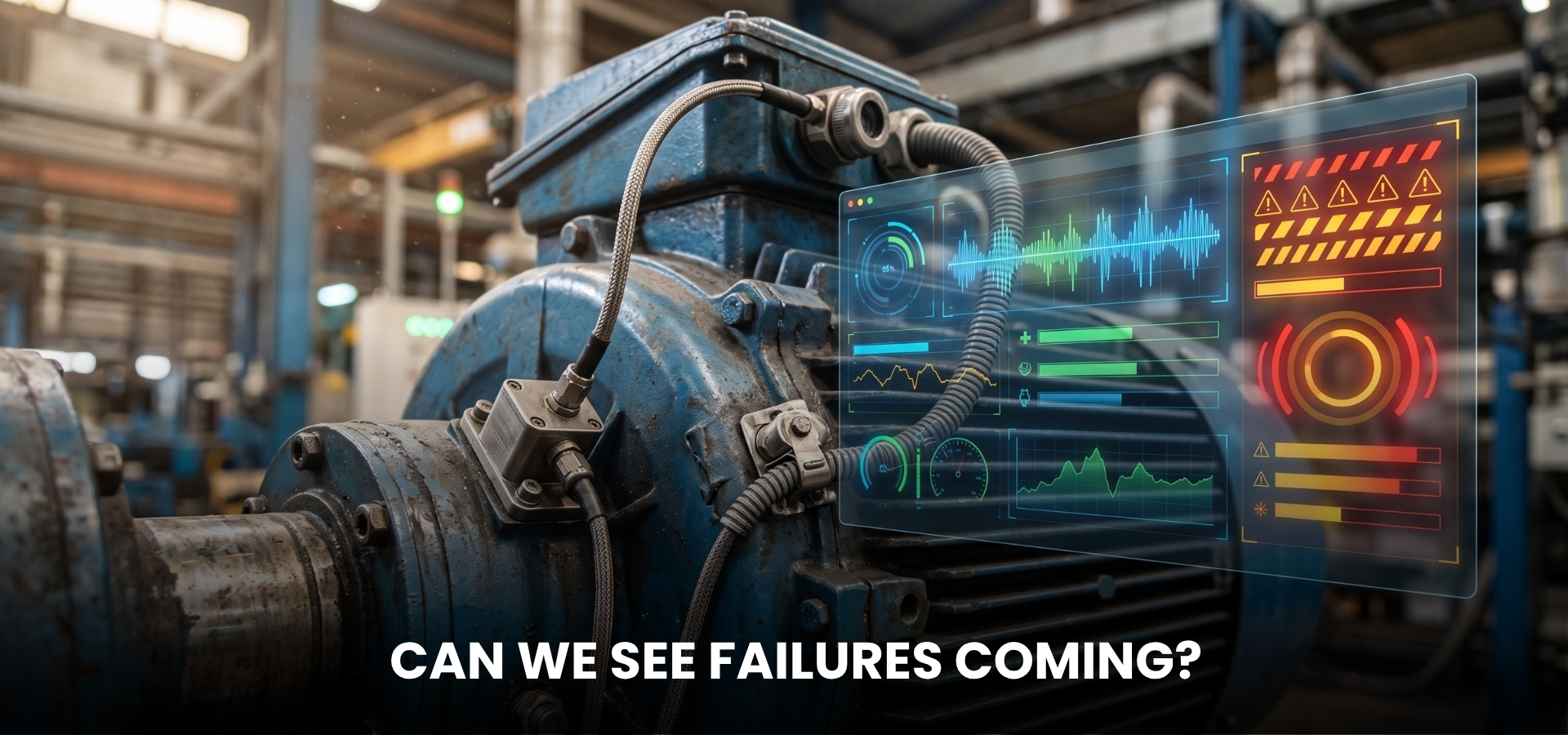
AI-Powered Predictive Maintenance uses artificial intelligence to analyze equipment information and identify patterns that may indicate developing mechanical, electrical, or operational problems.
Its purpose is to support maintenance decisions before certain failures interrupt production.
Traditional preventive maintenance follows predetermined schedules. Predictive maintenance focuses on the condition and behavior of the equipment.
This difference is important because industrial machines do not always deteriorate at the same rate.
Two identical motors may operate under different loads, temperatures, and environmental conditions. As a result, their maintenance requirements may differ.
Predictive maintenance attempts to account for these variations using relevant equipment information.
Step 1: Identify Critical Equipment
A successful predictive maintenance program should begin with equipment selection.
Manufacturers do not necessarily need predictive monitoring for every asset.
The most suitable candidates are often machines whose failure would create significant consequences.
Examples may include:
Critical production of motors.
Compressors supply essential utilities.
Pumps supporting continuous processes.
Important gearboxes.
Production-line conveyors.
High-value rotating equipment.
Machinery with a history of detectable deterioration.
Equipment selection should consider safety, production impact, repair requirements, and available monitoring opportunities.
Step 2: Understand Relevant Failure Mechanisms
Before installing sensors or selecting an AI model, manufacturers should understand the equipment problems they want to detect.
For example, a motor can fail because of electrical, mechanical, thermal, or environmental conditions.
Different problems produce different symptoms.
A vibration measurement may help identify certain mechanical conditions, while electrical measurements may be more relevant to other problems.
Selecting the correct monitoring approach requires engineering knowledge.
Step 3: Collect Equipment Data
Predictive maintenance systems require relevant measurements.
Common data sources include vibration sensors, temperature measurements, electrical monitoring, pressure readings, and process information.
The information must be collected at suitable intervals and under appropriate operating conditions.
A measurement taken while a machine is starting may differ significantly from one taken during steady operation.
Without sufficient operating context, an AI model may misinterpret normal behavior.
Step 4: Prepare the Data
Industrial measurements can contain errors, missing values, inconsistent timestamps, and other quality problems.
Data preparation may involve:
Checking sensor accuracy.
Identifying missing measurements.
Aligning timestamps.
Separating different operating conditions.
Removing clearly invalid readings.
Confirming equipment identification.
Reviewing historical failure labels.
Poor data quality can reduce the reliability of predictive analysis.
Step 5: Analyze Equipment Patterns
Machine learning models can analyze relevant measurements to identify patterns.
Depending on the application, a model may learn normal equipment behavior, recognize anomalies, or classify certain known fault conditions.
For example, a model may identify changes in vibration behavior that differ from a machine's established operating pattern.
However, an anomaly does not necessarily indicate an imminent failure.
It is a reason to investigate.
Step 6: Generate Maintenance Insights
A predictive system may alert maintenance professionals when unusual conditions are identified.
A useful alert should provide enough context for engineers to understand what has changed.
Relevant information may include:
The affected asset.
The measurement shows abnormal behavior.
When the change began.
Whether the condition is continuing.
Relevant operating circumstances.
Available historical comparisons.
The purpose is to support a practical maintenance decision.
Step 7: Verify the Equipment Condition
Maintenance engineers must evaluate the alert.
They may perform additional measurements, inspect the equipment, or review operating conditions.
For example, abnormal vibration could justify checking alignment, bearings, mounting conditions, or mechanical loading.
The inspection determines whether corrective action is required.
Step 8: Evaluate the Outcome
After maintenance intervention, the organization should monitor the equipment.
If the abnormal condition improves, that information can support the evaluation of the maintenance response.
If the problem remains, further investigation may be necessary.
This feedback helps manufacturers assess whether their predictive maintenance process is effective.
Example: Predictive Maintenance for an Industrial Motor
Imagine a manufacturing facility operating several motors that drive critical production equipment.
One motor begins showing a gradual increase in vibration under similar operating conditions.
A suitably configured AI monitoring system identifies the change.
The maintenance team reviews the measurements and schedules an inspection.
Engineers discover a mechanical condition requiring attention.
After appropriate corrective work, the motor is returned to operation and monitored.
If the issue is addressed before functional failure, the organization may avoid an unexpected interruption.
This example illustrates a possible application. It is not a guaranteed outcome or a documented customer case study.
Benefits of AI-Powered Predictive Maintenance
When implemented appropriately, predictive maintenance may support:
Earlier recognition of certain equipment problems.
Better-informed inspection schedules.
More effective maintenance planning.
Reduced dependence on emergency repairs.
Improved equipment condition visibility.
Better allocation of maintenance resources.
Opportunities to improve equipment availability.
Limitations Manufacturers Should Understand
Predictive maintenance has important limitations.
Not every failure produces a measurable warning sign.
A sensor may detect abnormal behavior without identifying the exact cause.
An AI model may also generate false alerts or fail to recognize unusual conditions.
Predictive maintenance therefore requires appropriate validation, maintenance procedures, and engineering oversight.
The objective should be useful for decision support rather than perfect failure prediction.
What Is AI Root Cause Diagnosis in Manufacturing?
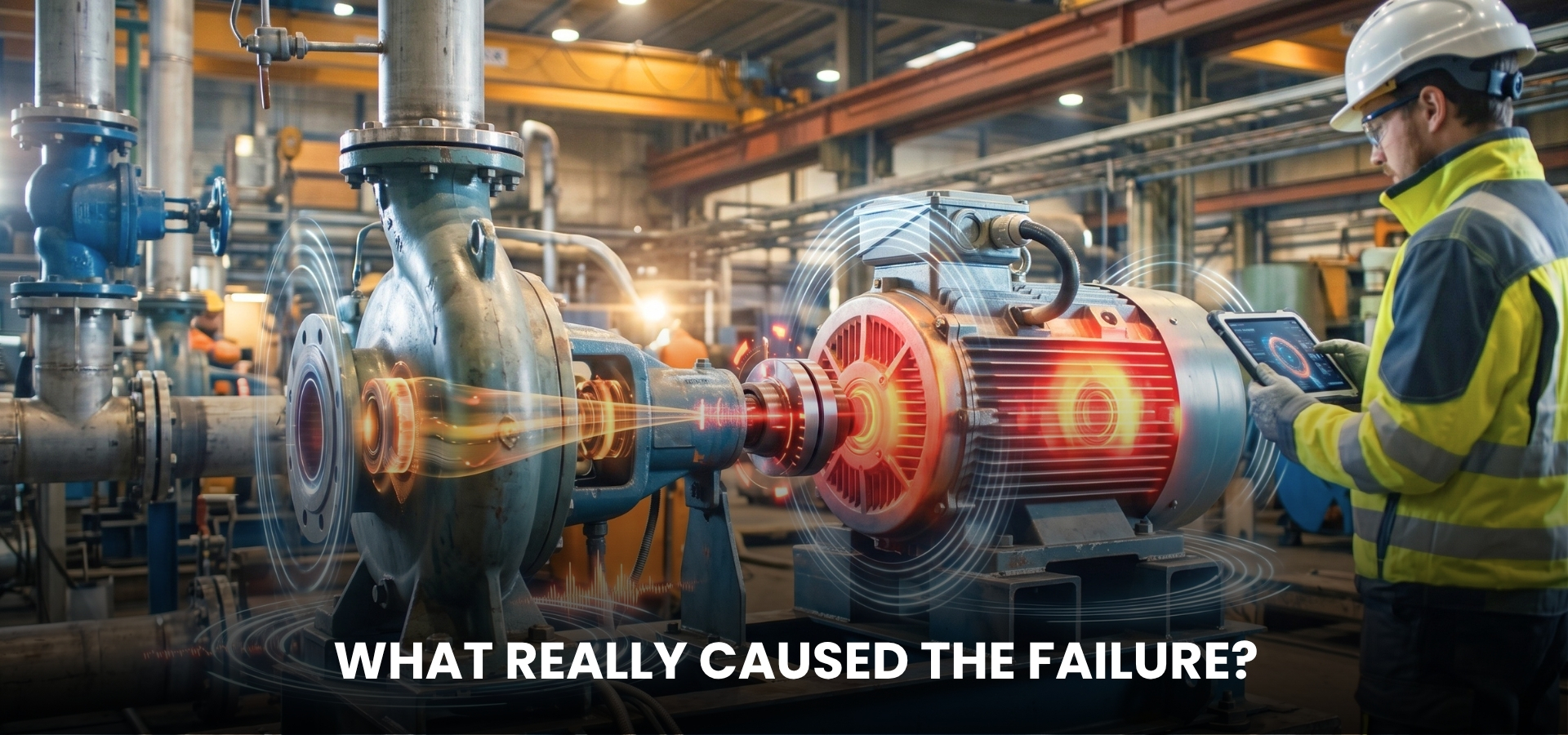
Manufacturers often face equipment problems that return despite repeated repairs.
A failed bearing is replaced, but another bearing fails soon afterward.
A pump seal is changed, yet leakage returns.
Motor trips repeatedly even after the immediate fault has been cleared.
These situations raise an important question:
Is the maintenance team correcting the underlying problem or only addressing its symptoms?
AI Root Cause Diagnosis is an approach that uses artificial intelligence to support investigations into the possible underlying causes of equipment failures.
It can help maintenance teams examine historical information, identify related incidents, and explore possible contributing factors.
Understanding Root Cause Analysis
Root cause analysis is a structured investigation into why a problem occurred.
The objective is to identify underlying conditions that can be addressed to reduce the likelihood of recurrence.
Consider a motor that experiences repeated bearing failures.
The immediate problem is causing damage.
However, the underlying cause may involve:
Shaft misalignment.
Incorrect lubrication.
Contamination.
Excessive loading.
Installation errors.
Inappropriate bearing selection.
Mechanical looseness.
Replacing the damaged bearing may be necessary to restore operation.
But if the underlying condition remains, failure may be returned.
Why Root Cause Analysis Is Important
Recurring failures can create operational problems that extend beyond individual repairs.
They may increase maintenance expenditure, consume technician time, and reduce confidence in equipment reliability.
Root cause investigations help organizations move beyond repeated symptom treatment.
The goal is to understand the failure mechanism and implement effective corrective action.
Traditional Root Cause Analysis Methods
Maintenance professionals use several established methods to investigate failures.
The Five Whys Method
The Five Whys technique involves repeatedly asking why a problem occurred.
For example:
The motor stopped because the bearing failed.
Why did the bearing fail?
The investigation may reveal inadequate lubrication.
Why was lubrication inadequate?
Further examination may identify an issue with the lubrication procedure or equipment condition.
The process continues until the investigation identifies an underlying factor that can be addressed.
However, the Five Whys method should not be treated as a substitute for technical evidence.
Complex equipment failures may involve multiple contributing factors.
Fishbone or Cause-and-Effect Analysis
A fishbone diagram helps teams organize possible causes into categories.
These may include equipment, methods, materials, people, measurements, and operating conditions.
The method supports structured discussion.
However, possible causes must still be investigated and verified.
Failure Mode and Effects Analysis
Failure Mode and Effects Analysis, commonly known as FMEA, is a systematic method used to examine potential failure modes and their consequences.
It helps organizations identify risks and prioritize preventive actions.
FMEA is primarily a forward-looking risk analysis method, while root cause analysis investigates specific failures that have occurred.
Both can contribute to reliability improvement.
Fault Tree Analysis
Fault tree analysis examines combinations of events or conditions that could lead to an unwanted outcome.
It can be useful for complex systems where several factors may contribute to failure.
The appropriate method depends on the equipment, the problem, and the depth of investigation required.
How AI Supports Root Cause Investigations
AI can support traditional root cause analysis by improving access to relevant information.
A maintenance engineer investigating a recurring problem may need to review years of work orders.
These records may contain similar symptoms, previous repairs, inspection results, and technician observations.
AI-assisted analysis can help retrieve related incidents and organize relevant evidence.
For example, an engineer investigating repeated pump failures may discover that similar problems occurred after particular maintenance activities.
This observation may justify further investigation.
However, the pattern itself does not prove causation.
Example: Repeated Mechanical Seal Failures
Consider a chemical processing facility operating a critical centrifugal pump.
The pump experiences recurring mechanical seal leakage.
Each time the problem occurs, the maintenance team replaces the seal.
The repair restores operation, but leakage returns.
A structured investigation examines:
Previous seal failure records.
Pump operating conditions.
Alignment measurements.
Installation practices.
Seal support arrangements.
Vibration observations.
Maintenance activities performed before each failure.
Historical analysis may reveal that failures frequently follow a particular operating condition.
Engineers can then investigate whether that condition contributes to seal damage.
The objective is to verify the actual failure mechanism and implement an appropriate corrective action.
Where BODHI Fits in AI Root Cause Diagnosis
This is a relevant application area for BODHI.
BODHI is an AI-powered industrial maintenance platform focused on equipment failure diagnosis and maintenance intelligence.
Its diagnostic approach is intended to help maintenance professionals make better use of historical maintenance information when investigating equipment problems.
For manufacturers experiencing recurring faults, the value of this approach lies in making relevant maintenance knowledge easier to examine.
Instead of beginning every investigation without reference to previous incidents, engineers can use AI-assisted analysis to explore historical records and possible contributing factors.
BODHI supports the diagnostic process; qualified maintenance professionals remain responsible for evaluating evidence and verifying failure causes.
More information is available at https://bodhi.approlabs.com/.
Why AI Root Cause Diagnosis Matters for Manufacturing Reliability
Effective root cause investigations can help manufacturers improve maintenance practices.
Potential benefits include:
Better understanding of recurring equipment problems.
More informed corrective decisions.
Reduced repetition of ineffective repairs.
Improved maintenance documentation.
Greater use of historical technical knowledge.
Stronger reliability improvement processes.
The most important outcome is not simply identifying a possible explanation.
It is verifying the cause and implementing an effective corrective action.
How AI Improves Equipment Failure Diagnosis
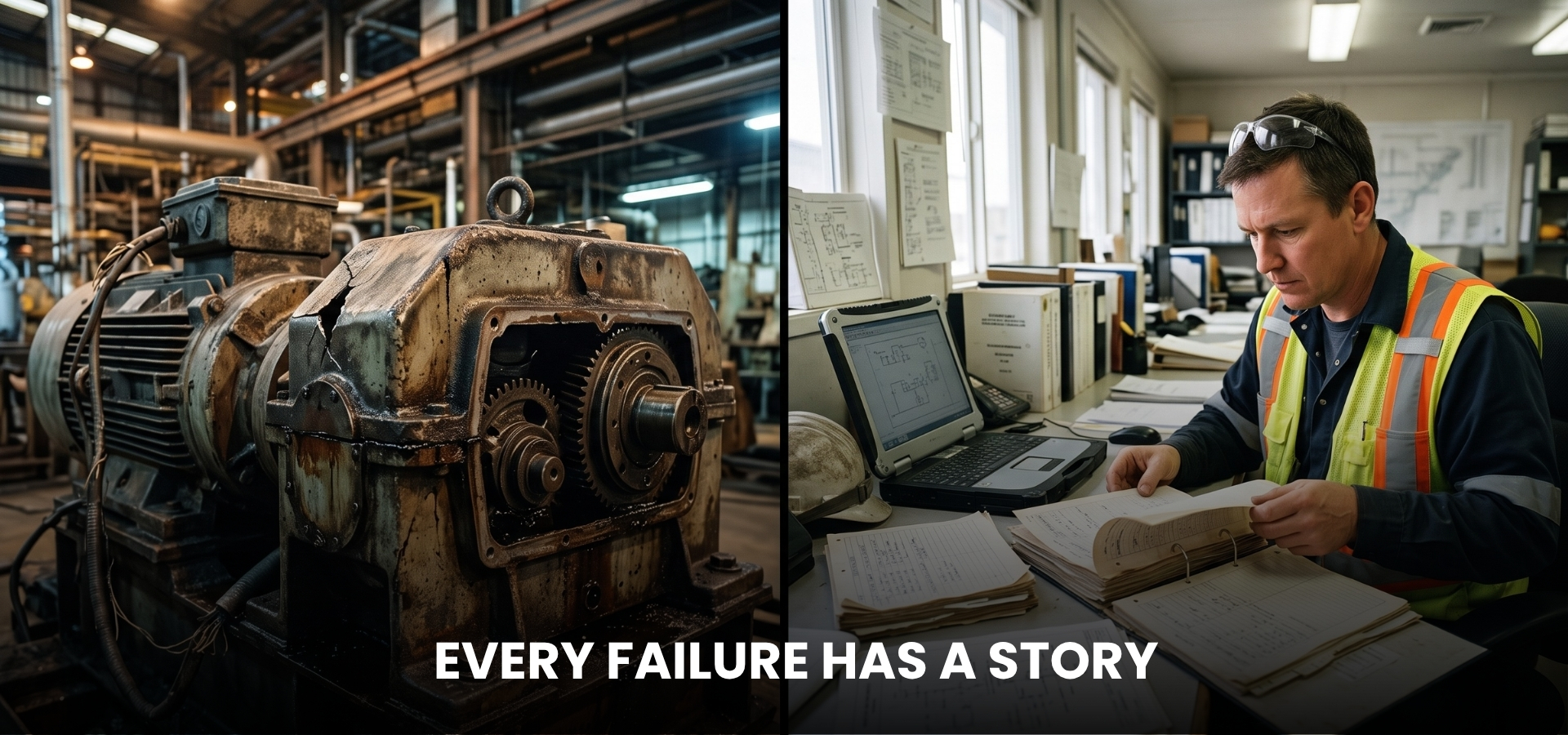
Equipment Failure Diagnosis involves identifying the reasons why machinery or industrial equipment is not functioning as intended.
The process can be straightforward for simple faults.
However, modern manufacturing equipment often combines mechanical, electrical, hydraulic, pneumatic, and control systems.
A symptom observed in one component may originate elsewhere.
For example, a motor may trip because of an electrical problem, excessive mechanical loading, a process obstruction, or a protection-system response.
Diagnosing the problem requires examining the available evidence.
Stage 1: Identify the Reported Symptoms
The first step is to understand what happened.
Common symptoms include:
Abnormal noise.
Excessive vibration.
Overheating.
Unexpected shutdowns.
Reduced output.
Loss of pressure.
Increased electrical current.
Repeated component damage.
Unusual equipment movement.
Changes in process performance.
Accurate documentation helps engineers distinguish between symptoms and possible causes.
For example, “motor failed” provides limited information.
A report describing the operating conditions, observed symptoms, and sequence of events is more useful.
Stage 2: Collect Relevant Equipment Information
Engineers may review:
Maintenance of work orders.
Fault codes.
Equipment operating history.
Inspection reports.
Technician observations.
Manufacturer documentation.
Condition-monitoring measurements.
Previous repair activities.
The goal is to understand the circumstances surrounding failure.
Stage 3: Review Similar Historical Incidents
Previous failures can provide valuable context.
For example, a conveyor that repeatedly stops under high loading may have a history of related problems.
Historical maintenance records may show whether previous repairs addressed the underlying condition.
AI-assisted search can help retrieve relevant incidents.
This is particularly useful when different technicians describe similar problems using different terminology.
Stage 4: Develop Possible Explanations
The available evidence may support several possible failure mechanisms.
For example, excessive vibration in a rotating machine may be associated with imbalance, misalignment, looseness, or bearing problems.
Engineers should avoid assuming that the first plausible explanation is correct.
The investigation should consider the available evidence and the physical characteristics of the equipment.
Stage 5: Verify the Failure Mechanism
Verification may involve physical inspection, measurements, testing, or specialist analysis.
For example:
Vibration measurements may support mechanical condition assessment.
Electrical testing may help investigate motor problems.
Alignment checks may identify installation-related issues.
Lubricant analysis may reveal contamination or wear evidence.
Process measurements may help identify abnormal operating conditions.
The appropriate methods depend on the equipment and suspected failure.
Stage 6: Implement Corrective Action
Once the cause is established, maintenance professionals can determine the appropriate corrective work.
Corrective action may involve repairing equipment, adjusting operating conditions, improving maintenance procedures, or modifying components.
All work must follow applicable safety and engineering requirements.
Stage 7: Confirm the Outcome
After corrective action, the equipment should be evaluated to determine whether the problem has been resolved.
For recurring failures, longer-term monitoring may be necessary.
This helps establish whether the corrective action addresses the underlying issue.
Why AI-Assisted Diagnosis Can Be Useful
AI can support equipment failure investigations by helping engineers retrieve and analyze relevant historical information.
Potential advantages include:
Less time spent manually searching records.
Easier identification of related incidents.
Better access to previous maintenance knowledge.
More consistent technical documentation.
Improved support for recurring failure investigations.
However, the system's usefulness depends on data quality, relevant records, and reliable outputs.
Example: Diagnosing a Repeated Conveyor Shutdown
Imagine a packaging facility where a conveyor stops unexpectedly several times each month.
The immediate symptom is a drive-system trip.
The maintenance team resets the system after inspection, but the problem returns.
A systematic investigation examines operating loads, mechanical condition, electrical information, and previous maintenance records.
Historical analysis may reveal that stoppages frequently occur during a particular operating condition.
Engineers can then investigate whether mechanical overloading, driving problems, or other factors are responsible.
The purpose of AI-assisted diagnosis is to help organize relevant evidence, not automatically determine the answer.
How Historical Maintenance Data Supports AI in Manufacturing
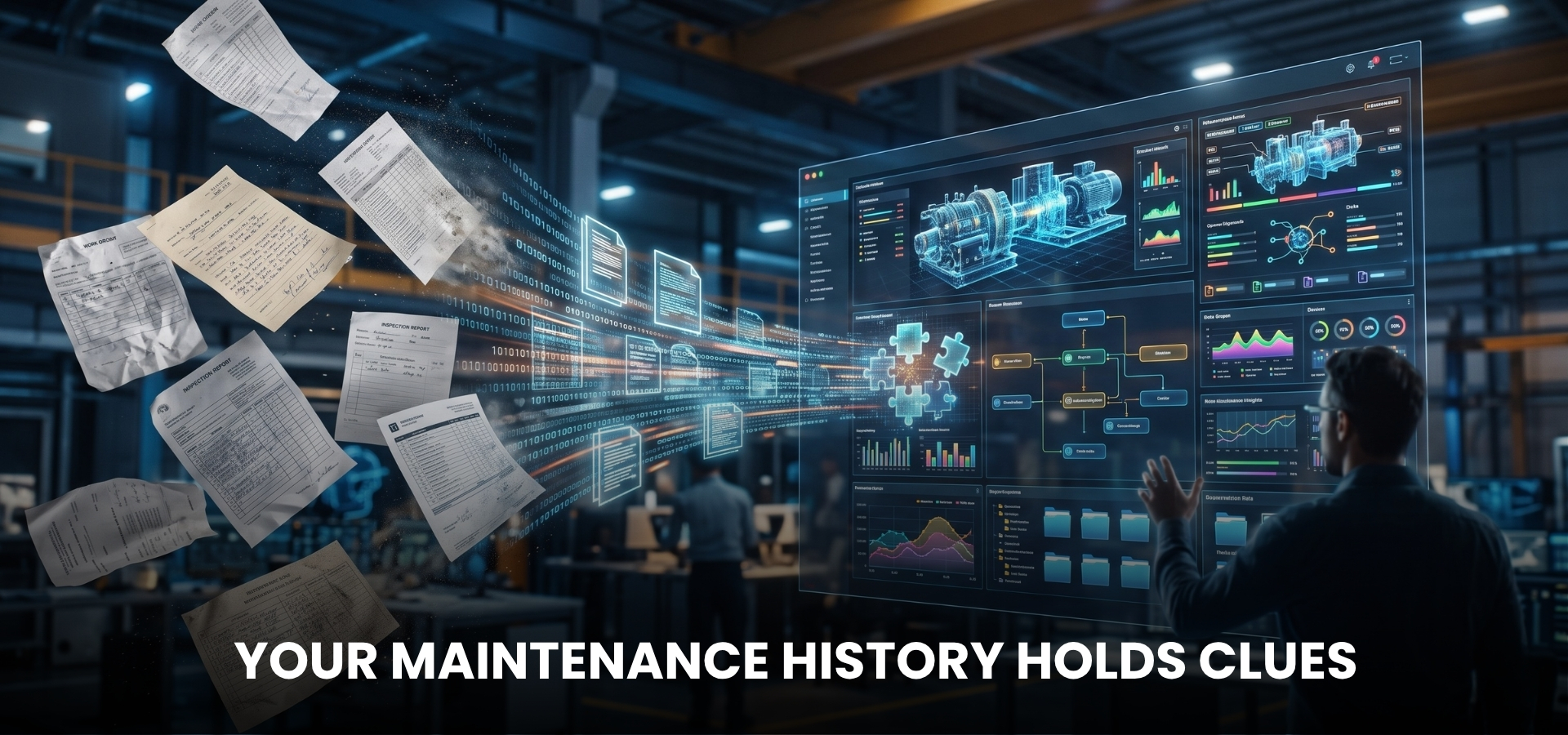
Manufacturing facilities often possess more useful maintenance information than they realize.
Years of equipment repairs, inspections, and technician observations may contain valuable knowledge about recurring problems and operating conditions.
However, historical data is only useful when it can be retrieved, understood, and applied.
What Is Historical Maintenance Data?
Historical maintenance data includes records of previous maintenance activities and equipment problems.
Examples include:
Equipment failure reports.
Corrective maintenance of work orders.
Preventive maintenance records.
Inspection findings.
Component replacement histories.
Technician observations.
Root cause investigation reports.
Maintenance completion notes.
Equipment operating conditions.
Follow-up inspection results.
These records provide a history of how equipment has been performed and how problems were addressed.
Why Maintenance History Is Often Underused
Many maintenance systems are designed primarily for recording work.
Once a work order is closed, the information may receive limited attention unless the same equipment fails again.
Over time, thousands of records have accumulated.
Finding relevant information is becoming increasingly difficult.
This is especially challenging when records contain free text descriptions.
The Problem with Inconsistent Terminology
Different technicians may describe the same problem differently.
For example:
Motor overheating.
High motor temperature.
Thermal overload trip.
Excessive heat during operation.
Motor running hot.
These descriptions may refer to related symptoms.
A basic keyword search may not identify every relevant record.
Natural language processing can help recognize relationships between different descriptions.
Turning Maintenance Records into Useful Knowledge
AI-assisted systems can help manufacturers organize historical information.
For example, a maintenance engineer investigating a gearbox failure may want to know:
Has this gearbox failed before?
Were similar symptoms previously reported?
Which components were replaced?
What corrective actions were attempted?
Did the problem return?
Were comparable failures reported on similar equipment?
Retrieving this information can support a more informed investigation.
Why Good Documentation Matters
AI cannot reliably recover technical details that were never recorded.
A work order stating only “pump repaired” provides limited value.
A more useful record would describe:
The equipment was affected.
The observed symptoms.
The operating conditions.
Inspection findings.
The verified failure mechanism.
Corrective work is performed.
Follow-up results.
Better documentation improves both conventional maintenance management and AI-assisted analysis.
Preserving Knowledge Across Maintenance Teams
Manufacturing facilities often operate multiple shifts.
Different technicians may work on the same equipment at different times.
Consistent documentation allows technical knowledge to move between teams.
AI-assisted retrieval can make this information easier to access when needed.
Using Maintenance History for Continuous Improvement
Historical records can help manufacturers identify repeated problems.
For example, a facility may discover that several similar motors experience recurring bearing damage.
The organization can then investigate whether failures share a common cause.
Possible areas of investigation might include installation practices, lubrication procedures, operating conditions, or equipment selection.
The value comes from connecting historical observations with structured engineering investigations.
Applications of Machine Learning in Industrial Maintenance
Machine learning is a branch of artificial intelligence that enables systems to identify patterns in data.
In industrial maintenance, machine learning can support several analytical activities.
However, different applications require different types of information and validation.
Machine Learning for Equipment Condition Monitoring
Equipment condition monitoring involves observing measurements that may indicate changes in machinery health.
Machine learning models can analyze these measurements and identify patterns.
For example, a model may examine vibration data collected from a rotating machine.
The model may identify changes that differ from the machine's established operating behavior.
This information can support further investigation.
However, changes in vibration may also result from normal variations in loading or operating speed.
The model must account for relevant operating conditions.
Anomaly Detection in Manufacturing Equipment
Anomaly detection involves identifying observations that differ from expected patterns.
It is useful when manufacturers have substantial operating data, but limited examples of confirmed failures.
For example, a compressor may normally operate within a particular range of pressure and temperature conditions.
An AI model may identify an unusual combination of measurements.
The result may indicate a condition requiring investigation.
However, anomaly detection does not necessarily identify the specific fault.
An abnormal condition is not the same as a confirmed diagnosis.
Fault Classification Using Machine Learning
Fault classification involves assigning observations to known fault categories.
For example, a suitably trained model may attempt to distinguish selected mechanical fault conditions using relevant sensor data.
This approach requires reliable examples of the conditions being classified.
If the training data does not adequately represent actual equipment behavior, model performance may be limited.
Manufacturers should therefore evaluate how models perform under realistic operating conditions.
Natural Language Processing for Maintenance Reports
Natural language processing enables AI systems to work with written information.
This is especially relevant to industrial maintenance because work orders often contain unstructured text.
A technician may write a brief description using terminology that differs from another technician's description.
Natural language processing can help identify related information.
Potential applications include:
Searching for maintenance histories.
Grouping similar fault descriptions.
Summarizing previous incidents.
Identifying recurring terminology.
Retrieving relevant technical records.
Generative AI for Maintenance Knowledge Assistance
Generative AI can support the interpretation and summarization of available information.
For example, an engineer might ask a system to summarize previous failures involving a specific pump.
A properly configured system could retrieve and summarize relevant maintenance records.
However, generative AI can produce inaccurate or unsupported statements.
For industrial applications, important outputs should be traceable to original records.
Why Model Explainability Matters
Maintenance decisions can affect production continuity, equipment condition, and safety.
Engineers need to understand why a system produced a particular suggestion.
A useful AI maintenance application should ideally help answer:
What information was analyzed?
Which observations influenced the result?
Which historical incidents are relevant?
What remains uncertain?
What should engineers verify?
Explainability helps maintenance professionals evaluate AI-generated information.
Machine Learning Is Not a Substitute for Reliability Engineering
Machine learning can identify patterns, but it does not automatically understand every physical failure mechanism.
A model may identify that certain failures frequently occur under high load.
However, engineers must determine whether loading is the actual cause or simply associated with another condition.
The strongest maintenance applications combine analytical capabilities with engineering knowledge.
How IoT and AI Work Together in Smart Manufacturing
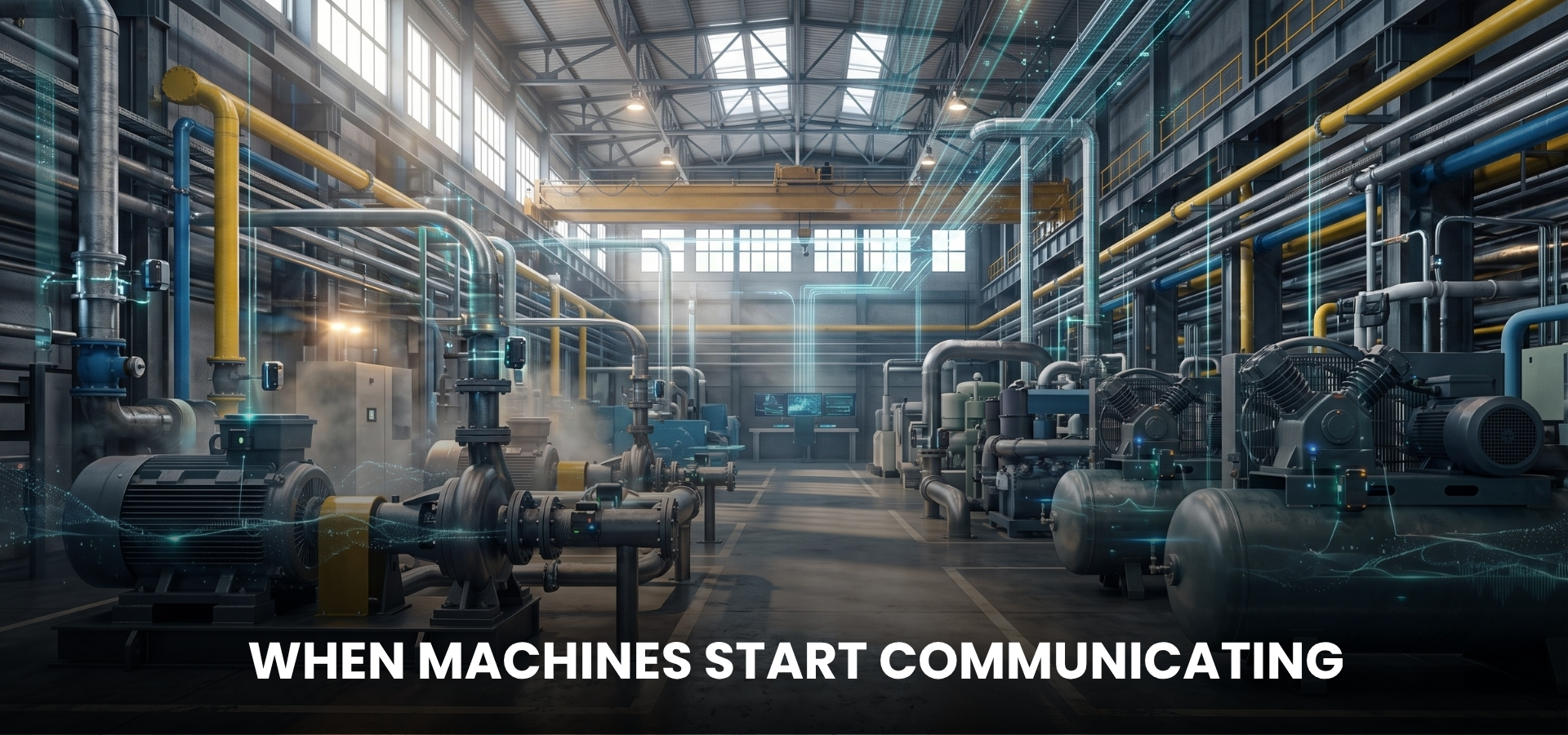
The Industrial Internet of Things, commonly called IoT, involves connected industrial equipment and systems that collect and exchange operational information.
IoT and AI are often discussed together because they can complement each other.
However, they serve different purposes.
IoT helps collect equipment information. AI helps analyze relevant information.
What Is Industrial IoT?
Industrial IoT includes sensors, connected devices, communication systems, and software used to collect information from manufacturing equipment.
For example, sensors may measure motor temperature, pump vibration, compressor pressure, or equipment operating hours.
The measurements can be transmitted to monitoring systems for analysis.
Common Types of Industrial Sensors
Vibration sensors
Vibration monitoring is commonly used for selected rotating machinery applications.
Changes in vibration behavior may provide evidence of mechanical conditions that require investigation.
Temperature sensors
Temperature measurements can help identify abnormal heating in motors, bearings, electrical equipment, and process systems.
However, temperature must be interpreted in relation to operating conditions.
Pressure sensors
Pressure monitoring is useful for pumps, compressors, hydraulic equipment, and process systems.
Abnormal pressure behavior may indicate equipment or process problems.
Electrical monitoring
Current, voltage, and other electrical measurements can provide information about equipment operating conditions.
These measurements may support investigations involving motors and electrical systems.
Lubricant monitoring
Oil analysis can provide evidence of contamination, lubricant degradation, and certain wear conditions.
The information may support condition-based maintenance decisions.
How AI Uses Industrial IoT Data
Once suitable measurements are available, AI models may analyze the information patterns.
For example, a pump monitoring system may collect vibration and temperature measurements.
A model may identify a change that differs from expected operating behavior.
Maintenance engineers can then investigate the equipment.
The usefulness of the result depends on the quality of the measurements and the relevance of the model.
Why Sensor Installation Alone Is Not Enough
Installing sensors does not automatically create an effective predictive maintenance program.
Manufacturers also need:
Appropriate equipment selection.
Relevant failure-mode knowledge.
Reliable data collection.
Suitable analytical methods.
Clear maintenance response procedures.
Performance evaluation.
A monitoring system that produces alerts without supporting useful action may provide limited operational value.
AI Applications Without Extensive IoT Infrastructure
Not every industrial AI application requires continuous sensor measurements.
Manufacturers may begin with historical maintenance records when their primary challenge is understanding recurring failures.
This can be particularly relevant for facilities operating legacy equipment.
The choice between sensor-based monitoring and historical maintenance intelligence should follow the operational problem.
How AI Helps Reduce Unplanned Downtime in Manufacturing
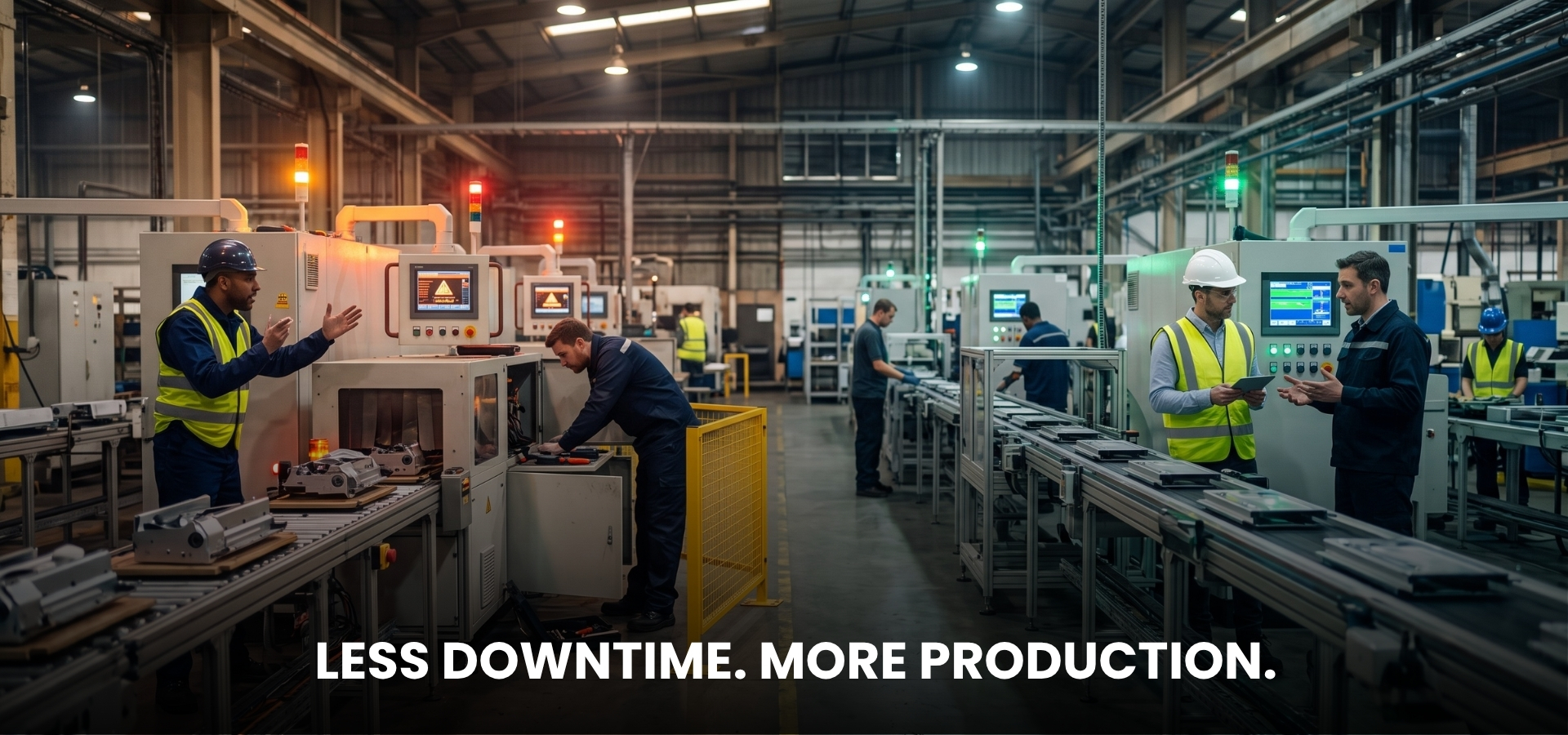
Unplanned downtime is a major concern for manufacturing businesses because it interrupts production and creates operational uncertainty.
However, downtime reduction requires more than identifying that a machine has stopped.
Manufacturers must understand why interruptions occur and which actions can prevent recurrence.
Understanding Different Causes of Downtime
Equipment-related downtime may result from:
Mechanical component failures.
Electrical faults.
Control system problems.
Inadequate lubrication.
Improper operating conditions.
Maintenance-related errors.
Process disturbances.
Repeated unresolved faults.
Different causes require different maintenance responses.
A monitoring system may help identify some developing mechanical conditions.
Historical maintenance analysis may be more useful for investigating repeated failures.
AI Before an Equipment Failure
Certain equipment problems develop gradually.
For example, some mechanical faults produce changes in vibration or temperature before functional failure occurs.
With suitable monitoring data, AI-Powered Predictive Maintenance may help identify abnormal trends.
Maintenance engineers can investigate whether intervention is required.
This creates an opportunity to address certain problems before they interrupt production.
AI During an Equipment Failure
Once equipment fails, maintenance teams need to diagnose the problem.
Relevant information may be scattered across work orders, manuals, and previous inspection reports.
AI-assisted Equipment Failure Diagnosis can help retrieve related maintenance records.
This may reduce the effort required to locate useful information.
However, physical inspection and technical verification remain necessary.
AI After an Equipment Failure
After equipment is repaired, manufacturers should consider whether the underlying cause has been addressed.
This is particularly important for recurring problems.
AI Root Cause Diagnosis can support investigations by helping engineers examine historical incidents and possible contributing factors.
Verified findings can guide corrective actions.
Example: Repeated Motor Failures in a Production Line
Imagine a manufacturing plant where a critical motor experiences several failures during the year.
Each time, maintenance engineers repair the affected component and restore production.
However, the problem continues.
A structured investigation examines previous maintenance records, operating conditions, and inspection of findings.
The team may discover that failures share a common mechanical or operational condition.
Once the cause is verified, an appropriate corrective action can be implemented.
The result may be fewer recurring interruptions.
The important improvement is treating repeated failures as a reliability problem rather than unrelated maintenance events.
Improving Downtime Reporting
Manufacturers should document downtime consistently.
Useful information includes:
Equipment affected.
Date and duration of the interruption.
Reported symptoms.
Confirmed failure caused.
Corrective work is performed.
Production consequences.
Follow up findings.
This information supports future analysis.
Measuring Downtime Improvement
Manufacturers should evaluate whether AI-assisted maintenance produces meaningful changes.
Relevant measures include:
Frequency of unexpected equipment failures.
Total unplanned downtime.
Repeat failure frequency.
Equipment availability.
Maintenance response time.
Corrective action effectiveness.
Improvements should be assessed against a reliable baseline.
How AI Improves Manufacturing Reliability and Equipment Performance
Manufacturing Reliability is a critical part of operational performance.
Reliable equipment helps manufacturers maintain production schedules, use resources effectively, and reduce avoidable interruptions.
However, reliability improvement requires more than repairing machines quickly.
It involves understanding failure mechanisms, controlling equipment risks, and learning from previous problems.
Understanding Equipment Reliability
Equipment of reliability describes the ability of an asset to perform its intended function without failure under specified conditions for a defined period.
Reliability is influenced by several factors.
These may include equipment design, installation of quality, operating conditions, maintenance practices, and environmental exposure.
For example, a correctly installed pump operating within its intended range may perform differently from a similar pump exposed to repeated cavitation or excessive loading.
Maintenance decisions must consider these conditions.
Reliability Versus Availability
Reliability and availability are related but different.
Reliability concerns how consistent equipment performs without failure.
Availability concerns whether equipment is ready for use when required.
A machine may fail frequently but be repaired quickly.
Another machine may rarely fail but require extensive restoration work when a breakdown occurs.
Both situations affect manufacturing operations.
Why Recurring Failures Affect Reliability
Repeated equipment problems may indicate that the underlying failure mechanism has not been addressed.
For example, repeated bearing replacement may restore a machine temporarily.
However, if the actual cause is incorrect alignment, contamination, or another unresolved condition, failures may continue.
Effective root cause investigations can help identify these problems.
How AI Supports Reliability Engineering
AI can support reliability improvement through several activities.
Historical failure analysis
Maintenance records can reveal recurring incidents and patterns.
Equipment condition analysis
Suitable monitoring systems can help identify changes that warrant investigation.
Diagnostic assistance
AI can help engineers retrieve relevant technical information during failure investigations.
Maintenance knowledge management
Historical records can become more accessible across teams.
Reliability improvement planning
Information about repeated failures can support prioritization of engineering investigations.
Important Manufacturing Reliability Indicators
Manufacturers commonly monitor several performance indicators.
Mean Time Between Failures (MTBF)
MTBF describes the average operating time between failures of repairable equipment, according to the organization's defined measurement method.
It can help evaluate failure frequency.
Mean Time to Repair (MTTR)
MTTR describes the average time required for repair or restoration, depending on the organization's definition.
It can help evaluate maintenance response performance.
Equipment Availability
Availability indicates whether equipment is ready for use when required.
It is influenced by both failure frequency and restoration performance.
Repeat Failure Frequency
This measure helps identify equipment experiencing recurring problems.
Repeated failures may justify a detailed root cause of investigation.
Unplanned Downtime
Unplanned downtime measures unexpected equipment-related interruptions.
It helps manufacturers understand the operational consequences of failures.
Reliability Improvement Requires Follow-Through
Identifying a possible problem is only the beginning.
Manufacturers must verify the cause, implement corrective action, and evaluate whether the issue has been resolved.
AI can support the process, but reliable outcomes depend on effective engineering decisions.
How AI Supports Maintenance Planning and Scheduling
Maintenance planning involves determining what work should be performed, when it should be performed, and which resources are required.
Effective planning helps manufacturers coordinate maintenance activities with production requirements.
AI can support this process by making relevant equipment information easier to analyze.
Understanding Equipment Criticality
Not every asset requires the same level of maintenance of attention.
Equipment of criticality depends on the consequences of failure.
Factors may include:
Safety impact.
Production consequences.
Repair complexity.
Replacement part availability.
Environmental impact.
Equipment redundancy.
Quality implications.
Criticality analysis helps manufacturers prioritize maintenance resources.
Identifying Assets with Recurring Problems
Historical maintenance records can reveal machines that experience repeated failures.
For example, a production facility may discover that a small group of assets account for a substantial portion of recurring maintenance incidents.
AI-assisted analysis can help retrieve and organize the relevant records.
Maintenance managers can then decide whether detailed investigations are required.
Supporting Planned Interventions
Predictive monitoring may help identify certain developing problems.
When engineers verify the condition, they may be able to plan an appropriate maintenance intervention.
This can improve coordination between maintenance and production teams.
However, urgent safety-related conditions must be addressed according to established procedures.
Improving Maintenance Work Preparation
Effective maintenance of work requires preparation.
This may include confirming the required spare parts, tools, technical instructions, and personnel.
Historical maintenance records can provide information about previous repairs and common equipment problems.
AI-assisted retrieval may help planners access this information.
Balancing Maintenance and Production Requirements
Production teams generally want equipment to remain available.
Maintenance teams need sufficient access to inspect and repair machinery.
Effective planning requires cooperation.
AI can provide information that supports discussions, but scheduling decisions must account for operational priorities and safety requirements.
Evaluating Planning Effectiveness
Manufacturers should assess whether maintenance planning improvements lead to practical benefits.
Possible indicators include:
Planned versus emergency maintenance work.
Maintenance schedule compliance.
Repeat failures after repairs.
Work order completion quality.
Equipment availability.
Maintenance of backlog characteristics.
The goal is a more effective maintenance process, not simply a greater number of completed work orders.
How AI Helps Manufacturers Reduce Maintenance Costs
Maintenance expenditure is necessary to protect industrial equipment and support production.
However, repeated breakdowns, inefficient troubleshooting, and ineffective corrective actions can increase operating costs.
Artificial intelligence may help manufacturers use maintenance resources more effectively.
Reducing Repeated Component Replacement
Recurring equipment failures can result in repeated purchases of the same components.
For example, a pump may require frequent seal replacement.
If the underlying cause remains unresolved, replacement costs can continue.
AI Root Cause Diagnosis can support investigations by helping engineers examine historical incidents.
Once the actual cause is verified, appropriate corrective action may reduce recurrence.
Improving Troubleshooting Efficiency
Maintenance engineers may spend significant time reviewing historical records.
AI-assisted Equipment Failure Diagnosis can help retrieve related incidents and technical information.
This may make investigations more efficient.
However, actual time savings depend on the quality of the available records and the system's performance.
Supporting Better Maintenance Planning
Condition of monitoring and historical analysis can help maintenance teams identify equipment requiring attention.
This may support more effective planning and reduce dependence on emergency work for certain problems.
Improving Spare-Parts Decisions
Historical maintenance information can help manufacturers understand which components are frequently replaced.
However, repeated replacement does not necessarily indicate that additional stock is the best solution.
It may indicate an unresolved equipment problem.
Maintenance teams should examine the causes of recurring component consumption.
Reducing Avoidable Maintenance Activities
Fixed maintenance schedules are useful, but they may not always reflect equipment's condition.
Condition-informed approaches can help manufacturers evaluate whether certain interventions are necessary.
Any changes to maintenance intervals must be technically justified and consistent with applicable requirements.
Supporting Better Equipment Replacement Decisions
Historical failure information can help manufacturers evaluate whether an asset should be repaired, modified, or replaced.
For example, repeated failures may indicate that equipment is unsuitable for its operating conditions.
The decision should consider engineering requirements, maintenance history, and business priorities.
Avoiding Cost Reduction at the Expense of Reliability
The goal of intelligent maintenance is not simply to minimize expenditure.
Reducing necessary inspections or delaying repairs may increase risk.
A better objective is to allocate maintenance resources where they provide the greatest operational value.
Applications of AI in Different Manufacturing Industries
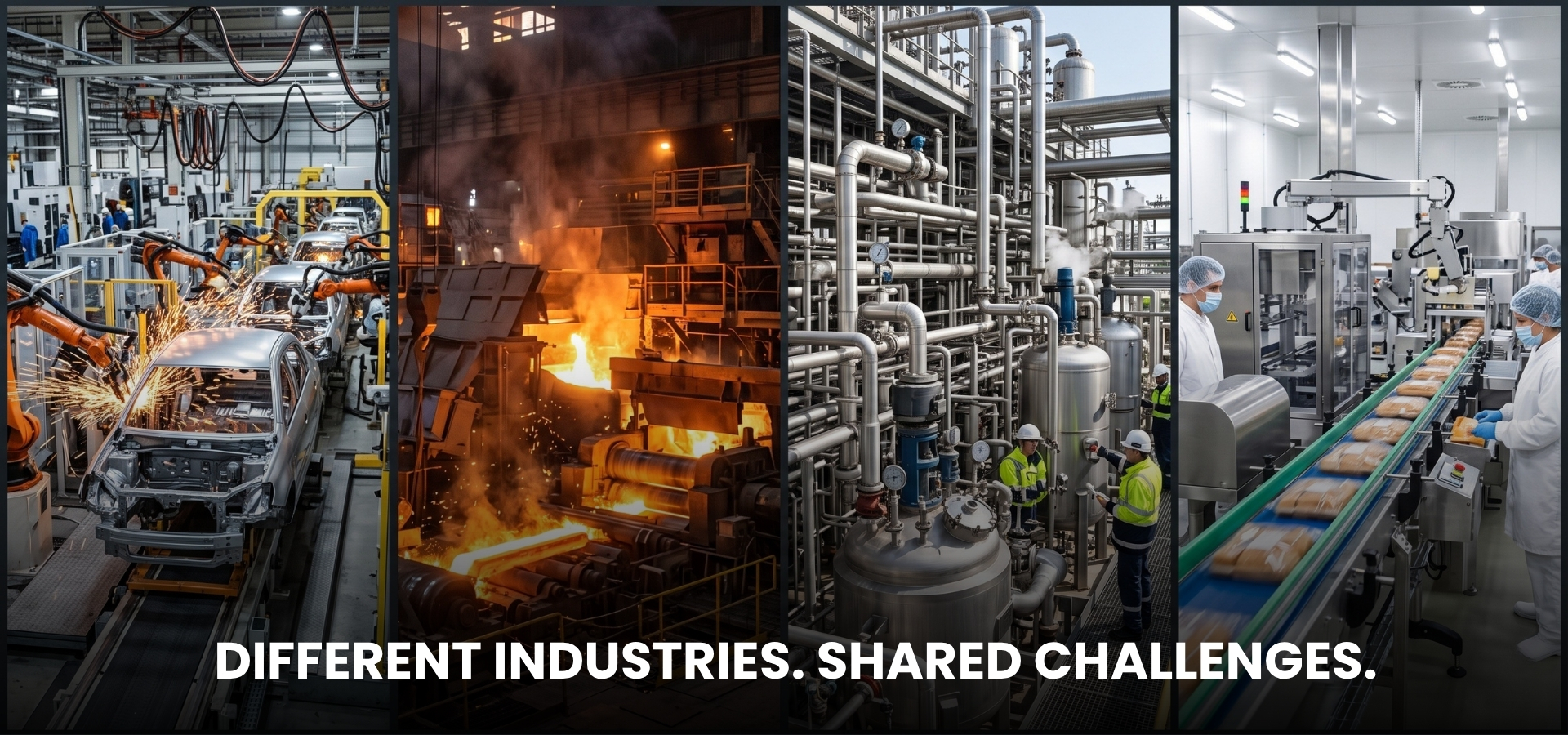
Artificial intelligence can support maintenance activities across different manufacturing sectors.
However, equipment characteristics, operating conditions, and maintenance requirements vary considerably.
The most appropriate AI application depends on the industry's specific challenges.
The examples below are illustrative rather than verified customer case studies.
AI in Automotive Manufacturing
Automotive manufacturing facilities operate interconnected production systems.
These may include robotic assembly equipment, conveyors, motors, welding systems, machining equipment, and automated material handling machinery.
A breakdown in one area can affect other stages of production.
For example, a conveyor drive failure may interrupt the movement of components between production stations.
AI applications may include:
Monitoring critical rotating equipment.
Investigating recurring conveyor failures.
Analyzing maintenance records from automated systems.
Supporting fault diagnosis.
Identifying repeated equipment problems.
Historical maintenance analysis can be particularly useful when similar machines operate across several production lines.
However, each fault must be evaluated in relation to the affected equipment and operating conditions.
AI in Steel and Metal Manufacturing
Steel and metal manufacturing involve machinery operating under demanding mechanical and thermal conditions.
Typical assets may include rolling equipment, motors, gearboxes, bearings, hydraulic systems, and cooling equipment.
Equipment failures can create significant production interruptions.
Potential AI applications include:
Vibration monitoring for selected rotating assets.
Investigation of recurring bearing failures.
Analysis of gearbox maintenance histories.
Review of hydraulic system problems.
Identification of repeated equipment incidents.
For example, repeated bearing failures in a rolling application may justify investigation of loading, lubrication, alignment, contamination, and installation practices.
AI can support the retrieval of historical evidence.
Engineers must verify the actual failure mechanism.
AI in Chemical Manufacturing
Chemical processing facilities depend on pumps, compressors, valves, heat exchangers, and interconnected process systems.
Equipment reliability is important for production of continuity and safe operations.
AI may support:
Condition monitoring of suitable rotating machinery.
Analysis of recurring pump problems.
Maintenance history retrieval.
Equipment of failure investigations.
Maintenance of knowledge management.
However, chemical processing environments can involve significant process safety considerations.
AI-generated recommendations must not replace established engineering procedures or protective systems.
Any application affecting safety-critical operations requires appropriate validation.
AI in Food and Beverage Manufacturing
Food and beverage manufacturing facilities use processing, packaging, refrigeration, and conveying equipment.
Unexpected equipment failures can interrupt production and complicate operational planning.
AI applications may include:
Monitoring refrigeration and compression equipment.
Investigating recurring packaging-line failures.
Analyzing conveyor maintenance history.
Reviewing repeated motor problems.
Supporting maintenance planning.
For example, repeated stoppages in a packaging machine may require examination of mechanical condition, operating speed, component wear, and previous repairs.
AI-assisted historical analysis can help retrieve relevant incidents.
Maintenance decisions must remain consistent with hygiene, food safety, and quality requirements.
AI in Pharmaceutical Manufacturing
Pharmaceutical facilities operate under strict quality and documentation requirements.
Equipment of reliability is important, but maintenance activities must also comply with applicable procedures.
AI may support historical maintenance analysis and technical investigations.
Potential applications include:
Retrieving previous equipment incidents.
Analyzing recurring mechanical faults.
Supporting maintenance documentation.
Reviewing historical corrective activities.
Improving access to technical knowledge.
However, systems used in regulated environments may require appropriate validation, data integrity controls, and quality oversight.
AI in Cement Manufacturing
Cement manufacturing uses heavy industrial machinery, including crushers, mills, conveyors, fans, motors, and material-handling equipment.
These assets may operate in dusty and mechanically demanding environments.
Potential AI applications include:
Monitoring critical rotating equipment.
Investigating recurring gearbox problems.
Analyzing bearing failure histories.
Reviewing conveyor breakdowns.
Supporting equipment condition analysis.
For example, recurring failures in a large industrial fan may require examination of vibration, alignment, operating conditions, and maintenance history.
AI in Textile Manufacturing
Textile manufacturing involves numerous motors, drives, rotating components, and production machines.
Equipment reliability influences production consistency and operational planning.
AI may support the investigation of recurring motor faults, mechanical failures, and maintenance patterns.
Facilities with large numbers of similar machines may benefit from comparing historical incidents.
However, comparisons must account for differences in machine condition, age, and operating requirements.
AI in General Engineering and Machinery Manufacturing
General engineering facilities often operate a mixture of modern and legacy equipment.
Some machines may have advanced monitoring systems, while others rely on manual inspections.
For these organizations, AI-assisted maintenance record analysis may be a practical starting point.
Instead of attempting to connect every asset immediately, manufacturers can begin by identifying recurring failures and improving access to historical maintenance knowledge.
Common Maintenance Challenges Across Industries
Despite differences in equipment and processes, many industries share similar challenges.
These include:
Unexpected breakdowns.
Recurring component failures.
Difficulty accessing maintenance records.
Pressure to control maintenance expenditure.
Dependence on experienced technicians.
The need for consistent equipment reliability.
These shared challenges explain why AI-based industrial maintenance technologies are relevant across a wide range of manufacturing sectors.
How AI Supports Maintenance Knowledge Management
Maintenance knowledge is one of the most valuable resources in an industrial organization.
Experienced technicians understand equipment behavior, common faults, and the practical challenges involved in troubleshooting.
However, much of this knowledge may remain scattered across work orders, reports, and individual experience.
AI can support efforts to make documented maintenance knowledge more accessible.
Why Maintenance Knowledge Is Often Difficult to Preserve
Maintenance teams frequently operate under time pressure.
When equipment fails, restoring production becomes an immediate priority.
Documentation may be completed after repairs, sometimes with limited detail.
Over time, this can create maintenance histories that are difficult to interpret.
For example, records may state:
Motor repaired.
Bearing replaced.
Pump serviced.
Fault cleared.
The machine restarted.
These entries confirm that work occurred, but they provide little information about the underlying problem.
Improving Maintenance Documentation
Useful maintenance records should capture more than the completed repair.
Important information includes:
Equipment identification.
Reported symptoms.
Operating conditions.
Inspection findings.
Confirmed failure mechanism.
Corrective action.
Replacement components.
Follow-up results.
Consistent documentation supports future investigations.
How AI Can Improve Information Retrieval
AI-assisted systems can help search historical maintenance information using natural language.
For example, an engineer may want to locate previous incidents involving excessive vibration in a particular motor.
A suitable system could retrieve relevant records even when the original descriptions use different terminology.
This can help engineers examine past experiences without manually searching every document.
Supporting New Maintenance Employees
New technicians may be unfamiliar with the history of specific machines.
Access to relevant previous maintenance records can help them understand recurring problems and earlier repairs.
AI-assisted retrieval may support this learning process.
However, technical training, supervision, and practical experience remain essential.
Supporting Multiple Manufacturing Facilities
Organizations operating several plants may have similar equipment across locations.
One facility may have investigated a problem that another facility later experiences.
Consistent maintenance documentation and appropriate information-sharing systems can help organizations make use of this experience.
AI can support retrieval and comparison of relevant records.
Avoiding the Loss of Technical Knowledge
When experienced employees leave an organization, undocumented knowledge may be lost.
Manufacturers should therefore establish processes for recording significant equipment failures and corrective actions.
AI can help make documented knowledge more accessible, but it cannot replace information that was never captured.
How AI Supports Maintenance Teams Without Replacing Engineers
Artificial intelligence is sometimes discussed as though it can independently diagnose and resolve industrial equipment problems.
In practice, maintenance activities involve responsibilities that require human expertise.
Industrial equipment must be inspected, tested, repaired, and returned to operation safely.
AI can support these activities, but it should not replace qualified maintenance professionals.
The Role of Maintenance Engineers
Maintenance engineers investigate equipment problems, evaluate technical evidence, and determine appropriate corrective actions.
They may need to consider mechanical design, electrical systems, process conditions, and operating requirements.
AI-generated information can assist in these investigations.
However, the final technical assessment must be based on verified evidence.
The Role of Maintenance Technicians
Technicians perform inspections, measurements, repairs, adjustments, and equipment servicing.
Their practical observations often provide important diagnostic information.
For example, a technician may identify unusual noise, leakage, or operating behavior that is not captured by available sensors.
AI systems should complement this experience.
The Role of Reliability Engineers
Reliability engineers focus on understanding failure mechanisms and improving long-term equipment performance.
They may use maintenance histories, condition data, and structured failure analysis.
AI can support these activities by making relevant information easier to retrieve and analyze.
The Role of Maintenance Managers
Maintenance managers must balance equipment reliability, maintenance of resources, and production requirements.
AI-assisted information may help identify recurring problems and support maintenance planning.
However, resource allocation and operational decisions require broader business and technical judgment.
Building Trust in AI-Generated Information
Maintenance teams are more likely to use AI when the system provides understandable and relevant information.
A diagnostic suggestion should ideally include supporting evidence.
For example, a system identifying a possible recurring fault should help engineers locate historical incidents by informing that suggestion.
This allows professionals to evaluate information independently.
Why Engineering Verification Is Essential
AI can generate incorrect conclusions.
An abnormal sensor reading may reflect normal operating changes.
A historical pattern may be coincidental.
A suggested failure may be plausible without being correct.
Manufacturers should establish clear procedures for reviewing and verifying important AI outputs.
Challenges of Implementing AI in Manufacturing
Artificial intelligence offers opportunities, but successful adoption requires careful planning.
Manufacturers should evaluate technical, operational, and organizational requirements before implementation.
1. Poor Data Quality
AI systems depend on relevant and reliable information.
Incomplete maintenance records, inconsistent equipment names, or inaccurate measurements can affect analytical results.
For example, historical failure analysis becomes more difficult when work orders do not identify the affected assets correctly.
Manufacturers should assess data quality before expecting reliable AI insights.
2. Inconsistent Maintenance Documentation
Different technicians may document similar problems using different terminology.
Some records may contain detailed technical information, while others provide brief descriptions.
AI can help interpret unstructured text, but missing technical evidence remains a limitation.
Improving documentation practices is therefore an important part of implementation.
3. Integration With Existing Systems
Manufacturing facilities may use maintenance management systems, enterprise software, and industrial monitoring platforms.
AI solutions may need access to information from these systems.
Integration requirements depend on the technology and the organization's infrastructure.
Manufacturers should evaluate compatibility before implementation.
4. Legacy Equipment
Older machinery may have limited digital connectivity.
Real-time predictive monitoring may require additional sensors or communication infrastructure.
However, some AI diagnostic applications can begin with historical maintenance records.
This distinction can help manufacturers select an appropriate starting point.
5. Cybersecurity
Industrial information may contain sensitive operational details.
Manufacturers should evaluate access controls, data handling, connectivity, and cybersecurity requirements.
AI adoption should not create unnecessary exposure to critical industrial systems.
6. Model Accuracy
AI models may produce false alerts or incorrect diagnostic suggestions.
Predictive models can miss certain developing failures.
Generative AI systems may produce statements that are not supported by the available evidence.
Manufacturers should establish appropriate validation and review processes.
7. Employee Training
Maintenance professionals need to understand how the selected AI system works.
Training should explain:
What information does the system analyze?
What does its output mean.
Which limitations apply.
How results should be verified.
When engineering judgment is required.
A technically capable system may provide limited value if employees do not understand how to use it.
8. Resistance to Operational Change
New technologies can change established maintenance workflows.
Employees may be concerned about complexity, reliability, or additional documentation requirements.
Involving maintenance professionals early can help organizations identify practical concerns.
A successful implementation should make existing work easier rather than create an unnecessary administrative burden.
9. Unrealistic Expectations
AI cannot guarantee zero downtime or perfect failure prediction.
Manufacturers should be cautious about claims that suggest every equipment failure can be anticipated or diagnosed automatically.
Realistic objectives and measurable results are more useful than broad promises.
10. Difficulty Measuring Business Value
Manufacturers need to determine whether AI improves actual maintenance outcomes.
This requires baseline information and clearly defined performance measures.
For example, a facility may track recurring failure frequency before and after implementing a diagnostic improvement process.
Without consistent measurement, it becomes difficult to establish whether the technology is providing value.
How to Implement AI in Manufacturing Maintenance: A Step-by-Step Guide
Manufacturers do not need to transform their entire maintenance operation at once.
A focused implementation can help organizations evaluate AI capabilities while controlling complexity.
Step 1: Identify a Specific Maintenance Challenge
Begin with a clearly defined operational problem.
Examples include:
Repeated failures of critical pumps.
Unexpected motor breakdowns.
Difficulty accessing maintenance history.
Frequent conveyor interruptions.
Limited visibility into equipment condition.
A specific problem provides a foundation for selecting suitable technology.
Step 2: Understand the Existing Maintenance Process
Review how the organization currently manages the problem.
Questions may include:
How are failures reported?
Where are maintenance records stored?
How are recurring faults being investigated?
Who verifies failure causes?
How are corrective actions documented?
How are outcomes evaluated?
Understanding the existing process helps identify opportunities for improvement.
Step 3: Evaluate Available Data
Determine which information is available.
For historical failure diagnosis, relevant data may include work orders, fault reports, and maintenance histories.
For predictive monitoring, suitable sensor measurements may be required.
The available information should match the intended application.
Step 4: Select a Suitable AI Application
Different maintenance problems require different technologies.
For example:
Recurring failures
AI-assisted historical maintenance analysis may be useful.
Developing mechanical problems
Condition of monitoring and predictive analysis may be appropriate.
Difficulty retrieving technical information
AI-assisted maintenance knowledge search may provide value.
Maintenance prioritization
Historical failure analysis and equipment criticality information may support decisions.
Step 5: Define Success Criteria
Before implementation, determine how success will be evaluated.
Possible measures include:
Reduced recurring failures.
Better access to maintenance information.
Improved diagnostic efficiency.
Fewer unexpected equipment interruptions.
More complete maintenance documentation.
Better corrective action follow-up.
Success criteria should be realistic and relevant to the selected application.
Step 6: Begin With a Pilot Project
A pilot project allows manufacturers to evaluate the technology on a manageable scale.
For example, an organization may select a group of critical pumps with extensive maintenance histories.
The pilot can examine whether AI-assisted analysis helps engineers retrieve relevant information and investigate recurring problems.
A predictive monitoring pilot may focus on a limited number of suitable assets.
Step 7: Involve Maintenance Professionals
Maintenance engineers and technicians should participate in implementation.
Their knowledge is essential for evaluating whether the system provides useful information.
They can also identify practical issues involving terminology, equipment records, and workflow requirements.
Step 8: Validate AI Outputs
The organization should evaluate whether the system produces relevant and reliable results.
For diagnostic applications, engineers should examine whether retrieved incidents and suggested explanations are technically meaningful.
For predictive systems, performance should be assessed against actual equipment conditions.
Step 9: Integrate the Technology into Maintenance Workflows
AI should support established maintenance processes.
For example, a diagnostic system may help engineers review historical incidents during troubleshooting.
A monitoring system may provide information for condition-based inspection planning.
The objective is to connect insights with practical action.
Step 10: Evaluate and Improve
After the pilot, review the results.
Determine whether the technology addresses the original problem.
Identify limitations, data gaps, and opportunities for improvement.
Only then should the organization consider wider deployment.
How to Choose the Best AI Industrial Maintenance Solution
Selecting an AI maintenance platform requires more than comparing feature lists.
Manufacturers should begin by understanding which problems they need to solve.
Different Industrial Maintenance Solutions focus on different stages of the maintenance process.
Some help organizations manage work orders.
Others monitor equipment condition, identify anomalies, or support failure investigations.
The most appropriate solution depends on operational requirements.
Identify the Primary Maintenance Objective
A manufacturer experiencing recurring pump failures may need better root cause investigation capabilities.
A facility operating critical rotating equipment may be interested in predictive condition monitoring.
An organization with extensive maintenance records may need better access to historical technical knowledge.
These are different problems.
Selecting technology without defining the objective can lead to unnecessary complexity.
Distinguish Current Capabilities from Planned Features
Software providers may describe both available functionality and future development plans.
Manufacturers should understand which features are currently available.
A planned predictive capability should not be treated as an operationally proven feature.
The same principle applies to diagnostic automation and corrective action workflows.
Understand Data Requirements
Different AI applications require different types of information.
For example, predictive maintenance may require suitable sensor measurements and operating history.
AI-assisted root cause diagnosis may depend on relevant maintenance records.
Manufacturers should determine whether their existing data is sufficient.
Evaluate Diagnostic Transparency
When a system suggests a possible failure of cause, engineers should be able to evaluate the supporting information.
Useful questions include:
Can the system identify relevant historical records?
Are important claims traceable to evidence?
Does it distinguish observations from conclusions?
Can engineers review the original information?
Does it communicate uncertainty appropriately?
Transparency is particularly important for industrial maintenance applications.
Review Integration Requirements
Manufacturers should determine whether the platform can work with existing maintenance information and systems.
Relevant considerations may include data formats, equipment identification, access permissions, and workflow compatibility.
Integration requirements should be understood before implementation.
Consider Usability
Maintenance professionals often work under operational pressure.
A system that requires complicated procedures may be difficult to adapt.
The interface should help engineers access relevant information without unnecessary effort.
Evaluate Security and Data Handling
Manufacturing information may be operationally sensitive.
Organizations should understand how data is stored, accessed, processed, and protected.
Security requirements should be evaluated alongside technical capabilities.
Assess Vendor Support
Successful implementation may require configuration, data preparation, training, and ongoing technical assistance.
Manufacturers should understand what support is available and what responsibilities remain with their internal teams.
Evaluate the Solution Through Practical Use
A focused evaluation is more informative than relying entirely on demonstrations.
Manufacturers should test the platform against representative maintenance problems.
For example, a diagnostic platform can be evaluated using historical equipment incidents with known outcomes.
This helps determine whether the system provides relevant information in a realistic setting.
Where BODHI Fits Among Industrial Maintenance Solutions
BODHI focuses on AI assisted equipment failure diagnosis and maintenance intelligence.
Its approach is particularly relevant for manufacturers seeking to make better use of historical maintenance information during equipment investigations.
For example, a maintenance team dealing with recurring motor failures may need to examine previous incidents, repair histories, and possible contributing factors.
BODHI's diagnostic focus is intended to support this type of investigation.
Its roadmap also includes predictive anomaly detection and closed-loop corrective action capabilities. These should be understood as planned developments rather than current live functionality.
Manufacturers evaluating BODHI should focus on how its available diagnostic capabilities align with their maintenance requirements and existing information.
More information is available at https://bodhi.approlabs.com/.
AI in Manufacturing in India: Opportunities for Industrial Maintenance
India has a diverse manufacturing sector that includes automotive production, engineering, pharmaceuticals, chemicals, metals, textiles, and food processing.
Facilities differ considerably in equipment age, automation levels, maintenance practices, and available data.
These differences influence how artificial intelligence can be adopted.
Opportunities for Large Manufacturing Facilities
Large industrial organizations may operate extensive equipment fleets across multiple production lines or facilities.
They may also maintain substantial maintenance of histories.
AI-assisted analysis can help these organizations retrieve relevant records and investigate recurring problems.
Facilities with suitable monitoring infrastructure may also evaluate predictive maintenance applications.
Opportunities for Small and Medium Manufacturers
Small and medium-sized manufacturers may face different challenges.
Some operate older machinery with limited digital connectivity.
Others maintain equipment information primarily in spreadsheets or conventional maintenance systems.
For these organizations, AI adoption does not necessarily need to begin with extensive sensor installation.
A practical first step may involve improving maintenance documentation and evaluating AI-assisted historical failure analysis.
Challenges in Indian Manufacturing Facilities
Potential challenges include:
Inconsistent maintenance documentation.
Limited equipment connectivity.
Dependence on experienced technicians.
Cost sensitivity.
Integration with older systems.
Limited internal AI expertise.
These challenges should influence technology selection.
Why a Focused Approach Matters
Manufacturers should identify equipment problems with clear operational consequences.
For example, recurring failures of a critical compressor may provide a more useful starting point than attempting to monitor every machine simultaneously.
A focused implementation allows the organization to evaluate practical value.
Building Long-Term Maintenance Capability
AI adoption should be accompanied by improvements in maintenance processes.
These may include more consistent failure reporting, better equipment identification, and systematic root cause investigations.
Technology becomes more useful when underlying maintenance information is reliable.
AI in Manufacturing in the UAE: Improving Industrial Equipment Reliability
The UAE has industrial activities across sectors such as metals, chemicals, food manufacturing, building materials, and other production industries.
Equipment reliability is important for organizations operating critical machinery and continuous processes.
Artificial intelligence may support maintenance improvement through better equipment analysis and access to technical information.
Supporting Reliability in Industrial Facilities
Manufacturing facilities may operate pumps, compressors, motors, conveyors, and other important assets.
Unexpected failures can disrupt production.
AI-assisted maintenance technologies may help organizations investigate recurring problems and evaluate certain developing equipment conditions.
Using Existing Maintenance Information
Facilities with extensive maintenance histories may already possess useful technical knowledge.
AI-assisted analysis can help make this information more accessible.
For example, engineers investigating repeated compressor problems may benefit from reviewing related historical incidents.
Evaluating Predictive Maintenance Opportunities
Predictive monitoring may be appropriate for selected critical equipment when relevant measurements are available.
Manufacturers should evaluate the failure mechanisms they want to detect and the practical value of monitoring.
Not every asset requires predictive analysis.
Importance of Industrial Cybersecurity
AI systems may interact with sensitive operational information.
Manufacturers should evaluate security, access control, and data handling requirements before implementation.
For safety-critical industrial environments, established engineering safeguards remain essential.
A Practical Adoption Strategy
Manufacturers in the UAE can begin by identifying recurring equipment problems and evaluating available maintenance data.
A focused pilot can help determine whether AI-assisted analysis provides useful support.
The objective should be measurable maintenance improvement rather than adopting technology for its own sake.
Future of AI in Manufacturing and Industrial Maintenance
Artificial intelligence is likely to become more closely integrated with industrial maintenance systems as manufacturers improve their use of operational information.
However, the future of maintenance intelligence will depend on reliable data, useful analytical capabilities, and effective engineering processes.
More Accessible Maintenance Knowledge
Manufacturing facilities generate extensive technical information.
Future AI systems may make it easier for engineers to retrieve relevant records using natural language questions.
For example, a technician may be able to search for previous incidents involving a specific machine without manually reviewing numerous work orders.
This can support troubleshooting and organizational learning.
Greater Integration Between Monitoring and Diagnosis
Predictive maintenance and root cause diagnosis address different maintenance challenges.
Predictive technologies help identify certain developing equipment problems.
Diagnostic technologies support investigations into possible failure causes.
Future systems may increasingly combine condition information with historical maintenance records.
For example, an abnormal vibration alert could lead engineers to examine previous failures involving similar symptoms.
The effectiveness of this approach will depend on data integration and technical validation.
More Explainable AI
Industrial maintenance professionals need to understand evidence supporting important recommendations.
Future systems may place greater emphasis on traceable information, uncertainty, and transparent diagnostic reasoning.
This can help engineers evaluate AI outputs more effectively.
Better Maintenance Knowledge Sharing
Organizations operating multiple facilities may benefit from improved access to documented maintenance experience.
A problem investigated at one plant may provide useful context for engineers at another.
AI-assisted retrieval may support knowledge sharing when information is documented consistently.
More Condition-Informed Maintenance Planning
As suitable monitoring technologies become available, manufacturers may increasingly evaluate equipment condition when planning maintenance.
However, preventive maintenance will remain important.
Not every failure can be predicted, and some maintenance activities are required regardless of measured condition.
Greater Focus on Corrective-Action Effectiveness
Identifying a problem does not guarantee that it will be resolved.
Manufacturers must implement appropriate corrective actions and evaluate their results.
Future maintenance intelligence systems may place greater emphasis on connecting diagnostic findings with documented corrective outcomes.
Continued Importance of Engineering Expertise
AI can support analysis, but industrial maintenance requires practical technical knowledge.
Maintenance engineers and technicians will remain essential for inspecting equipment, verifying faults, performing repairs, and ensuring safe operation.
The future of industrial maintenance is therefore likely to involve closer cooperation between intelligent software and experienced professionals.
Frequently Asked Questions About AI in Manufacturing
1. What is AI in manufacturing?
AI in manufacturing refers to the application of artificial intelligence technologies to industrial operations.
These technologies can analyze information, identify patterns, and support decisions involving production, maintenance, quality, and equipment performance.
In industrial maintenance, AI is commonly associated with equipment condition monitoring, predictive maintenance, historical failure analysis, and technical information retrieval.
The appropriate application depends on the manufacturer's operational challenges and available data.
2. How is artificial intelligence used in industrial maintenance?
Artificial intelligence can support industrial maintenance in several ways.
It may help identify unusual equipment operating patterns, retrieve related maintenance records, analyze historical incidents, and support failure investigations.
For example, an engineer investigating recurring motor problems may use AI-assisted analysis to examine previous maintenance reports.
However, AI-generated information must be evaluated against actual equipment conditions.
3. What is AI-Powered Predictive Maintenance?
AI-Powered Predictive Maintenance uses artificial intelligence to analyze relevant equipment data and identify patterns that may indicate developing problems.
The objective is to support maintenance decisions before certain failures occur.
For example, an AI model may identify an unusual vibration trend in a rotating machine.
Maintenance engineers can then investigate whether the change indicates a condition requiring attention.
Predictive maintenance cannot forecast every breakdown, and its effectiveness depends on data quality and suitable monitoring methods.
4. What is AI Root Cause Diagnosis?
AI Root Cause Diagnosis uses artificial intelligence to support investigations into the possible underlying causes of equipment failures.
It can help engineers retrieve relevant historical incidents, identify recurring patterns, and examine possible contributing factors.
For example, repeated pump seal failures may justify an investigation into operating conditions, alignment, installation practices, and previous maintenance activities.
AI can support the analysis, but the actual cause must be verified through appropriate engineering evidence.
5. What is Equipment Failure Diagnosis?
Equipment Failure Diagnosis is the process of determining why industrial equipment is not functioning as intended.
The process typically involves identifying symptoms, collecting relevant information, examining possible causes, performing inspections, and verifying the failure mechanism.
AI-assisted systems can help retrieve historical maintenance information and support technical investigations.
However, they do not replace physical inspection or engineering judgment.
6. What is the difference between predictive maintenance and root cause diagnosis?
Predictive maintenance focuses on identifying certain developing equipment problems before failure occurs.
Root cause diagnosis focuses on understanding why a failure happened.
For example, predictive monitoring may identify abnormal vibration in a motor.
Root cause investigation may then determine whether the condition results from misalignment, imbalance, bearing deterioration, or another factor.
Both approaches can support reliability improvement, but they address different questions.
7. Can AI reduce unplanned downtime in manufacturing?
AI can support downtime reduction through predictive condition monitoring, faster access to historical maintenance information, and improved failure investigations.
For example, suitable monitoring may identify a developing equipment problem before functional failure.
Historical maintenance analysis may also help engineers investigate recurring faults.
Actual downtime improvements depend on the equipment, available information, technical accuracy, and effectiveness of maintenance actions.
8. How does AI improve Manufacturing Reliability?
AI can support Manufacturing Reliability by helping organizations understand equipment behavior and recurring failures.
Historical analysis can reveal related incidents, while condition monitoring can identify certain abnormal operating patterns.
These insights may support more informed maintenance decisions.
However, reliability improvement ultimately depends on verified failure causes, appropriate corrective actions, and consistent maintenance practices.
9. Does AI replace maintenance engineers?
No.
AI can help engineers analyze information and retrieve relevant maintenance records, but it cannot replace the full range of technical responsibilities involved in industrial maintenance.
Qualified professionals remain responsible for equipment inspections, testing, failure verification, corrective work, and safety-related decisions.
AI is most useful when it supports engineering expertise.
10. Do manufacturers need IoT sensors to use AI?
Not necessarily.
Some AI applications require suitable sensor measurements, particularly real-time predictive maintenance.
Other applications can use historical maintenance records, work orders, and technical documentation.
For example, an AI-assisted failure diagnosis may begin with existing maintenance information.
The required infrastructure depends on the specific problem being addressed.
11. Can AI work with older industrial machinery?
Certain AI applications may be suitable for facilities operating legacy equipment.
For real-time condition monitoring, older machines may require additional sensors or connectivity.
However, historical maintenance analysis may be possible using existing work orders and technical records.
Manufacturers should evaluate available information and equipment requirements before selecting a solution.
12. How can small manufacturers benefit from AI?
Small manufacturers may benefit from improved maintenance of information retrieval, more systematic failure investigations, and better maintenance planning.
The appropriate starting point depends on their equipment, operational challenges, and available resources.
A focused project addressing a recurring equipment problem may be more practical than a large-scale technology implementation.
13. What data is required for AI-based maintenance?
Data requirements depend on the application.
Predictive monitoring may require vibration, temperature, electrical, pressure, or other suitable measurements.
Historical failure analysis may require maintenance of work orders, fault reports, inspection findings, and repair histories.
Data quality is important because incomplete or inaccurate information can affect analytical results.
14. Can AI identify the exact cause of every equipment failure?
No.
AI may identify relevant patterns or suggest possible explanations, but not every failure can be diagnosed automatically.
Industrial equipment problems can involve multiple contributing factors.
A plausible suggestion is not necessarily a confirmed cause.
Engineers must verify important findings using suitable inspections, measurements, and technical analysis.
15. What is the role of machine learning in predictive maintenance?
Machine learning models can analyze equipment measurements and identify patterns.
Depending on the application, models may detect anomalies, classify certain known faults, or support estimates of developing equipment conditions.
The effectiveness of these models depends on relevant training information, operating context, and validation.
Machine learning should support maintenance decisions rather than replace engineering evaluation.
16. What are the main benefits of AI-based Industrial Maintenance Solutions?
Potential benefits include better access to maintenance knowledge, improved failure investigations, more informed maintenance planning, and opportunities to reduce certain recurring equipment problems.
The actual value depends on the manufacturer's challenges and how effectively the technology is implemented.
Organizations should measure operational outcomes rather than relying only on software features.
17. What are the biggest challenges of implementing AI in manufacturing?
Common challenges include incomplete maintenance records, inaccurate sensor data, integration requirements, cybersecurity, employee training, and unrealistic expectations.
AI systems may also produce incorrect or uncertain outputs.
Successful implementation requires appropriate validation, technical oversight, and clearly defined objectives.
18. How should manufacturers choose an AI maintenance platform?
Manufacturers should begin by identifying their main maintenance problems.
They should then evaluate the platform's current capabilities, data requirements, integration needs, diagnostic transparency, security, and support.
A focused pilot using representative maintenance problems can help determine whether the system provides practical value.
19. How can AI help reduce repeated equipment failures?
AI can support investigations into recurring failures by helping engineers retrieve previous incidents and identify relevant historical patterns.
For example, repeated bearing failures may justify examination of lubrication, alignment, contamination, and operating conditions.
Once the actual cause is verified, maintenance professionals can implement appropriate corrective actions.
AI supports the investigation; it does not guarantee that recurring failures will be eliminated.
20. What does BODHI do?
BODHI is an AI-powered industrial maintenance platform focused on equipment failure diagnosis and maintenance intelligence.
Its diagnostic approach is intended to help maintenance professionals make better use of historical maintenance information during equipment investigations.
The platform's planned development includes predictive anomaly detection and closed-loop corrective-action capabilities.
Manufacturers can learn more at https://bodhi.approlabs.com/.
21. Is predictive maintenance suitable for every industrial machine?
No.
Predictive maintenance is most useful when equipment has relevant, detectable failure characteristics and when monitoring provides sufficient operational value.
For some noncritical assets, reactive maintenance may be appropriate.
Other equipment may be better managed through preventive or condition-based maintenance.
Manufacturers should select strategies based on equipment criticality, failure mechanisms, and operational requirements.
22. What is the future of AI in industrial maintenance?
The future of AI in industrial maintenance is likely to involve greater integration of equipment monitoring, historical maintenance records, intelligent diagnostics, and maintenance of decision support.
Manufacturers may increasingly use AI to retrieve technical knowledge and investigate equipment problems.
However, engineering expertise, reliable data, and appropriate verification will remain essential.
Conclusion: How AI Is Building Smarter and More Reliable Manufacturing Operations
Manufacturing businesses have always depended on reliable equipment, experienced maintenance professionals, and effective operational planning.
These fundamentals remain essential as industrial technology evolves.
What artificial intelligence changes is the ability to analyze equipment information and make better use of historical maintenance knowledge.
For many manufacturers, the greatest challenge is not simply repairing a failed machine.
It is understanding why the failure occurred, determining whether similar problems have happened before, and identifying the actions required to prevent recurrence.
This is where AI can provide meaningful support.
AI-Powered Predictive Maintenance can help identify certain developing equipment conditions when suitable monitoring data is available.
AI Root Cause Diagnosis can support investigations into recurring failures by making relevant historical information easier to examine.
AI-assisted Equipment Failure Diagnosis can help maintenance professionals retrieve related incidents, review previous repairs, and investigate possible contributing factors.
Together, these technologies can contribute to a more informed approach to industrial maintenance.
However, successful AI adoption requires more than selecting a software platform.
Manufacturers need to begin with genuine operational challenges.
They must understand their equipment, evaluate available information, involve maintenance professionals, and establish realistic objectives.
A facility experiencing recurring pump failures may benefit from better historical maintenance analysis.
A manufacturer operating critical rotating equipment may evaluate predictive condition monitoring.
An organization managing multiple plants may prioritize maintenance of knowledge sharing.
The appropriate starting point depends on the problem being solved.
For manufacturing business owners, AI offers an opportunity to improve operational decision-making and strengthen long-term performance.
For plant managers, it can support better equipment visibility and more consistent production planning.
For maintenance engineers, it can make relevant technical information easier to access during investigations.
The most valuable Industrial Maintenance Solutions are not necessarily those with the greatest number of features.
They are the solutions that address practical maintenance challenges and help professionals make better decisions.
BODHI is part of this evolving industrial maintenance landscape through its focus on AI-assisted equipment failure diagnosis and maintenance intelligence.
Manufacturers interested in exploring this approach can visit https://bodhi.approlabs.com/.
Ultimately, the future of AI in Manufacturing is not only about predicting when machines might fail.
It is about understanding why equipment fails, learning from maintenance history, and using that knowledge to build more reliable manufacturing operations.
AUTHOR

I help businesses enhance their online presence through strategic digital marketing and content development. By combining creativity, insights, and a results-oriented approach, I contribute to building brand visibility, engagement, and long-term growth.