How IoT Asset Tracking Helps Hospitals, Warehouses and Airports Manage Critical Assets
Discover how IoT asset tracking helps hospitals, warehouses, and airports monitor critical assets, improve visibility, and streamline daily operations.


How Can Businesses Track and Manage Assets?
Imagine a hospital where a nurse needs an infusion pump for a patient but cannot immediately locate an available one. Somewhere in the building, several pumps may be sitting unused in storage rooms or other department stores. Meanwhile, staff members spend valuable time calling colleagues and searching for different floors.
Now consider a warehouse where a forklift is needed to move an urgent shipment. The equipment is available, but nobody knows its current location. Employees begin searching for different sections of the facility, delaying an operation that should have taken only a few minutes.
At an airport, a ground handling team may face a similar challenge when baggage carts, aircraft service equipment, or maintenance tools are not where they are expected to be.
Although these situations occur in different industries, they share a common operational problem: organizations cannot always locate and manage their critical assets efficiently.
Hospitals, warehouses, and airports depend on physical equipment to keep essential services running. Their operations involve numerous movable assets, multiple departments, changing schedules, and employees who need reliable information to make quick decisions.
Traditional asset management methods, including spreadsheets, manual registers, barcode scanning, and physical inspections, can support basic tracking requirements. However, they often depend on employees remembering to update records whenever equipment changes location or status.
As operations expand, these limitations become more noticeable.
This is where IoT Asset Tracking Solutions offers a more connected approach.
The Internet of Things, commonly known as IoT, enables physical objects to communicate information through connected technologies. When applied to asset tracking, IoT can help organizations monitor equipment locations, movement, availability, usage, and certain operating conditions.
Instead of depending entirely on manual searches, teams can access asset information through centralized software platforms.
For hospitals, this can improve access to essential medical equipment. For warehouses, it can support better coordination of inventory movement and material handling equipment. For airports, it can help ground operations teams manage shared resources more effectively.
However, successful asset tracking involves more than attaching a sensor to equipment.
Organizations must understand which technologies work in their environments, what information they need, how tracking systems integrate with existing operations, and how employees will use the collected data.
This guide explores how IoT asset tracking works, the technologies involved, and its practical applications across hospitals, warehouses, and airports. It also explains how businesses can evaluate asset tracking solutions, address implementation challenges, and build more efficient asset management processes.
What Is IoT Asset Tracking?

IoT asset tracking is the process of using connected devices, identification technologies, sensors, and software to monitor physical assets and support their management.
An asset can be any physical resource that an organization needs to operate.
In hospitals, assets may include wheelchairs, infusion pumps, portable monitors, medical beds, and diagnostic equipment. In warehouses, they may include forklifts, pallets, containers, tools, and material handling equipment. At airports, assets can include baggage carts, ground support vehicles, maintenance tools, and aircraft servicing equipment.
These assets may move frequently between departments, locations, and employees.
Without reliable tracking, organizations may struggle to understand where equipment is located, whether it is available, and how effectively it is being used.
IoT asset tracking helps address this challenge by connecting physical assets to digital systems.
Understanding Connected Asset Tracking
A typical IoT asset tracking system includes identification or sensing devices attached to assets, communication infrastructure, software platforms, and interfaces that allow employees to access information.
For example, a hospital may attach a Bluetooth Low Energy tag to a wheelchair. Compatible receivers installed throughout the building can detect the tag and report its approximate location to a central platform.
A warehouse may use RFID tags to identify pallets as they pass through receiving docks or storage checkpoints.
An airport may install GPS-enabled tracking devices on service vehicles operating across outdoor areas.
In each situation, the tracking system collects information that helps employees understand where assets are located or where they were last detected.
Depending on the technology, an organization may also collect information about movement, temperature, operating conditions, or usage.
What Information Can IoT Track?
Connected asset tracking systems can support several types of information.
Asset location: The current or last recorded position of equipment.
Asset movement: Information about movement between monitored areas.
Asset availability: Whether equipment is ready for use, assigned, or undergoing maintenance.
Asset condition: Measurements such as temperature or vibration when suitable sensors are installed.
Asset history: Records of movement, assignments, inspections, and maintenance activities.
The availability and accuracy of this information depend on the technologies selected and how the system is configured.
For instance, a passive RFID tag does not continuously broadcast its location. It is generally detected when it enters the range of a compatible reader.
A GPS-enabled device may provide periodic location updates, but its performance can be limited to indoors.
Understanding these differences helps organizations select technologies that match their actual requirements.
Why Is IoT Different from Traditional Tracking?
Traditional asset tracking methods often depend on manual action.
Employees may scan barcodes, update spreadsheets, enter equipment assignments, or physically check storage areas.
These methods can be useful, particularly when assets rarely move or when detailed real-time information is unnecessary.
However, it becomes more difficult to maintain when equipment moves frequently across large facilities.
IoT technologies can automate identification and monitoring activities.
For example, instead of requiring an employee to scan a tag each time equipment passes through a monitored doorway, a suitably configured RFID system may record the movement automatically.
Similarly, a BLE-based system can detect tagged equipment within areas covered by compatible receivers.
The objective is not necessarily to eliminate manual asset management tasks. It is to reduce unnecessary effort and improve the reliability of information used in daily operations.
Is IoT Asset Tracking the Same as GPS Tracking?
GPS tracking is one method of locating physical assets, but IoT asset tracking includes a wider range of technologies.
GPS is commonly suitable for outdoor applications, such as tracking service vehicles, delivery fleets, and mobile equipment.
Indoor facilities present different challenges.
Hospitals contain multiple floors, enclosed rooms, and corridors. Warehouses may have tall storage racks, metal structures, and dense equipment arrangements. Airport terminals and maintenance facilities may also require indoor location visibility.
These environments may use Bluetooth Low Energy, RFID, Wi-Fi, Ultra-Wideband, or combinations of different technologies.
Some systems provide location estimates, while others record movement through specific checkpoints.
The most appropriate approach depends on the organization's required accuracy, tracking frequency, infrastructure, and budget.
How Does IoT Asset Tracking Work?
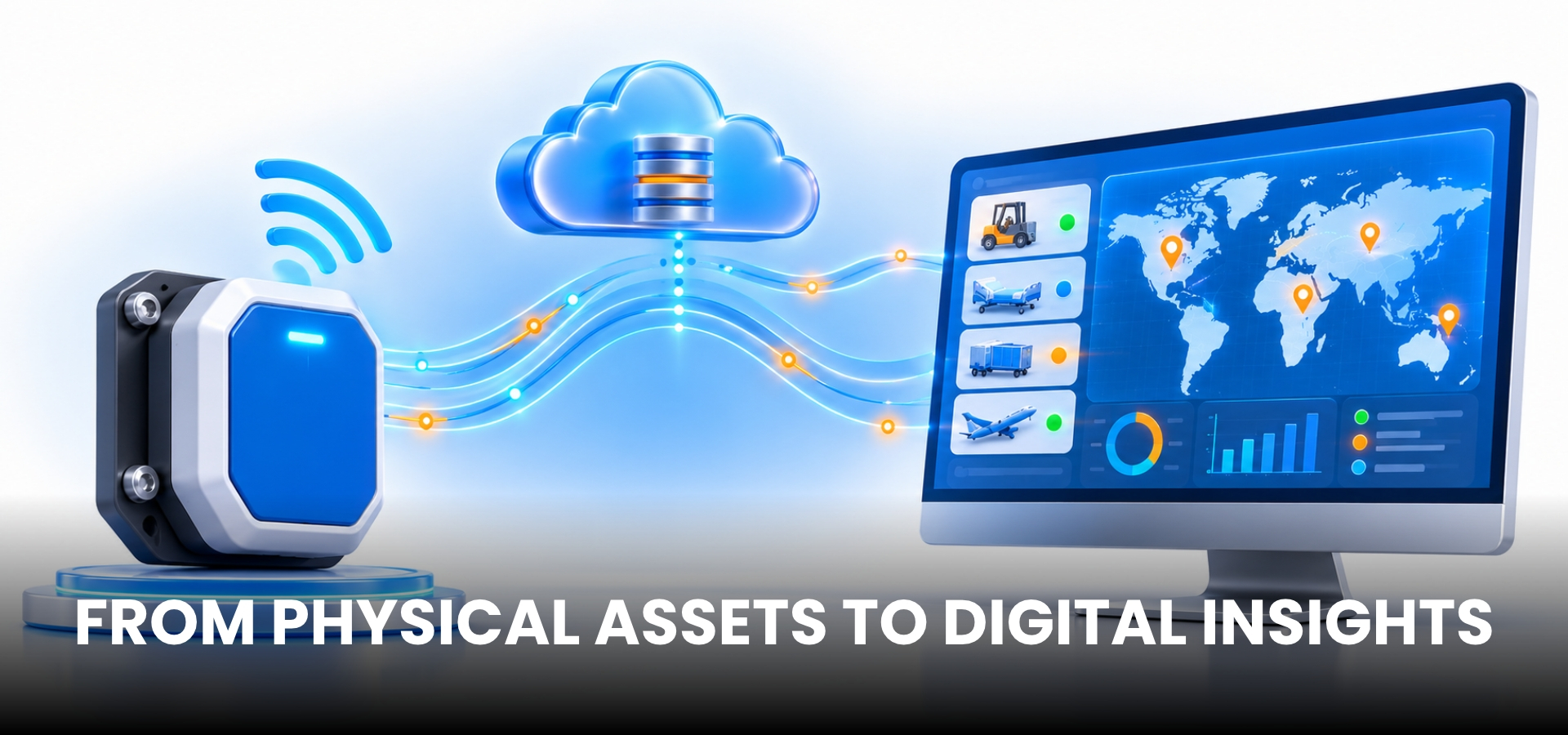
IoT asset tracking works by connecting physical assets to a digital monitoring system.
The process usually begins with identifying which equipment needs to be tracked and selecting a suitable tracking technology.
A tag, sensor, or tracking device is then associated with the asset.
When the asset moves or its operating condition changes, the tracking infrastructure collects relevant information.
That information is transmitted to a software platform, where it can be processed, stored, and presented to authorized employees.
Although the underlying technology can be sophisticated, the overall process is straightforward.
Step 1: Identify the Assets
Before installing tracking equipment, organizations need to determine which assets are important enough to monitor.
Not every item requires the same level of tracking.
A hospital may prioritize mobile medical equipment that frequently moves between departments.
A warehouse may focus on forklifts, reusable containers, and high-value inventory.
An airport may prioritize ground support equipment shared between operational teams.
Organizations should consider how often assets move, how difficult they are to locate, their operational importance, and the consequences of unavailability.
This helps ensure that the tracking system addresses genuine operational problems.
Step 2: Attach Tracking Devices
Once assets are identified, suitable tags or devices are assigned.
Some tracking devices are small enough to attach to portable equipment. Others are designed for vehicles, containers, or industrial machinery.
The selected device may contain a unique identifier, wireless communication capabilities, a battery, or additional sensors.
Passive RFID tags generally do not require an onboard battery for identification. Active tracking devices often require power and may need battery replacement or recharging.
Device selection should consider operating conditions.
A tag attached to hospital equipment may need to withstand cleaning procedures. A device installed on warehouse machinery may need protection from vibration, dust, and impacts. Airport equipment may operate outdoors in changing weather conditions.
Step 3: Collect Location Data
Tracking infrastructure detects or receives information from the devices.
For example, RFID readers can identify tagged assets within their operating range.
BLE receivers can detect signals transmitted by compatible tags.
GPS-enabled devices can determine outdoor positions and transmit them through an available communication network.
The system may also collect information about temperature, movement, or equipment status when the necessary sensors are available.
Importantly, location accuracy varies.
Some technologies can identify an asset's approximate zone, while others can support more precise positioning.
Organizations should choose accuracy based on operational needs rather than assuming every asset requires continuous, highly precise tracking.
Step 4: Send Data to Software
The collected information is transmitted to an asset management platform.
Depending on the architecture, data may pass through gateways, local networks, cellular connections, or cloud services.
The software processes incoming information and associates it with the correct asset.
For example, a tracking system may receive a signal indicating that a tagged wheelchair was detected near a particular hospital department.
The platform can update the asset's last known location and make that information available to authorized staff.
Step 5: Display Asset Information
Employees access tracking information through dashboards, web applications, or mobile interfaces.
A useful dashboard may show equipment categories, locations, availability, recent movements, and maintenance status.
Employees should be able to find relevant information without navigating unnecessarily complicated screens.
A hospital employee may search for available equipment by type and department.
A warehouse supervisor may view equipment assigned to different operating zones.
An airport operations team may monitor the last reported locations of ground support vehicles.
The software interface plays an important role because collecting data provides limited value unless employees can use it effectively.
Step 6: Generate Alerts
Some systems can notify employees when predefined conditions occur.
For example, a warehouse may receive an alert when a tracked container leaves a designated area.
A hospital may configure notifications when certain equipment remains outside an approved location.
An airport may receive an alert when a monitored vehicle enters a restricted operational zone.
Alerts should be designed carefully to avoid overwhelming employees with unnecessary notifications.
The objective is to draw attention to situations that require action.
Step 7: Analyze Asset Usage
Over time, collected information can help organizations understand asset movement and utilization patterns.
A hospital may identify equipment that is frequently unavailable during particular shifts.
A warehouse may discover that some forklifts are heavily used while others remain underutilized.
An airport may observe repeated equipment shortages in specific operational areas.
These insights can support better resource allocation, equipment purchasing decisions, and maintenance planning.
Why Is Asset Tracking Important?

Asset tracking is important because physical equipment directly influences how efficiently an organization operates.
When employees cannot locate necessary equipment, even simple tasks can become complicated.
A missing asset may cause delays, unnecessary purchases, additional work, or interruptions to essential services.
The consequences depend on the industry and the importance of the equipment.
The Problem with Poor Asset Visibility
Many organizations know how much equipment they own but have limited information about where it is currently located.
An inventory register may confirm that a hospital owns a particular number of wheelchairs. However, that record does not necessarily show how many are available on a specific floor.
A warehouse may have an accurate list of forklifts but still struggle to locate the nearest available vehicle.
An airport may maintain equipment records without knowing which ground support assets are currently assigned to different operational areas.
This difference between inventory records and operational visibility creates challenges.
Asset tracking helps bridge that gap.
Time Lost Searching for Equipment
Employees often compensate for missing information by searching manually.
They may walk between departments, call colleagues, inspect storage areas, or check equipment logs.
Although each search may seem minor, repeated searches can consume considerable staff time.
In hospitals, this can distract employees from patient-facing responsibilities.
In warehouses, it can delay material movement and order processing.
At airports, it can complicate coordination between teams working within time-sensitive operating schedules.
Tracking systems can reduce the need for these searches by providing more accessible asset information.
Unnecessary Equipment Purchases
Poor visibility can also influence purchasing decisions.
When equipment is difficult to locate, organizations may assume that additional units are required.
However, the problem may be uneven distribution rather than insufficient inventory.
For example, one hospital department may have unused equipment while another experiences a shortage.
A warehouse may purchase additional handling equipment even though existing assets are not being utilized efficiently.
Better asset visibility helps managers evaluate whether equipment is genuinely insufficient or simply poorly allocated.
This can support more informed investment decisions.
Maintenance and Equipment Availability
Assets require maintenance to remain safe and operational.
When maintenance records are disconnected from asset information, employees may struggle to identify which equipment requires inspection or servicing.
A connected asset management platform can help associate equipment records with maintenance schedules and service history.
Some IoT devices can also collect operating-conditioned data.
This information may support condition-based maintenance, although it does not automatically provide predictive maintenance capabilities.
When integrated properly, tracking and maintenance systems can help organizations understand which assets are available, which require attention, and which should be removed from service.
Better Accountability
Asset tracking can also support accountability.
Organizations may need to know when equipment was assigned, where it was last detected, and which department is responsible for it.
These records can help employees investigate missing assets and improve equipment handover procedures.
However, tracking systems should be designed around legitimate operational requirements, with appropriate access controls and privacy protections.
The goal is responsible for asset management rather than unnecessary monitoring of individual employees.
What Assets Can IoT Track?
IoT tracking can support many types of physical assets, but the most suitable technology depends on the asset size, movement, environment, and operational importance.
Organizations should begin by identifying assets that are frequently misplaced, shared between teams, expensive to replace, or essential to daily operations.
Medical Equipment
Hospitals use many types of movable equipment.
Examples include infusion pumps, wheelchairs, patient monitors, portable diagnostic devices, and certain types of medical beds.
Tracking can help staff identify the location or last detected position of these assets.
For equipment that moves between departments, improved visibility can make coordination easier.
Warehouse Equipment
Warehouses rely on forklifts, pallet jacks, reusable containers, tools, and other material handling resources.
These assets may move continuously throughout a facility.
Tracking can help supervisors understand where equipment is located and how it moves between operational zones.
Certain systems can also support usage monitoring when integrated with compatible equipment data.
Inventory and Containers
Organizations may track pallets, reusable transport containers, and high-value inventory.
RFID and other identification technologies can support movement of records at receiving docks, storage locations, and dispatch areas.
However, tracking an entire pallet does not necessarily mean that every individual item on it is continuously tracked.
The tracking design should match the required level of inventory visibility.
Vehicles and Mobile Machinery
GPS and cellular-connected devices are often used for outdoor vehicles and equipment.
Examples include airport service vehicles, logistics vehicles, and machinery operating across large outdoor facilities.
These systems can support location monitoring, movement of histories, and geofencing.
Some installations also integrate vehicle operating data.
Tools and Specialized Equipment
Maintenance teams often share specialized tools.
When equipment is expensive, difficult to replace, or required for time-sensitive tasks, tracking may help reduce losses and improve availability.
An airport maintenance team, for example, may need reliable records of tool issuance and return.
A warehouse maintenance team may need to locate specialized inspection equipment.
Different categories of assets may require different tracking approaches within the same organization.
How Do Hospitals Track Medical Equipment?
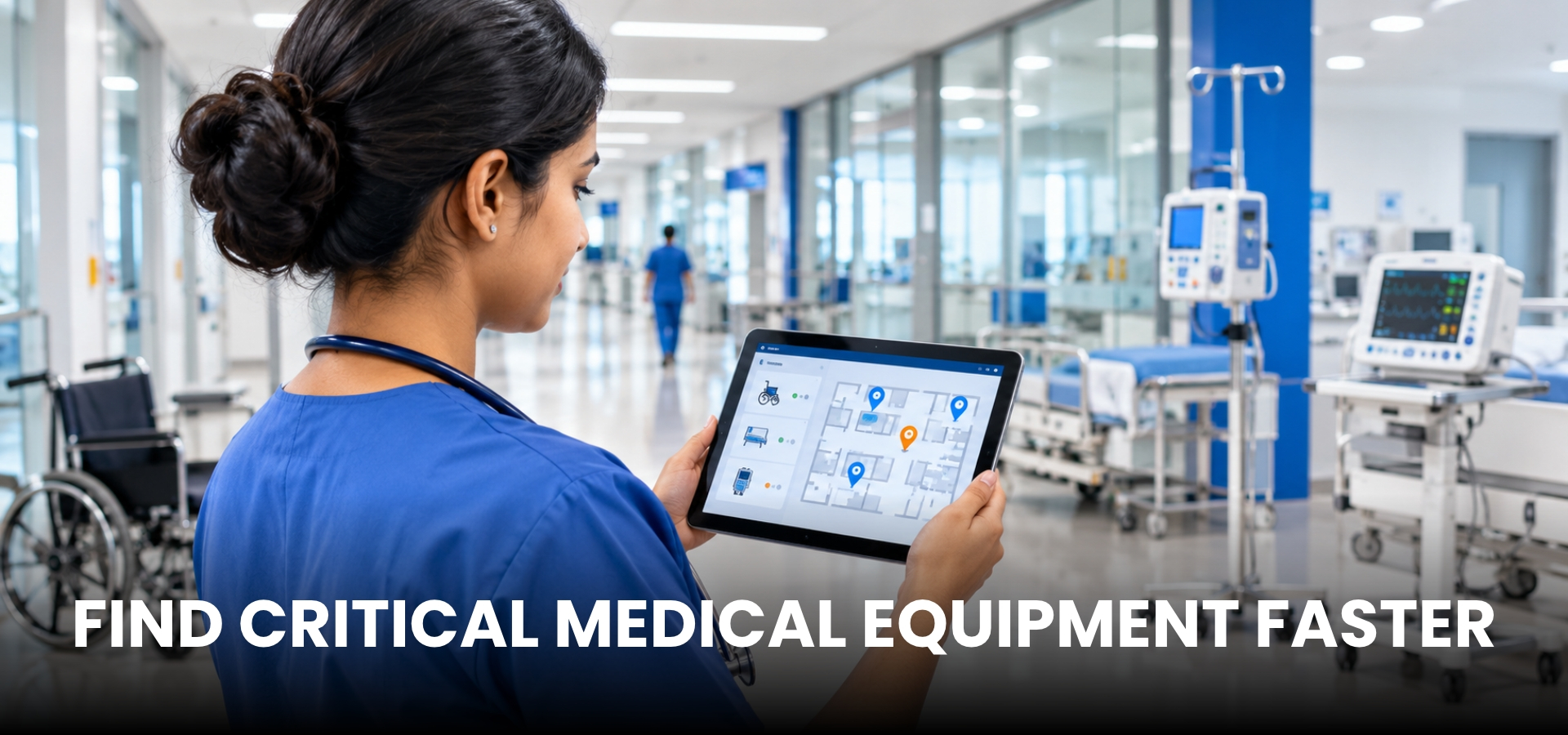
Hospitals are complex environments where equipment moves frequently between departments, treatment areas, storage rooms, and maintenance facilities.
Medical staff depend on equipment available when needed.
However, locating mobile equipment can be challenging, particularly in large hospitals with multiple floors and departments.
Hospital equipment tracking helps improve visibility into the location and availability of essential assets.
Why Medical Equipment Gets Misplaced
Medical equipment is often shared.
A wheelchair may be moved from an outpatient department to an inpatient ward.
An infusion pump may be transferred between treatment areas.
A portable monitor may be temporarily stored in a room that is not in its usual location.
These movements are part of normal hospital operations.
Problems arise when location records are not updated consistently.
Staff members may know that the hospital owns enough equipment but still struggle to find an available unit.
Manual searching can become especially difficult during busy periods.
How IoT Helps Hospitals Locate Equipment
A hospital can attach compatible tracking tags to selected equipment.
Receivers or readers installed throughout the facility to detect tagged assets.
The collected information is sent to a central software platform.
Authorized employees can search for equipment by category, location, or status.
For example, a nurse looking for a wheelchair may check the system to identify the last reported location of nearby units.
The system may also show whether equipment is assigned to a department or marked unavailable.
Actual availability may require integration with hospital workflows or manual status updates. Location of information alone cannot always determine whether equipment is ready for use.
Tracking Infusion Pumps
Infusion pumps are examples of equipment that may move between clinical areas.
A hospital may have multiple pumps distributed across different departments.
Without a reliable tracking system, staff may spend time searching for available devices.
IoT tracking can help identify their locations and movement patterns.
When combined with equipment management records, the system may also help distinguish between available pumps and those undergoing inspection or maintenance.
This can support better equipment coordination.
Tracking Wheelchairs and Patient Transport Equipment
Wheelchairs and patient transport equipment frequently move throughout hospitals.
They may be used in emergency departments, outpatient facilities, inpatient wards, and diagnostic areas.
Tracking systems can help staff identify where equipment was last detected.
Hospitals may also analyze movement patterns to understand where equipment is most frequently needed.
These insights can support better distribution across departments.
Tracking Portable Medical Devices
Portable medical devices are often shared between clinical teams.
Examples may include portable monitors and diagnostic equipment.
Tracking can help reduce uncertainty about their location.
However, hospitals must consider equipment compatibility, cleaning requirements, wireless interference, and clinical safety when selecting tracking devices.
Any tracking installation should comply with applicable hospital policies and medical equipment requirements.
Supporting Equipment Maintenance
Hospitals need reliable processes for maintaining medical equipment.
Asset tracking software can be integrated with equipment maintenance records.
This may help staff identify devices awaiting inspection, servicing, or calibration.
For example, equipment that has been marked for maintenance can be shown as unavailable in the asset management system.
This reduces the risk of employees assuming that equipment is ready for use simply because it is physically present.
The tracking system should support established clinical engineering and safety procedures rather than replace them.
Improving Equipment Distribution
A hospital may experience equipment shortages in one department while other departments have unused devices.
Tracking data can help administrators identify these patterns.
By reviewing equipment locations and utilization, managers can make better decisions about allocation.
For example, equipment may be redistributed based on recurring demand.
This can improve access without automatically requiring additional purchases.
The benefit depends on accurate data and effective coordination between departments.
What Are the Benefits of IoT in Hospitals?
IoT asset tracking can support several aspects of hospital operations, particularly equipment visibility, staff coordination, maintenance management, and resource planning.
Its greatest value often comes from reducing uncertainty about where essential equipment is located.
Less Time Searching for Equipment
One of the most practical benefits is reducing the time spent locating equipment.
Instead of contacting multiple departments or searching for storage rooms, authorized staff may be able to check out a centralized system.
This can make equipment searches more efficiently.
The amount of time saved depends on tracking coverage, location accuracy, system usability, and staff adoption.
Better Equipment Availability
Hospitals need equipment to be accessible when required.
Tracking systems can provide information about where assets are located and how they are distributed.
When combined with availability records, this can help staff identify equipment that is ready for use.
It can also help managers recognize departments experiencing repeated shortages.
Improved Staff Productivity
Healthcare professionals have many responsibilities.
Repeatedly, searching for equipment adds unnecessary work to already demanding schedules.
Improved asset visibility can reduce some of these administrative and logistical tasks.
This may allow staff to spend more time on their primary responsibilities.
However, asset tracking should be viewed as an operational support system, not as a substitute for clinical staffing or established care procedures.
Better Equipment Utilization
Hospitals may own expensive equipment that is not used evenly across departments.
Tracking data can help identify utilization patterns.
For example, administrators may discover that some equipment remains in storage for extended periods while other departments frequently request additional units.
These insights can support better allocation and purchasing decisions.
More Organized Maintenance
Medical equipment requires appropriate inspection and servicing.
When tracking software is integrated with maintenance systems, employees can access equipment records more easily.
They may be able to identify devices that require attention or locate equipment scheduled for maintenance.
This supports more organized asset management.
Better Operational Planning
Historical asset data can help hospitals understand recurring demand.
For example, certain departments may require more transport equipment during particular periods.
Managers can use these patterns to improve equipment distribution.
The quality of these decisions depends on how accurately the system represents actual equipment availability and usage.
Important Considerations for Hospitals
Hospitals must treat asset tracking as part of a larger safety-sensitive environment.
Wireless infrastructure should be assessed for compatibility with medical equipment.
Systems should use appropriate cybersecurity protections and role-based access.
Asset tracking should avoid collecting patient information unless there is a legitimate, properly governed requirement.
Healthcare organizations must also ensure that tracking information does not create false confidence about equipment readiness.
A device's location does not establish that it has been cleaned, inspected, or approved for clinical use.
These distinctions are essential for responsible implementation.
How Does Warehouse Asset Tracking Work?
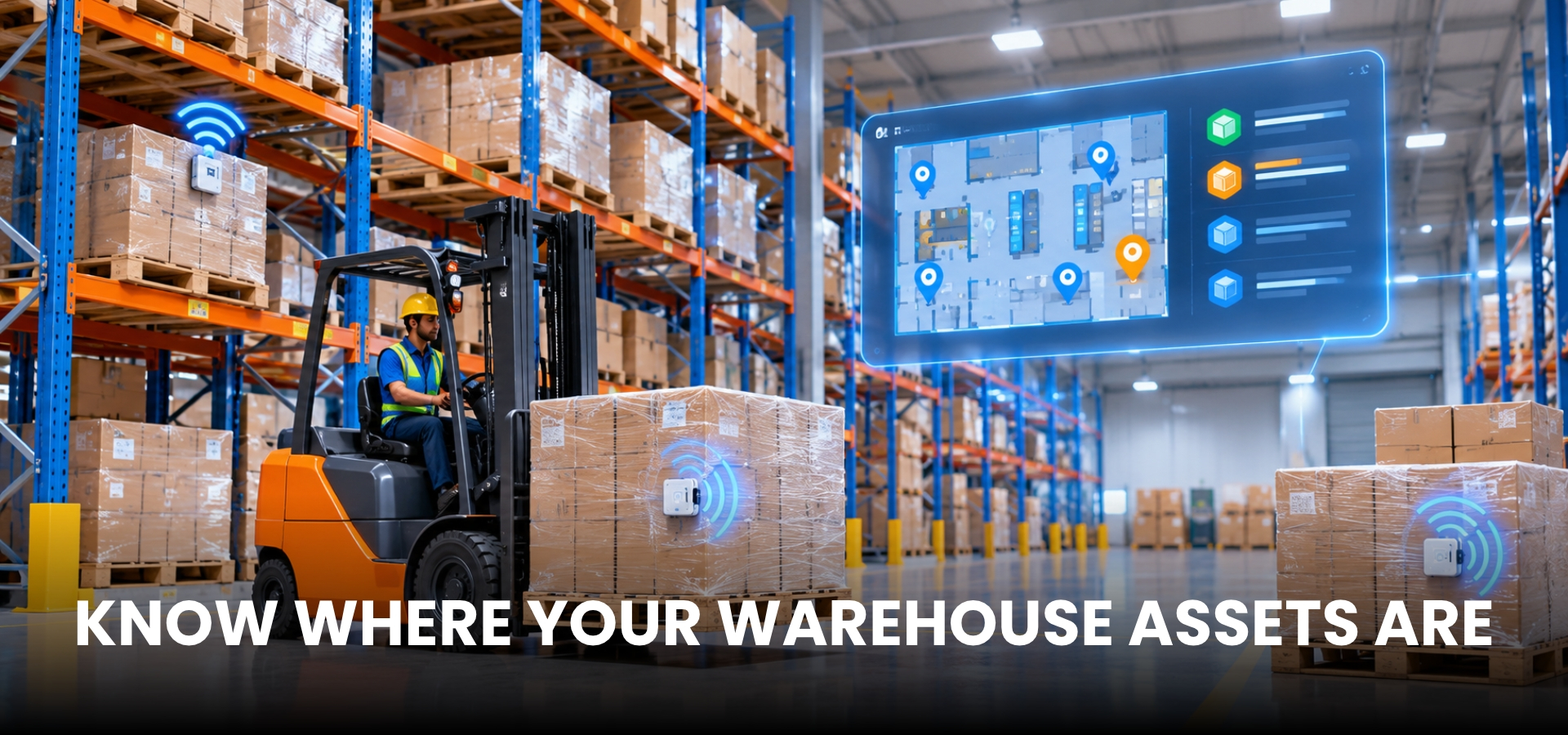
Warehouses manage continuous movement of goods, equipment, containers, and employees.
Assets move between receiving docks, storage zones, picking areas, packing stations, and dispatch locations.
In busy facilities, maintaining accurate information about these movements can be challenging.
Warehouse Asset Tracking Solutions used identification technologies and connected systems to improve visibility across these operations.
Tracking Assets During Receiving
Warehouse operations often begin when goods arrive at a receiving dock.
Employees inspect incoming shipments, verify quantities, and record inventory information.
RFID or barcode-based systems can support identification at this stage.
When compatible RFID tags pass through monitored checkpoints, readers may automatically record their presence.
This information can be associated with receiving records in warehouse software.
However, not all shipments arrive with compatible tags, and automated identification still requires appropriate validation processes.
Monitoring Pallet Movement
Pallets move between receiving, storage, picking, and dispatch areas.
Without consistent tracking, employees may struggle to identify where a particular pallet was placed.
RFID checkpoints or other location technologies can help record movement.
For example, a pallet may be detected entering a storage zone.
The software can update its last recorded location.
More precise tracking may be possible with additional infrastructure, but a basic RFID checkpoint system does not necessarily identify an exact shelf position.
Tracking Forklifts
Forklifts are essential in many warehouse environments.
They transport pallets, support loading operations, and move materials between storage locations.
When forklifts are shared across teams, employees may have difficulty locating available equipment.
Suitable tracking devices can help supervisors identify vehicle locations or operating zones.
When integrated with equipment systems, additional information may be available about usage, maintenance, or operating status.
This can support better allocation.
Managing Reusable Containers
Warehouses and logistics businesses often use reusable crates, bins, and transport containers.
These assets may circulate between facilities, suppliers, and customers.
Poor visibility can result in losses, unnecessary replacement purchases, or delays.
Tracking technologies can help record container movement through monitored locations.
For assets moving across multiple sites, organizations may need tracking infrastructure at each location or devices capable of communicating over wider areas.
Tracking Warehouse Tools
Maintenance and operational teams may share specialized tools.
When these tools are misplaced, repairs and daily activities can be delayed.
Asset identification systems can help record tool issuance and returns.
Some organizations may use automated cabinets or monitored storage areas.
The appropriate solution depends on the value of the tools and the importance of maintaining reliable custody records.
Connecting Tracking with Warehouse Software
IoT tracking becomes more useful when integrated with warehouse management systems.
A warehouse management system typically supports inventory records, receiving, storage, picking, and dispatching workflows.
Tracking technologies can provide additional information about physical movement.
When integrated correctly, these systems can help employees compare recorded inventory positions with detected asset activity.
However, integration requires careful data mapping and validation.
A tracking event should not automatically be treated as proof that an entire inventory transaction has been completed.
For example, detecting a pallet near a dispatch area does not necessarily confirm that the shipment has been loaded and approved for departure.
Operational rules must define what each event means.
How Can Warehouses Reduce Lost Assets?
Misplaced assets are a common operational challenge in large warehouses.
An item may be stored in the wrong location; a reusable container may not be returned, or a piece of equipment may be moved without updating its assigned position.
These problems can interrupt normal workflows.
IoT tracking can help reduce uncertainty by creating more consistent movement records.
Identifying Common Causes
Before implementing technology, warehouse managers should understand why assets are frequently misplaced.
Possible causes include inconsistent storage procedures, incomplete movement records, shared equipment, unclear responsibilities, and limited visibility between operating zones.
Technology can help address some of these issues, but it cannot replace effective warehouse processes.
For example, a tracking system may identify where a pallet was last detected, but employees still need clear procedures for handling incorrectly stored goods.
Using Location Zones
Warehouses can divide facilities into monitored areas.
These may include receiving docks, storage sections, packing stations, maintenance areas, and dispatch zones.
Tracking infrastructure can help record when tagged assets enter or leave certain areas.
This provides useful information when employees need to locate equipment.
Zone-level visibility may be sufficient for many operations.
More precise positioning should be considered when additional accuracy creates meaningful operational value.
Setting Up Movement Alerts
Some systems can generate alerts when assets move outside approved areas.
For example, a high-value tool may be assigned to a particular maintenance zone.
If the system detects movement beyond that area, an alert may be generated.
Similarly, reusable containers may be monitored when moving between facilities.
Alerts should be designed around real operational requirements to avoid unnecessary notifications.
Improving Equipment Handover
Shared equipment often changes responsibility between employees and teams.
Digital handover records can help clarify assignments.
A forklift, for example, may be associated with a particular shift or operating area.
Tracking information can support these records, although it should not be used to infer employee responsibility without reliable supporting data.
Clear handover procedures remain important.
Reviewing Repeated Losses
Historical tracking data can reveal patterns.
If assets repeatedly disappear from the same area, managers can investigate whether storage procedures, infrastructure coverage, or operational practices need improvement.
This allows organizations to address recurring causes rather than repeatedly searching for individual items.
Reducing Replacement Purchases
When equipment cannot be located, organizations may purchase replacements.
Better tracking can help identify existing assets before additional purchases are approved.
However, organizations should evaluate actual equipment availability and conditions.
Locating an asset does not necessarily mean it is suitable for immediate use.
The strongest results come from combining location visibility with accurate asset status records.
How Do Airports Track Equipment?
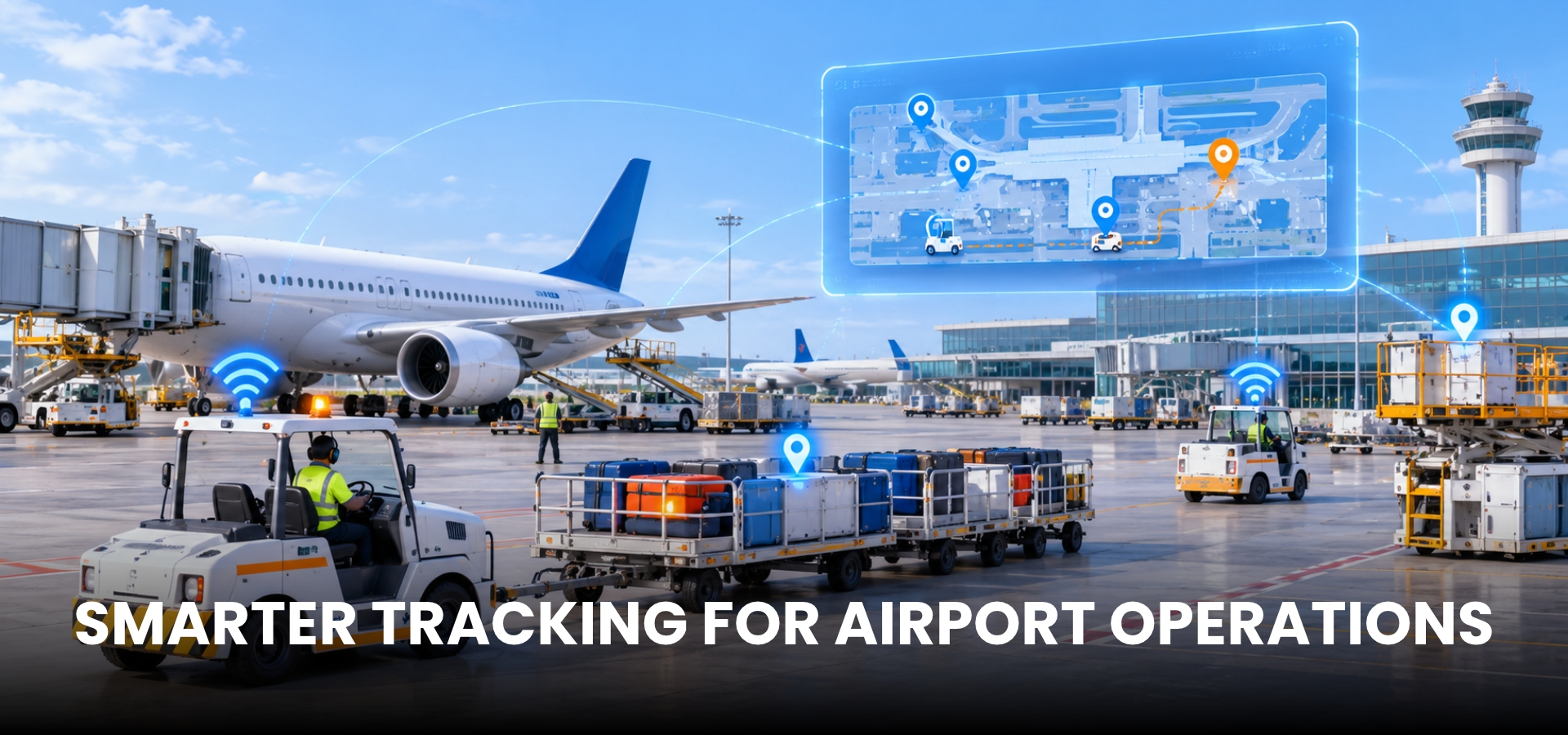
Airports depend on numerous types of equipment to support aircraft operations, baggage handling, passenger services, maintenance, and ground transportation.
These assets operate across large areas and may be shared between multiple teams.
Airport asset tracking helps improve visibility into the location and movement of important equipment.
Tracking Ground Support Equipment
Ground support equipment includes machinery and vehicles used to service aircraft while they are on the ground.
Examples include baggage tractors, ground power units, aircraft tugs, belt loaders, and other service equipment.
These assets may move between aircraft stands, storage areas, maintenance facilities, and operational zones.
When equipment is difficult to locate, ground handling teams may experience delays.
GPS-based tracking can support outdoor location visibility for suitable vehicles and equipment.
Other technologies may be required for indoor areas or equipment that does not have continuous power.
Tracking Baggage Carts
Baggage carts are used to transport luggage between terminals, sorting facilities, and aircraft.
They may be moved frequently during daily operations.
Tracking systems can help ground teams understand where carts are located or where they were last detected.
Depending on the system, this may involve GPS-enabled devices, RFID checkpoints, or other technologies.
The appropriate approach depends on the equipment, infrastructure, and level of visibility required.
Managing Airport Service Vehicles
Airports use vehicles for maintenance, logistics, passenger support, and operational services.
Connected tracking systems can provide location information for vehicles operating outdoors.
Some systems also support geofencing, which allows organizations to define virtual geographic boundaries.
Alerts may be generated when tracked vehicles enter or leave specified areas.
However, these alerts should support established airport safety procedures rather than replace operational controls.
Tracking Maintenance Tools
Aircraft maintenance activities require careful tool management.
Some tools are specialized, expensive, and subject to strict accountability procedures.
Digital identification systems can support tool issuance, return, and inventory checks.
RFID-enabled tool storage systems may help record whether tagged tools are present in monitored cabinets or designated locations.
However, tracking technology should not replace required tool-control procedures or physical verification.
Tracking Equipment Across Airport Zones
Airports contain different operational environments.
An asset may move between outdoor aircraft stands, maintenance hangars, storage facilities, and terminal areas.
A single tracking technology may not work equally well in every location.
Organizations may need a combination of GPS, RFID, BLE, or other technologies.
The software platform must be designed to handle these different sources consistently.
Supporting Ground Handling Coordination
Ground handling involves multiple activities that must be completed within operational schedules.
Equipment of availability is one part of this coordination.
Asset tracking can help teams identify where relevant equipment is located.
For example, supervisors may be able to review the positions of available ground support vehicles before assigning them to upcoming operations.
This can support better resource planning.
However, location alone does not confirm that equipment is safe, available, or authorized for a particular task.
Operational status, maintenance records, and staff assignments remain important.
How Does IoT Improve Airport Operations?
Airport operations involve complex coordination between equipment, employees, aircraft schedules, and service providers.
Delays in one activity can affect other tasks.
IoT asset tracking can support airport efficiency by improving equipment visibility and helping teams make more informed decisions.
Better Equipment Availability
Ground operations teams need suitable equipment at the right location.
Tracking systems can help supervisors identify the last reported positions of assets.
When integrated with assignment and maintenance records, the platform may also provide information about availability.
This can make equipment allocation more organized.
Faster Equipment Searches
Airport facilities can cover extensive areas.
Searching manually for equipment may require significant effort.
A tracking platform can help employees narrow down where an asset is likely to be located.
This can reduce unnecessary searching, particularly for equipment that moves frequently.
Improved Turnaround Coordination
Aircraft turnaround involves several ground activities.
Equipment availability is one factor influencing how efficiently these activities can be coordinated.
Tracking information may help teams plan equipment assignments and identify potential shortages.
For example, supervisors may review the location of baggage handling equipment before a scheduled aircraft arrival.
This can support preparation.
However, asset tracking alone cannot guarantee faster aircraft turnaround because many other operational factors influence departure readiness.
Better Resource Allocation
Historical asset movement records can help airport managers understand how equipment is distributed.
Some areas may experience recurring demand, while others may have equipment that remains unused for long periods.
These patterns can inform allocation of decisions.
Managers may also use the information when evaluating whether additional equipment is required.
Maintenance Planning
Ground support equipment requires regular maintenance.
When asset tracking is connected with maintenance management software, teams can locate equipment scheduled for servicing.
Additional operating data may also support maintenance decisions when compatible sensors and integrations are available.
This can improve coordination between maintenance and operational teams.
Supporting Operational Accountability
Airport equipment may be shared between departments or service providers.
Clear assignment records help establish responsibility for equipment.
Tracking data can support these records by providing movement information.
However, organizations should define appropriate access rights and ensure that tracking data is interpreted correctly.
Improving Long-Term Planning
Over time, tracking data can support analysis of equipment utilization.
Managers may identify frequently used assets, recurring bottlenecks, or areas where equipment distribution could improve.
These insights can support long-term planning.
The results depend on reliable tracking coverage, accurate operational data, and appropriate analysis.
What Are the Benefits of Real-Time Asset Tracking?
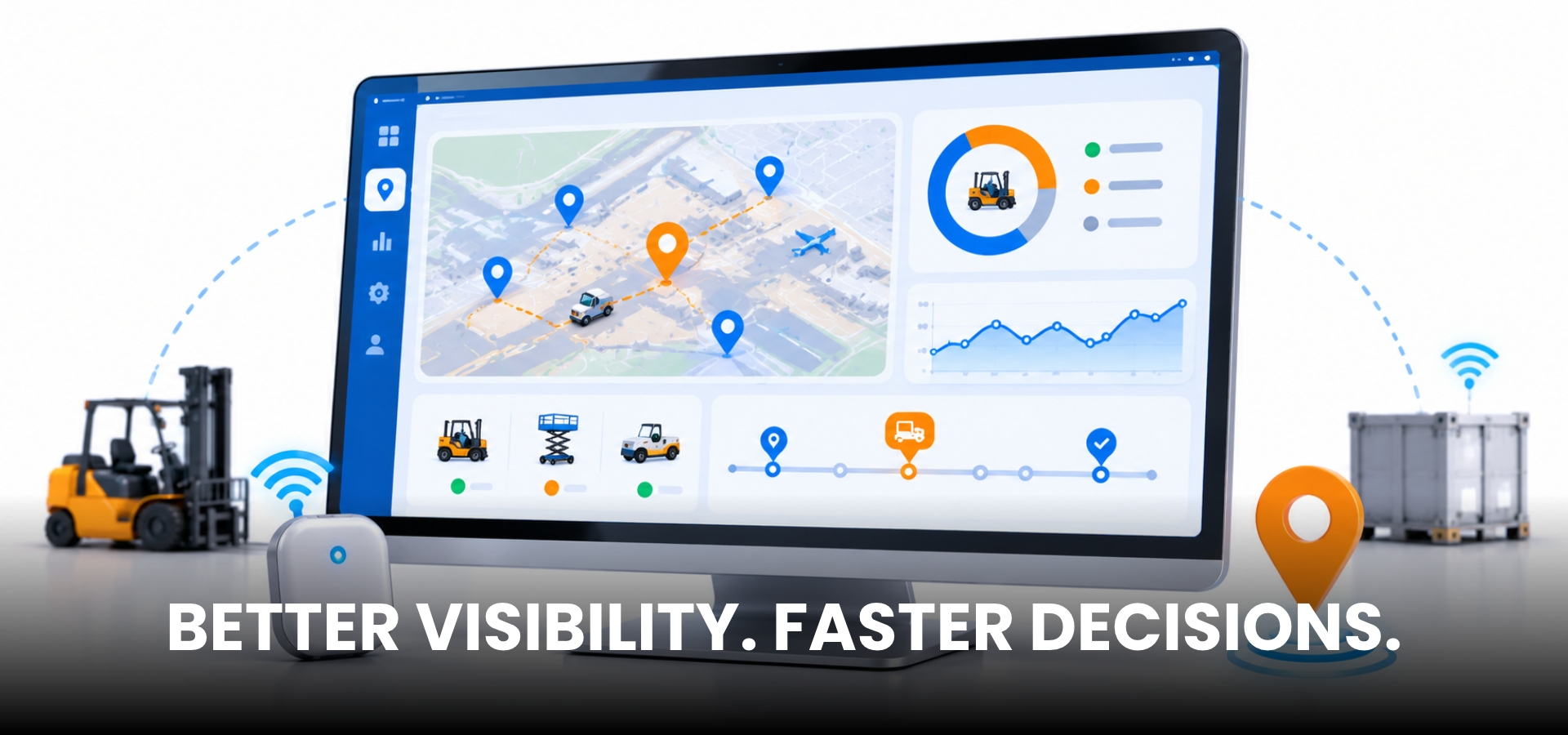
Real-time asset tracking is often discussed as one of the most valuable applications of IoT.
However, the term requires careful understanding.
Some systems provide frequent automatic location updates, while others record asset movement only when tags pass through monitored checkpoints.
The practical value depends on whether the information is timely enough for the organization's needs.
Improved Asset Visibility
The most immediate benefit is better visibility into physical equipment.
Employees can access information about asset locations or last detected positions.
This reduces uncertainty and helps teams make more informed decisions.
Reduced Search Time
When employees know where equipment is likely to be located, they can spend less time searching.
This is particularly useful in facilities where assets move frequently.
Hospitals, warehouses, and airports can all benefit from more accessible location information.
Better Asset Utilization
Tracking data can help organizations understand how equipment is distributed.
When combined with reliable usage records, this information can support utilization analysis.
Managers may discover opportunities to redistribute equipment or adjust purchasing plans.
Improved Operational Coordination
Different teams often depend on shared resources.
A centralized asset tracking platform can provide relevant information available across authorized departments.
This can improve coordination and reduce reliance on repeated phone calls or manual updates.
More Reliable Asset Records
Automated detection can reduce manual recording requirements.
However, data quality still depends on infrastructure coverage, device performance, and system integration.
Organizations should regularly validate tracking information against physical assets and operational records.
Better Maintenance Coordination
Asset tracking can help maintenance teams locate equipment that requires servicing.
When connected with maintenance management systems, it can also support more organized service scheduling.
Additional condition-monitoring sensors may provide further information about equipment health.
Reduced Operational Waste
Poor asset visibility can lead to repeated searches, unnecessary movement, inefficient allocation, and premature replacement purchases.
Tracking systems can help organizations identify and address these inefficiencies.
The financial value should be evaluated using actual operating data rather than assumed savings.
Improved Decision-Making
Historical tracking records can support analysis of movement patterns and asset distribution.
Managers can use these insights to identify operational problems.
For example, repeated equipment shortages in a particular area may indicate the need for better allocation procedures.
Tracking data becomes more valuable when it is connected to decisions that employees can act upon.
Which Technologies Are Used for Asset Tracking?
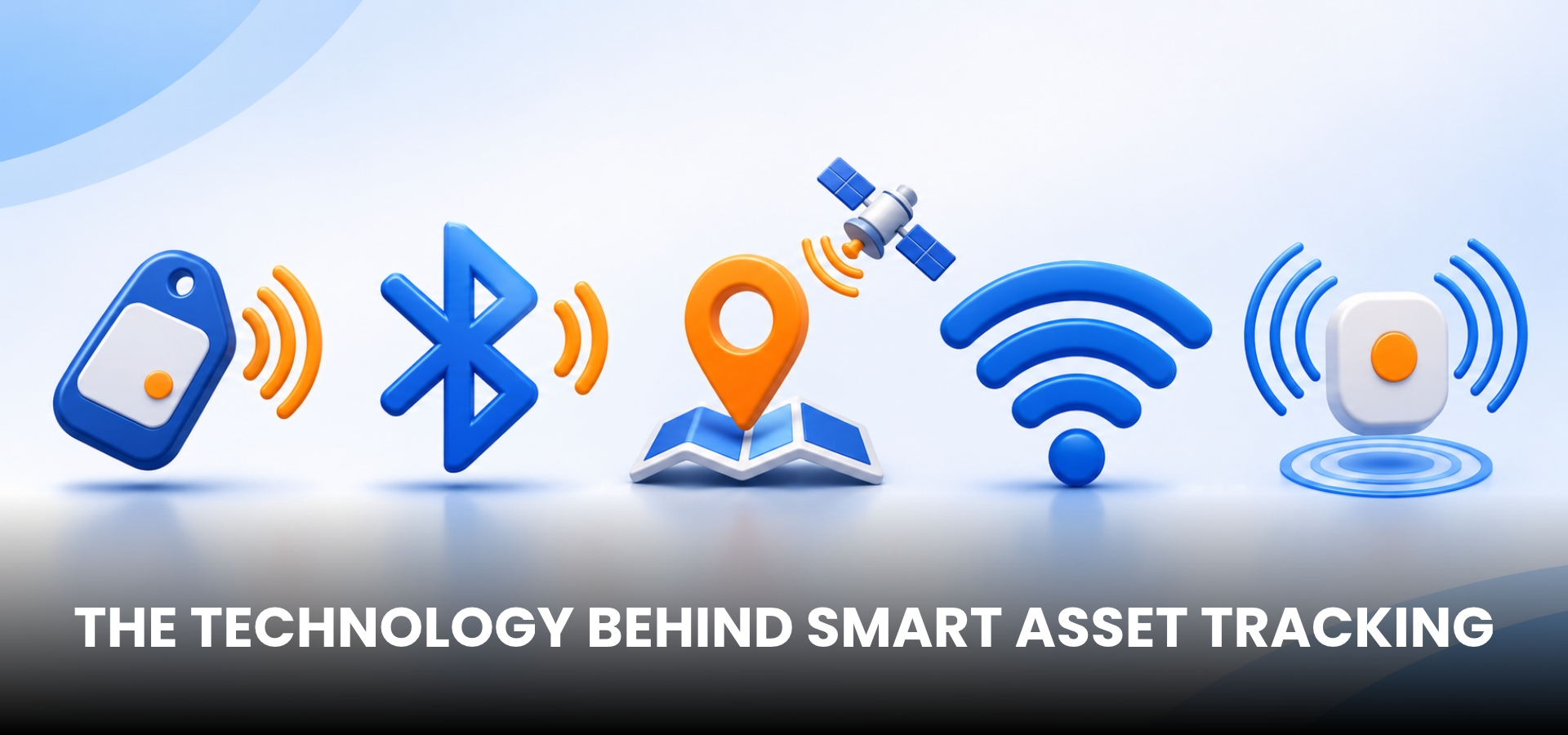
IoT asset tracking uses several technologies, each with different capabilities.
The best choice depends on the operating environment, asset type, location accuracy requirements, infrastructure, and cost.
Understanding these differences is essential before selecting a system.
RFID Asset Tracking
Radio Frequency Identification, or RFID, uses radio signals to identify tagged objects.
An RFID system generally includes tags, readers, and software.
Passive RFID tags are commonly used for identification at monitored points.
For example, a warehouse may install RFID readers near receiving docks.
When compatible tagged pallets pass through the detection area, the system can record their presence.
RFID is useful for inventory identification and checkpoint-based tracking.
However, passive RFID does not normally provide continuous location updates throughout an entire facility.
Bluetooth Asset Tracking
Bluetooth Low Energy, or BLE, is commonly used for indoor asset tracking.
BLE tags transmit signals that compatible receivers can detect.
The system can use these signals to estimate an asset location or determine whether it is within a monitored area.
BLE can be suitable for mobile equipment in hospitals, warehouses, and other indoor facilities.
However, location accuracy depends on receiver placement, signal conditions, and the positioning method used.
GPS Asset Tracking
Global Positioning System technology uses satellite signals to determine geographic location.
GPS is widely used for vehicles and equipment operating outdoors.
Airports may use GPS-enabled devices for ground support vehicles.
Logistics businesses may use similar technologies for fleet tracking.
However, GPS generally performs poorly inside buildings or in areas where satellite signals are obstructed.
GPS-enabled devices also require a way to transmit their location information to a monitoring platform.
Wi-Fi Asset Tracking
Wi-Fi infrastructure can support certain indoor positioning approaches.
Organizations may use existing wireless networks or deploy additional infrastructure.
Location estimates can be based on signals detected by compatible access points or devices.
Performance depends on the environment, network design, and positioning method.
Wi-Fi tracking may be useful where suitable infrastructure already exists, but implementation should account for network capacity and security.
Ultra-Wideband Tracking
Ultra-Wideband, or UWB, can support precise indoor positioning in appropriately designed systems.
It may be suitable for applications where organizations need more accurate location information than basic zone-level tracking.
However, UWB generally requires dedicated infrastructure and careful deployment.
Its higher positioning capability does not automatically make it the best choice for every asset.
Organizations should evaluate whether additional accuracy justifies the implementation requirements.
Cellular and Wide-Area IoT Networks
Some assets move across large outdoor areas or between facilities.
Cellular connectivity and low-power wide-area networking technologies can support communication over wider distances.
These approaches may be suitable for certain vehicles, containers, and distributed equipment.
Coverage, power requirements, update frequency, and network costs should be considered.
Choosing Between Technologies
Technology | Common Use | Main Consideration |
RFID | Inventory and checkpoint detection | Detection depends on reader coverage |
BLE | Indoor equipment tracking | Accuracy depends on infrastructure |
GPS | Outdoor vehicle and equipment tracking | Limited indoor performance |
Wi-Fi | Indoor positioning | Depends on network design |
UWB | Precise indoor positioning | Requires dedicated infrastructure |
Cellular IoT | Wide-area connected tracking | Coverage and power requirements |
Many organizations benefit from combining technologies.
For example, an airport may use GPS outdoors and indoor tracking technologies within maintenance facilities.
A warehouse may use RFID for inventory identification and BLE for movable equipment.
The software platform should be capable of managing information from the selected technologies without creating unnecessary complexity.
How Does IoT Reduce Asset Management Costs?
Asset management costs extend beyond the original purchase price of equipment.
Organizations also spend money on maintenance, storage, replacement, administration, and operational effort required to manage physical resources.
IoT tracking can help identify opportunities to reduce these costs.
However, savings are not automatic.
The financial value depends on the problems being addressed and the effectiveness of implementation.
Reducing Time Spent Searching
Employees may spend time locating equipment that has been moved without updating records.
Tracking systems can reduce some of this effort.
For example, a hospital employee may locate a wheelchair more quickly through a centralized platform.
A warehouse supervisor may identify the last recorded location of a reusable container.
An airport team may locate ground support equipment without searching for multiple operational areas.
Reduced search time can support better productivity.
Avoiding Unnecessary Purchases
Organizations sometimes purchase additional equipment because existing assets appear unavailable.
Tracking information can help distinguish between genuine shortages and poor distribution.
Managers may discover that equipment can be redistributed instead of replaced.
This can support more informed purchasing decisions.
Improving Equipment Utilization
Assets that remain unused still represent an investment.
Tracking and usage data can help organizations understand whether equipment is being utilized effectively.
For example, a warehouse may identify forklifts that are consistently underused.
A hospital may find that equipment distribution does not match departmental demand.
Better utilization can reduce the need for additional capacity in some circumstances.
Reducing Asset Loss
Tracking technologies can improve records of asset movement.
This may help organizations investigate missing equipment and improve control procedures.
However, tracking does not guarantee that assets will never be lost or stolen.
Device removal, network limitations, and incomplete coverage can affect visibility.
Supporting Maintenance Efficiency
When tracking systems are integrated with maintenance software, organizations can locate equipment requiring service.
This can reduce coordination difficulties.
Condition-monitoring sensors may also help identify certain operating problems, depending on the equipment and system design.
The benefits should be assessed separately from the capabilities of location tracking alone.
Improving Operational Planning
Historical data can help managers identify inefficient asset distribution.
Organizations may use these insights to adjust equipment placement, staffing workflows, or maintenance schedules.
Improved planning can reduce unnecessary movement and repeated administrative work.
Understanding Implementation Costs
IoT asset tracking also introduces expenses.
These may include tracking tags, readers, gateways, networking infrastructure, software development, integration, installation, training, and ongoing maintenance.
Battery replacement and device management may create recurring costs.
Organizations should evaluate the total cost of ownership rather than focusing only on device prices.
A successful implementation should solve operational problems that justify the investment.
What Are the Challenges of IoT Asset Tracking?
Although IoT asset tracking offers useful capabilities, implementation can be challenging.
Organizations must consider technical infrastructure, operational workflows, cybersecurity, data quality, and employee adoption.
Understanding these challenges early can help prevent costly mistakes.
Choosing the Wrong Technology
Different tracking technologies serve different purposes.
A system designed for outdoor vehicle tracking may not work well inside a hospital.
A passive RFID system may be suitable for checkpoint detection but insufficient for continuous indoor location monitoring.
Selecting technology without clearly defining operational requirements can lead to disappointing results.
Organizations should begin with the problem they need to solve.
Indoor Location Accuracy
Indoor environments contain obstacles that affect wireless signals.
Metal racks, walls, machinery, and building structures can influence performance.
Warehouses may have particularly challenging radio environments because of metal shelving and moving equipment.
Hospitals and airports also contain complex layouts.
Tracking accuracy should be tested under realistic operating conditions.
Network Connectivity
Connected tracking systems depend on communication infrastructure.
Poor connectivity may delay updates or prevent devices from transmitting information.
Organizations should evaluate coverage throughout the areas where assets operate.
They should also determine how the system handles temporary network interruptions.
Device Battery Life
Active tracking devices often require batteries.
Battery life depends on the device, communication technology, update frequency, and operating conditions.
Frequent updates may increase power consumption.
Organizations should establish procedures for monitoring battery status and replacing or recharging devices.
Data Accuracy
Tracking information is only useful when it can be trusted.
Incorrect asset identifiers, missing detection events, outdated status records, or integration errors can create confusion.
For example, a system may correctly identify an asset's location but display an incorrect availability status.
Organizations should define how information is validated and updated.
Cybersecurity Risks
Connected devices and software platforms introduce cybersecurity considerations.
Organizations should protect communication channels, device identities, software interfaces, and stored information.
Appropriate measures may include encryption, authentication, access controls, secure updates, and monitoring.
Security requirements should reflect the sensitivity of the environment.
Hospitals and airports may have particularly strict operational and regulatory considerations.
Integration With Existing Systems
Organizations often already use enterprise software.
Hospitals may use equipment management and maintenance systems.
Warehouses may use warehouse management platforms.
Airports may use operational and maintenance applications.
Connecting IoT tracking with these systems can require custom integration.
Data formats, asset identifiers, access permissions, and workflow rules must be aligned.
Employee Adoption
Technology cannot deliver its intended benefits if employees do not use it correctly.
Interfaces should be simple and relevant to daily work.
Employees need to understand how to search for assets, interpret location information, update statuses, and respond to alerts.
Training and clear procedures are important.
Scaling Across Facilities
A tracking system that works in one department may face new challenges when expanded across multiple buildings or sites.
Additional infrastructure, higher data volumes, and more complex user permissions may be required.
Organizations should consider scalability during initial system design.
How Do You Choose an IoT Asset Tracking System?
Selecting an IoT asset tracking system requires a clear understanding of operational requirements.
The best system is not necessarily the one with the most features.
It is the one that provides useful information, integrates with existing processes, and solves important asset management problems.
Start With the Business Problem
Organizations should first identify their most significant asset tracking challenges.
A hospital may need to reduce the time required to locate mobile equipment.
A warehouse may need better visibility into reusable containers.
An airport may need to coordinate ground support equipment across operational areas.
These requirements should guide technology selection.
Identify Critical Assets
Not every asset needs to be tracked.
Organizations should prioritize equipment based on operational importance, value, movement frequency, and difficulty of replacement.
Starting with a focused group of assets can make implementation easier.
Define Location Requirements
Different operations require different levels of accuracy.
A hospital may only need to know which department contains a wheelchair.
A warehouse may need to identify a storage zone.
An airport may require outdoor vehicle locations.
Other applications may need more precise positioning.
Defining these requirements helps prevent unnecessary infrastructure spending.
Evaluate the Operating Environment
The physical environment affects tracking performance.
Hospitals have multiple floors and medical equipment considerations.
Warehouses contain racks, machinery, and moving inventory.
Airports combine indoor facilities with extensive outdoor areas.
Organizations should test technologies in the environments where they will actually operate.
Review Software Capabilities
A tracking platform should make asset information accessible and understandable.
Useful capabilities may include asset search, location history, status management, alerts, reporting, and role-based access.
The interface should support the tasks employees perform most frequently.
Complex dashboards are not automatically better than simple, well-designed workflows.
Check Integration Requirements
Asset tracking information may need to connect with existing software.
Organizations should identify which systems require integration.
These may include inventory management, maintenance management, enterprise resource planning, or operational applications.
Integration planning should include data ownership, synchronization rules, and error handling.
Consider Security and Privacy
Security should be evaluated before deployment.
Organizations should understand how devices are authenticated, how information is transmitted, and who can access tracking records.
Access permissions should match employee responsibilities.
Data retention and privacy requirements should also be considered.
Test Before Expanding
A pilot implementation can help organizations evaluate tracking performance.
For example, a hospital may begin with one department.
A warehouse may track selected equipment in a single operating zone.
An airport may test tracking on a limited group of service vehicles.
The pilot should measure whether the system solves the intended problem.
Measure Practical Results
Organizations should establish meaningful performance indicators.
These may include equipment search time, asset availability, utilization, missing asset incidents, or maintenance coordination.
Results should be compared with the original operating conditions.
This helps determine whether the system should be expanded or adjusted.
Plan for Long-Term Maintenance
IoT tracking requires ongoing management.
Devices may need battery replacement, firmware updates, inspections, or repairs.
Software platforms require security maintenance and operational support.
Organizations should consider these responsibilities before deployment.
How Can Approlabs Help with IoT Asset Tracking?
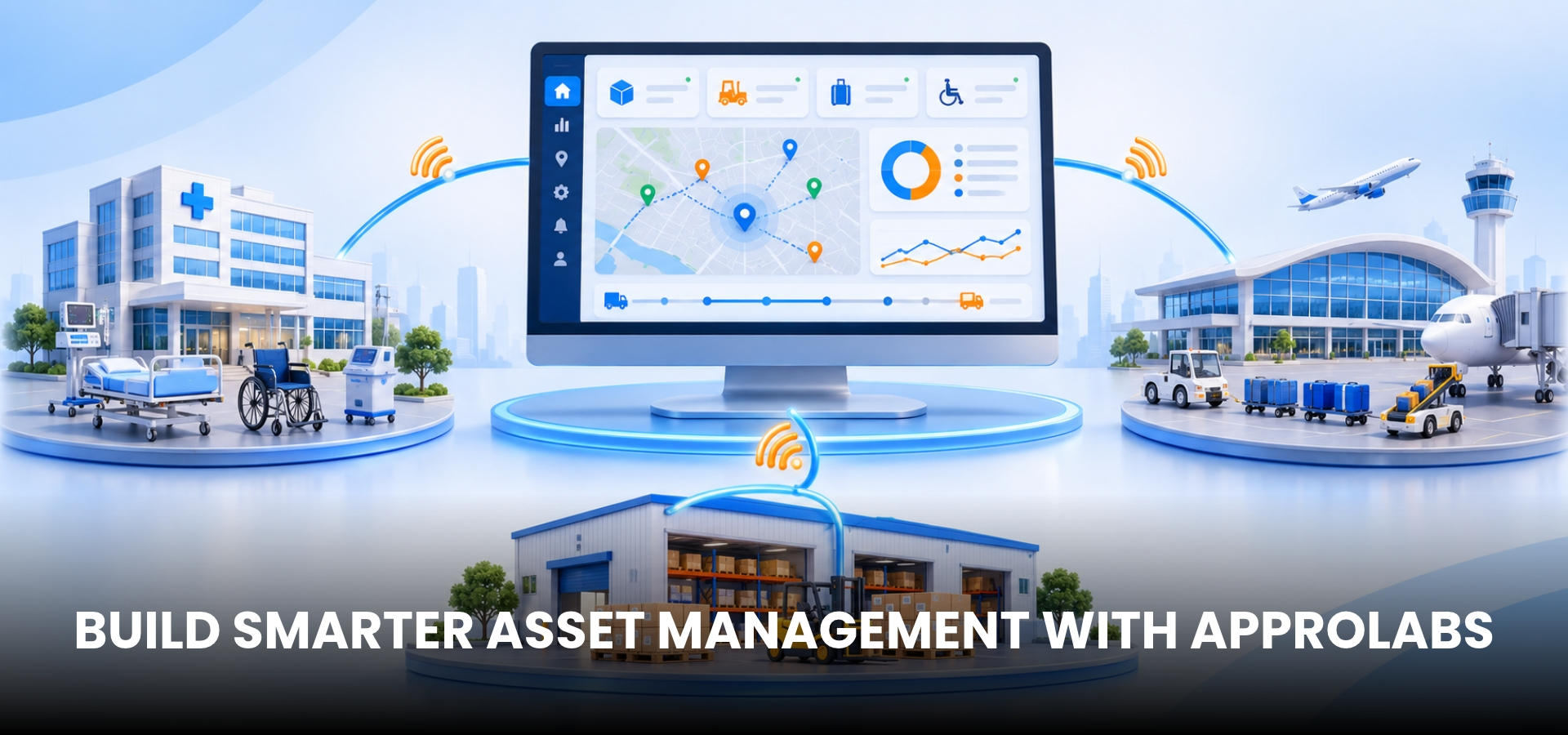
Implementing IoT asset tracking involves more than selecting sensors and tags.
Organizations also need software that converts collected information into useful operational insights.
A tracking device may identify where equipment is located, but employees still need a practical way to access that information, understand asset status, and coordinate daily activities.
This is where custom software development and system integration have become important.
Approlabs can be positioned as a technology development partner for organizations exploring connected asset management solutions, particularly where custom applications and integrations are required.
Custom Asset Tracking Software
Different industries have different asset management requirements.
A hospital may need equipment search and departmental availability views.
A warehouse may need to asset movement of records connected to inventory workflows.
An airport may require equipment, location of dashboards, and operational assignment information.
Custom software can be designed around these specific workflows.
Rather than forcing every organization to use identical processes, tailored applications can reflect how teams work.
Centralized Asset Dashboards
A centralized dashboard can bring relevant asset information into one interface.
Employees may be able to search for equipment, review locations, check status records, and access movement history.
Managers may need additional reporting and administrative capabilities.
Effective dashboard design should prioritize clarity.
Employees should be able to find the information they need without navigating unnecessary screens.
IoT Data Integration
Tracking devices may communicate through different networks and protocols.
A software solution may need to receive information from gateways, device management platforms, or external tracking services.
Integration development can help connect these sources to a centralized application.
The system must also handle incomplete data, delayed updates, and device communication failures.
Enterprise System Integration
Asset tracking becomes more useful when connected to existing operational software.
For example, a warehouse may need to connect tracking information with inventory management workflows.
A hospital may need integration with equipment maintenance records.
An airport may need asset information to support ground operations planning.
Custom integrations can help make tracking data available within established workflows.
Workflow Automation
Some asset management tasks can be automated.
For example, software may generate alerts when an asset moves outside a designated area.
It may notify maintenance teams when equipment is marked for inspection.
It may also support digital equipment assignments and return workflows.
Automation should be designed around clear operational rules.
Scalable Software Architecture
Organizations may begin with a limited tracking deployment and expand later.
Software architecture should account for additional assets, users, facilities, and data sources.
Scalability involves more than handling larger amounts of information.
It also requires reliable performance, appropriate access controls, and maintainable integrations.
Building Around Business Requirements
The most effective asset tracking systems begin with operational needs.
Organizations should define what they want to improve before choosing technologies.
A development partner can help translate these requirements into software workflows, integration plans, dashboards, and implementation stages.
For Approlabs, the strongest message is the value of custom software development, IoT-enabled applications, workflow automation, Custom IoT Asset Tracking Solutions and Enterprise System Integration in building practical asset tracking solutions.
Specific hardware capabilities, industry deployments, or measurable customer outcomes should only be presented as Approlabs offerings when they have been independently confirmed.
What Is the Future of IoT Asset Tracking?
IoT asset tracking continues to develop as connected devices, wireless technologies, cloud platforms, and data analysis capabilities improve.
Organizations increasingly want more than basic asset identification.
They want systems that help them understand equipment availability, movement patterns, operational demand, and maintenance requirements.
Several developments are shaping this direction.
Smarter Asset Management
Asset tracking platforms can combine location records with operational information.
For example, an organization may connect equipment locations with assignment records and maintenance status.
This creates a more useful view of asset availability.
Instead of showing only where an asset is located, the system may help employees understand whether it can be used.
AI-Assisted Analysis
Artificial intelligence can help analyze large volumes of asset data.
For example, machine learning models may identify recurring movement patterns or unusual equipment activity.
Organizations may use these insights to investigate inefficiencies.
However, useful AI analysis depends on reliable data and clearly defined objectives.
Adding AI to a tracking platform does not automatically improve accuracy or operational outcomes.
Predictive Maintenance Integration
Asset tracking and predictive maintenance are related but distinct capabilities.
Location tracking identifies where equipment is located.
Predictive maintenance uses suitable operating-condition data and analytical methods to assess potential equipment problems.
When these capabilities are integrated, organizations may gain a more complete understanding of asset location and condition.
For example, an industrial vehicle may transmit both location information and selected operating measurements.
A maintenance system could use the operating data to support condition-based analysis.
The effectiveness of such systems depends on sensor quality, equipment characteristics, and analytical validation.
Greater Automation
Future asset management systems may automate more administrative workflows.
Examples include updating equipment movement records, generating alerts, and coordinating maintenance requests.
Automation can reduce manual work when the underlying data is reliable.
However, organizations should maintain appropriate human oversight for safety-sensitive decisions.
Connected Operations Across Facilities
Large organizations may manage assets across multiple buildings or geographic locations.
Cloud-based platforms can help centralize information from different sites.
This may support organization-wide reporting and more consistent asset management processes.
However, each facility may have different tracking infrastructure and operational requirements.
More Efficient Tracking Devices
Improvements in low-power electronics and wireless communication may support longer device operation and more flexible deployments.
Organizations may benefit from devices that require less frequent maintenance.
Nevertheless, battery life and communication performance will continue to depend on device configuration and operating conditions.
Better Use of Historical Data
Historical tracking records can help organizations identify recurring problems.
Hospitals may analyze equipment distribution.
Warehouses may study asset movement patterns.
Airports may evaluate ground equipment allocation.
These insights can support long-term planning.
The future of IoT asset tracking is therefore not simply about knowing where equipment is located.
It is about using connected information to improve how physical resources are managed throughout their operational life.
Conclusion
Hospitals, warehouses, and airports operate in very different environments, but all three depend on the availability of critical physical assets.
When equipment is difficult to locate, employees spend time searching, operations become harder to coordinate, and organizations may struggle to use their resources efficiently.
IoT Asset Tracking offers a way to improve visibility by connecting physical assets with digital monitoring systems.
In hospitals, it can help employees locate medical equipment and support better departmental coordination.
In warehouses, it can improve visibility into pallets, reusable containers, forklifts, and other operational resources.
At airports, it can support the management of ground support equipment, service vehicles, and maintenance tools.
However, successful asset tracking requires more than installing connected devices.
Organizations must choose suitable technologies, design reliable software workflows, integrate tracking information with existing systems, and ensure employees can use the information effectively.
They must also consider security, infrastructure coverage, data accuracy, and long-term maintenance.
The greatest value comes when asset information supports practical decisions.
Knowing where equipment is located is useful. Understanding whether it is available, how it is being used, and where operational improvements are possible can be even more valuable.
For organizations planning to modernize asset management, connected technologies and custom software can provide a foundation for more efficient operations.
Approlabs can be considered for custom software development and integration requirements that support connected asset management initiatives.
By focusing on real operational challenges and selecting technologies that match business needs, organizations can move toward more reliable, connected, and informed asset management.
AUTHOR

Marketing team.