AI Voice Automation for Customer Support: How Businesses Can Automate Customer Conversations
Discover how AI voice automation helps businesses automate customer conversations, manage incoming calls, schedule appointments, reduce manual work, and improve customer support through intelligent business system integration.


How Can AI Handle Customer Calls?
Customer communication is an essential part of every business. Whether customers want to book an appointment, check an order, enquire about a service, or report a problem, they expect quick and reliable assistance.
However, managing customer conversations becomes increasingly challenging as businesses grow. Customer support teams often spend considerable time answering repetitive questions, checking information, updating records, and managing follow-ups.
During busy periods, customers may experience long waiting times, unanswered calls, and unnecessary transfers between departments. Employees may also struggle to balance customer communication with their other responsibilities.
This is where AI Voice Automation can help.
Artificial intelligence enables businesses to manage customer conversations through automated voice systems that understand spoken requests and provide relevant responses.
Unlike traditional telephone systems that require customers to navigate predefined menus, modern AI Voice Agents allow customers to explain their requirements naturally.
These systems can answer common questions, retrieve business information, schedule appointments, track orders, collect customer enquiries, and initiate supported business activities.
For example, when a customer calls to check the status of an order, an AI voice agent can retrieve information from an integrated order management system and communicate the available update.
Similarly, when someone contacts a service business to book an appointment, the system can check availability, collect the necessary information, and confirm the booking.
Through AI Customer Support Automation, businesses can reduce repetitive manual work while maintaining access to human assistance for complex situations.
The purpose of voice automation is not simply to replace traditional customer support. It is to create a more connected communication environment where customers receive timely assistance, and employees can concentrate on responsibilities that require their experience and judgment.
With the help of Conversational AI, businesses can transform ordinary telephone conversations into meaningful interactions connected to their existing operational systems.
From small businesses managing daily enquiries to large enterprises handling thousands of customer interactions, voice automation offers opportunities to improve communication, productivity, and operational efficiency.
Understanding how these systems work and where they can be implemented is an important first step towards building a more effective customer support strategy.
What Is AI Voice Automation?
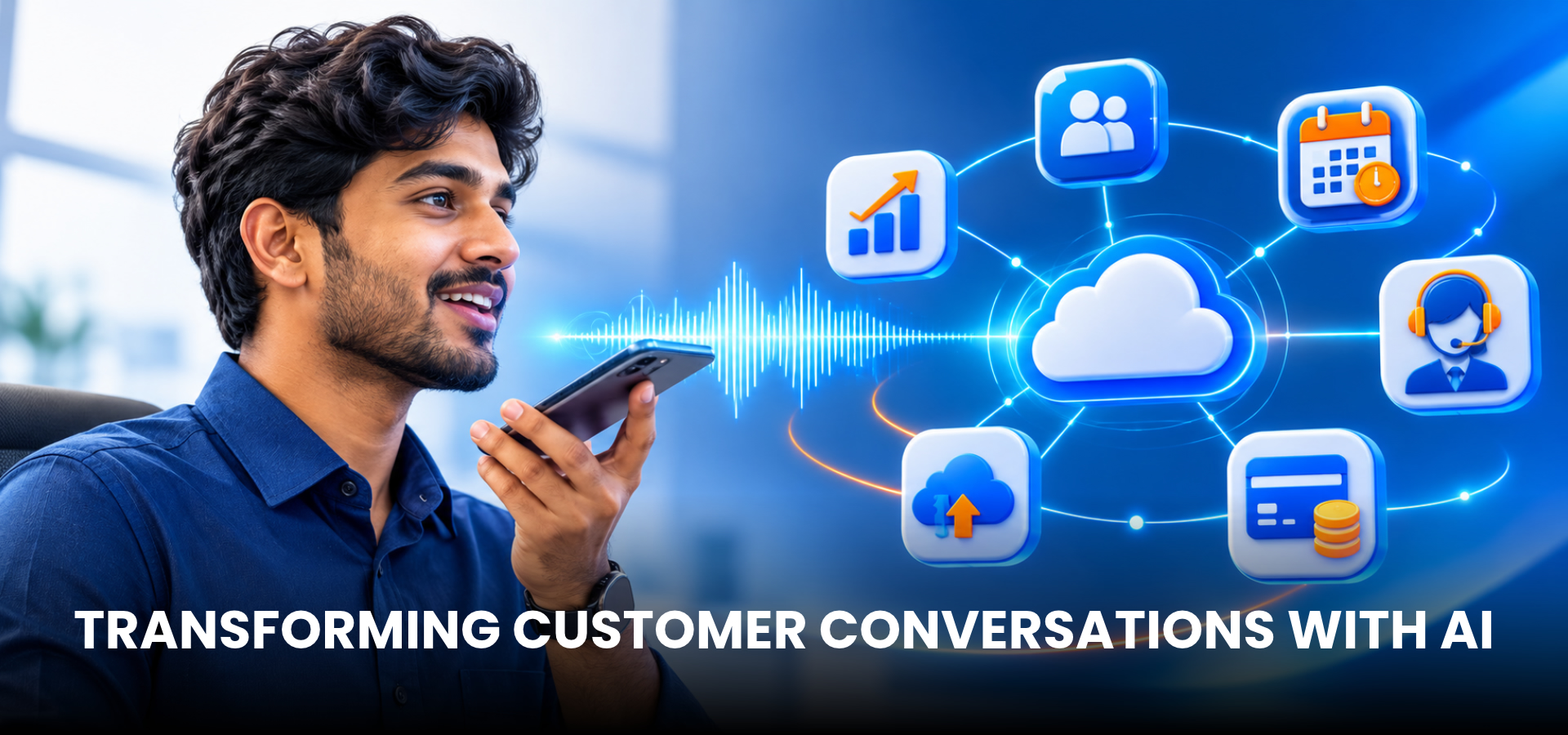
AI Voice Automation is the use of artificial intelligence to manage spoken conversations and automate supported activities through voice-based interactions.
It combines speech recognition, language understanding, speech generation, and software integration to allow customers to communicate with business systems naturally.
Traditional automated telephone systems generally follow fixed instructions. Customers may need to press specific numbers, select departments, or listen to recorded messages before receiving assistance.
AI-powered voice systems provide a more flexible approach.
Customers can explain what they need using everyday language, and the system can identify their requirements, ask relevant questions, and provide suitable assistance.
For example, a customer might call a business and say:
“I booked an appointment for tomorrow, but I need to change it to next week.”
An AI voice agent can identify that the customer wants to reschedule an existing appointment. After appropriate verification, it can retrieve the booking, check alternative availability, and complete the supported rescheduling process.
This makes voice automation more than a system for answering telephone calls. It can become an interface between customers and business operations.
How Voice Automation Supports Businesses
Many business activities begin with conversation.
A customer requests a quotation; a hotel guest asks for housekeeping assistance, a patient books an appointment, or a distributor checks an order.
Traditionally, employees must understand these requests and manually perform the necessary activities within business applications.
Through Business Process Automation, selected activities can be initiated directly from customer conversations.
For example, a customer requesting equipment maintenance may provide the necessary information during a telephone call. The voice agent can create a service request and notify the appropriate department through an integrated application.
This reduces the need to manually transfer information between telephone conversations and operational systems.
Moving Beyond Basic Telephone Automation
Recorded telephone messages are useful for communicating business hours, department information, and general announcements.
However, they cannot easily respond to individual customer requirements.
Modern AI Voice Assistants can adapt to their responses based on the purpose of a conversation.
A customer requesting delivery information receives a different response from someone booking an appointment or asking about product availability.
This flexibility makes voice automation suitable for businesses receiving varied customer enquiries.
Connecting Conversations with Business Software
The capabilities of a voice agent increase when it connects with existing business applications.
Through AI Integration Services, businesses can connect voice automation with CRM platforms, ERP applications, appointment scheduling software, inventory systems, and customer support tools.
These integrations allow voice agents to retrieve approved information and perform authorized activities.
For example, a logistics company can provide shipment updates directly from its tracking system, while a healthcare provider can manage administrative appointment requests through scheduling software.
The effectiveness of voice automation therefore depends on both conversation quality and reliable software integration.
What Is an AI Voice Agent?
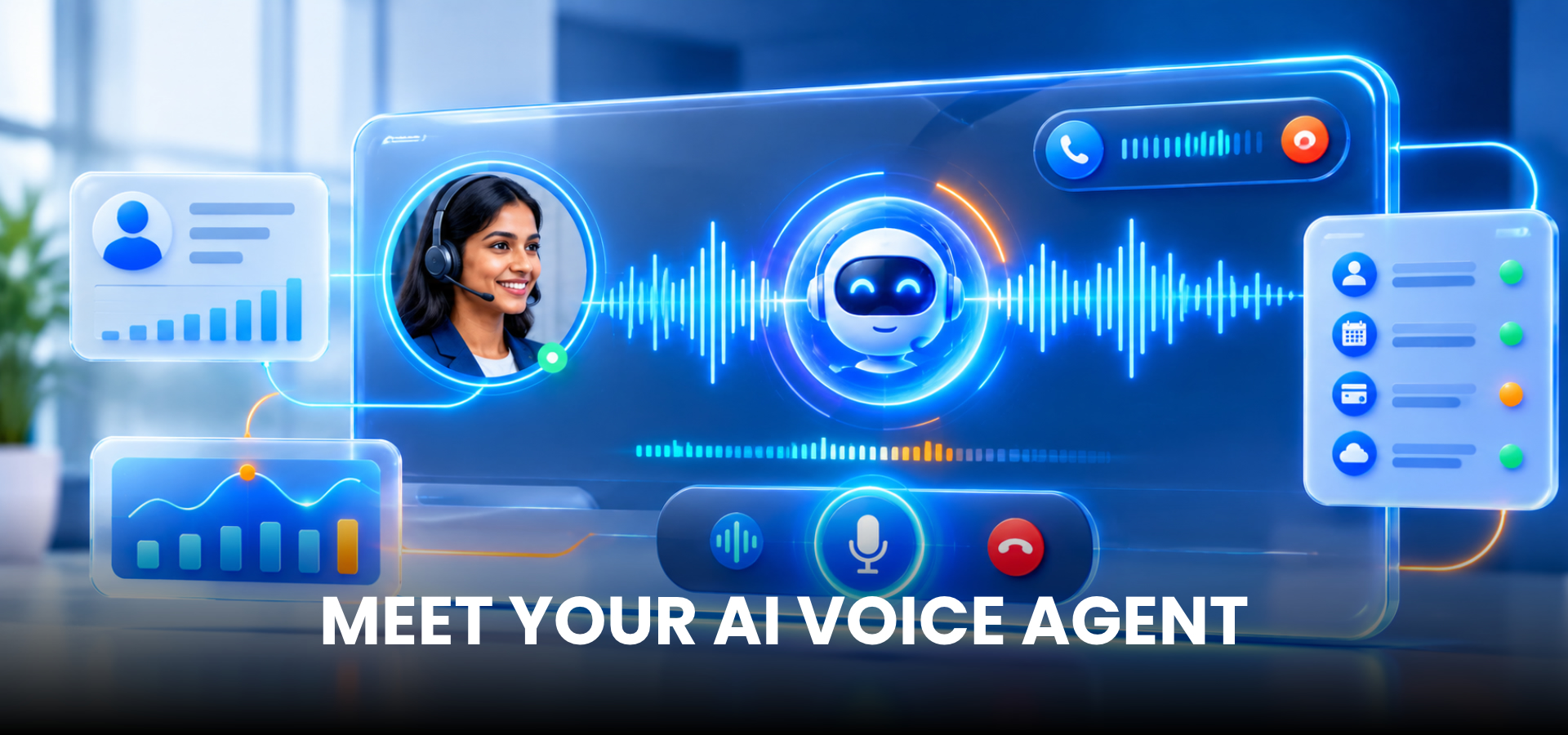
An AI voice agent is a software application designed to communicate with people through spoken conversations.
It listens to customer requests, understands their purpose, prepares appropriate responses, and communicates through generated speech.
Depending on its configuration, it may also retrieve information, update records, and complete supported business activities.
Unlike traditional recorded telephone systems, AI Voice Agents can respond differently depending on what customers say.
They can also maintain relevant conversation details, allowing customers to ask follow-up questions without repeatedly providing the same information.
How AI Voice Agents Understand Customers
Customers rarely express their requirements using identical sentences.
Someone checking an order might ask:
Where is my order?
Has my package been shipped?
When will my delivery arrive?
Can you check my shipment status?
Why haven't I received my order?
Although the wording is different, these questions relate to order tracking or delivery assistance.
Conversational AI helps voice agents recognize the underlying customer requirements.
The system can then request an order of reference, complete appropriate verification, and retrieve the necessary information.
When a request is unclear, the voice agent should ask additional questions instead of making assumptions.
What Can an AI Voice Agent Do?
The capabilities of an AI voice agent depend on its available information, software integrations, and operational permissions.
Customer requirement | AI voice agent capability |
General enquiries | Answer common business questions |
Appointment scheduling | Check availability and create bookings |
Order tracking | Retrieve order status information |
Customer complaints | Collect details and create support tickets |
Service requests | Initiate approved business workflows |
Customer follow-ups | Conduct authorized follow-up calls |
Call routing | Connect customers with relevant departments |
Feedback collection | Record customer responses |
After-hours support | Provide selected assistance outside working hours |
Multilingual communication | Support conversations in configured languages |
Businesses should identify which activities can be automated reliably before expanding the system's responsibilities.
How AI Voice Agents Support Employees
Customer support employees frequently spend time collecting preliminary information before addressing a customer's actual problem.
For example, when a customer reports a damaged product, an employee may need to retrieve the order reference, purchase details, and description of the issue.
An AI voice agent can collect this information and create a structured support request before transferring the customer.
The employee can then concentrate on investigating and resolving the problem.
Through AI Customer Support Automation, businesses can establish a working relationship between automated systems and human support teams.
Routine activities can be automated where appropriate, while employees remain available for situations requiring personal attention.
How Does AI Voice Automation Work?
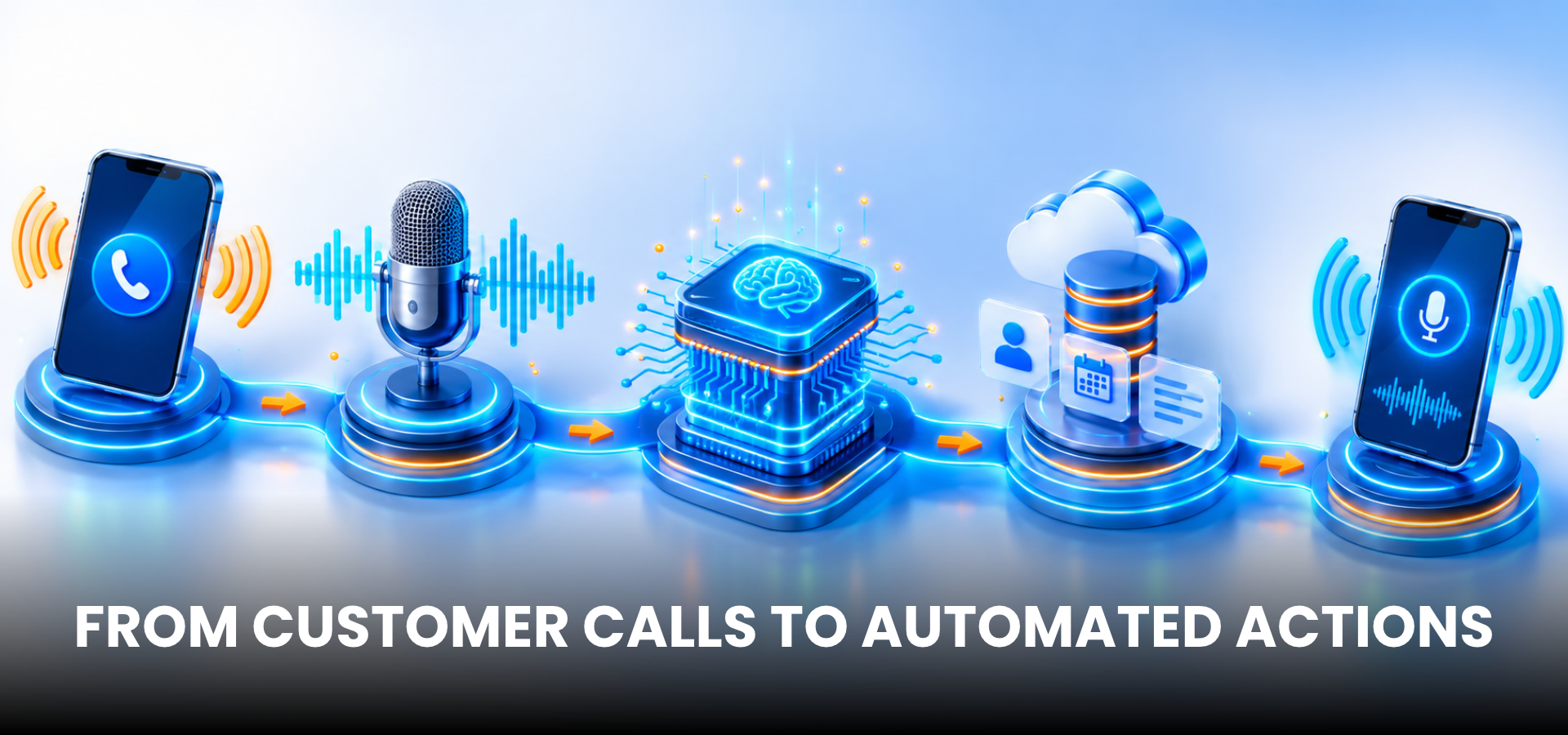
Although customers experience voice automation as a telephone conversation, several technologies operate together behind the scenes.
These technologies help the system understand customer requests, retrieve information, generate responses, and complete supported activities.
The exact architecture may vary depending on business requirements, but most voice automation systems follow a similar process.
Step 1: Receiving the Customer Call
The process begins when a customer contacts the business.
The call may arrive through an existing telephone number, cloud communication platform, contact center, or another supported voice channel.
The voice agent receives the call and introduces itself.
Businesses can configure greetings according to operating hours, supported languages, available services, and department requirements.
Customers should be informed that they are interacting with an automated system.
A clear introduction helps customers understand the type of assistance available.
Step 2: Listening to the Customer
The voice agent listens to the customer's request.
Customers may speak quickly, pause between sentences, change their requirements, or provide incomplete information.
A well-designed voice system should accommodate reasonable variations in speaking behavior.
For example, a customer might request an appointment for next Friday.
If the date is unclear, the system should confirm the exact day before proceeding.
Clarification is particularly important when conversations involve bookings, customer records, or operational activities.
Step 3: Converting Speech into Information
Many voice automation systems use Automatic Speech Recognition to convert spoken audio into text.
This allows other software components to interpret the customer's request.
Some modern systems can also process spoken audio more directly.
Recognition accuracy is important because errors involving customer names, order references, dates, or addresses can affect subsequent activities.
Businesses should evaluate voice systems under realistic conditions, including background noise, regional accents, and different speaking speeds.
Step 4: Understanding Customer Intent
Once the spoken information has been processed, the system identifies what the customer wants to achieve.
For example, a customer may explain that they do not want to cancel an appointment but need to change their time.
The voice agent must distinguish between cancellation and rescheduling because these activities have different consequences.
Through Conversational AI, the system can interpret the customer's request and identify the next appropriate action.
If important information is missing, the voice agent can ask a relevant follow-up question.
Step 5: Retrieving Business Information
Understanding a customer's question does not automatically provide the information needed to answer it.
The voice agent must retrieve information from reliable sources.
For general enquiries, the system may access an approved knowledge base containing business policies, service details, operating hours, and frequently asked questions.
For customer-specific requests, it may need to access connected operational applications.
For example, an appointment request requires scheduling information, while an order enquiry requires access to order management records.
Through AI Integration Services, businesses can establish controlled connections between voice agents and these applications.
Step 6: Preparing a Relevant Response
After retrieving the necessary information, the system prepares a response.
The response may provide an answer, explain available options, request clarification, or communicate with the next step.
Voice responses should remain clear and easy to understand.
Unlike written information, customers cannot always review a spoken response conveniently.
For example, instead of reading every available appointment time for an entire week, the voice agent can present a few options based on the customer's preferences.
The customer can request additional options if necessary.
Step 7: Generating a Spoken Response
Speech generation technology converts the prepared response into audio.
Modern voice systems may support different languages, speaking styles, pronunciation settings, and natural pacing.
Businesses can select a voice that reflects their communication standards.
However, the objective should be clear and understandable in communication rather than simply making the system sound human.
Customers should continue to understand that they are communicating with an automated assistant.
Step 8: Completing the Customer Request
Some conversations involve activities beyond answering questions.
Customers may want to create appointments, arrange callbacks, submit complaints, or request services.
When connected to appropriate business applications, the voice agent can perform authorized activities.
For example, after a customer confirms an appointment date and time, the system can submit the booking to the scheduling application.
The voice agent should communicate successful completion only after receiving confirmation from the connected application.
This is an important part of reliable Business Process Automation.
Step 9: Recording Conversation Outcomes
After customer interaction, the system may create a structured record of the conversation.
This record can include the purpose of the call, assistance provided, completed activities, and remaining requirements.
For example, a customer may request a callback from a sales representative.
The voice agent can record this requirement within the CRM application.
Through Intelligent Automation, businesses can connect conversation outcomes with wider operational reporting and employee workflows.
Step 10: Providing Human Assistance
Not every customer request can be completed automatically.
A connected application may be unavailable; the necessary information may be missing, or the conversation may involve a sensitive issue.
In these situations, the voice agent should explain the limitation and provide an appropriate support option.
This may involve transferring the customer to an employee or creating a callback request.
Effective AI-Powered Customer Service requires reliable escalation procedures as well as automated conversation capabilities.
What Technologies Are Used in AI Voice Automation?
Voice automation combines several technologies that perform different responsibilities.
Businesses do not necessarily need to develop every component independently. Existing AI technologies, communication platforms, and business applications can be combined into a suitable solution.
The important consideration is how effectively these components work together.
Automatic Speech Recognition
Automatic Speech Recognition, commonly known as ASR, allows software to identify spoken words.
It helps convert customer speech into information that other system components can process.
Recognition accuracy can be influenced by background noise, pronunciation, telephone audio quality, and speaking speed.
Businesses should evaluate speech recognition using conversations that reflect their actual customers.
A system that performs well during a controlled demonstration may behave differently during everyday customer calls.
Natural Language Processing
Natural Language Processing helps software interpret human language.
It can identify customer intentions, extract relevant information, and understand relationships between different parts of a conversation.
For example, a customer may explain that they want to change the delivery address rather than cancel an order.
Natural language processing helps AI Voice Assistants understand these differences and select the appropriate workflow.
Large Language Models
Large Language Models can support language understanding, response generation, conversation summarization, and information extraction.
They help voice agents interpret customer questions expressed in different ways.
However, language models do not automatically understand every business policy or operational requirement.
They should be connected to approved information sources, validation procedures, and clearly defined operational boundaries.
This helps reduce unsupported responses and unauthorized business activities.
Text-to-Speech Technology
Text-to-speech technology allows software to communicate through generated audio.
The quality of speech influences how easily customers understand the voice agent.
Incorrect pronunciation, excessive speaking speed, or unnatural pauses can create confusion.
Businesses should evaluate how the system communicates between dates, numbers, customer names, locations, and product terminology.
Clear speech is particularly important when customers need to confirm important information.
Telephony Integration
Telephony integration connects voice automation with the communication channels customers use.
Depending on existing infrastructure, businesses may connect AI voice agents with telephone numbers, cloud communication systems, or contact center platforms.
These integrations may also support call transfers, queue management, operating-hour rules, and backup call handling.
Reliable telephony integration is essential for maintaining customer access.
Application Programming Interfaces
Application Programming Interfaces, commonly known as APIs, allow different software systems to communicate.
Through APIs, voice agents can retrieve information and complete supported activities within business applications.
For example, a scheduling application may provide an interface that allows authorized systems to check appointment availability and create bookings.
When existing applications do not provide suitable integration capabilities, Custom Software Development may be required.
Knowledge Management
Voice agents require reliable information about the business they represent.
A knowledge base may contain product details, service information, operating hours, policies, and frequently asked questions.
When a customer asks about a return policy, the voice agent should retrieve the approved information instead of generating an answer based on assumptions.
Businesses should regularly review and update these information sources.
Conversation and Workflow Management
Conversation management helps the system handle greetings, questions, interruptions, confirmations, corrections, and transfers.
Workflow management determines how customer requests are converted into operational activities.
For example, booking an appointment may require checking availability, collecting customer details, applying scheduling rules, and sending confirmation.
Through AI Development Services, businesses can develop voice solutions that combine flexible conversations with controlled operational workflows.
What Is the Difference Between IVR and AI Voice Automation?
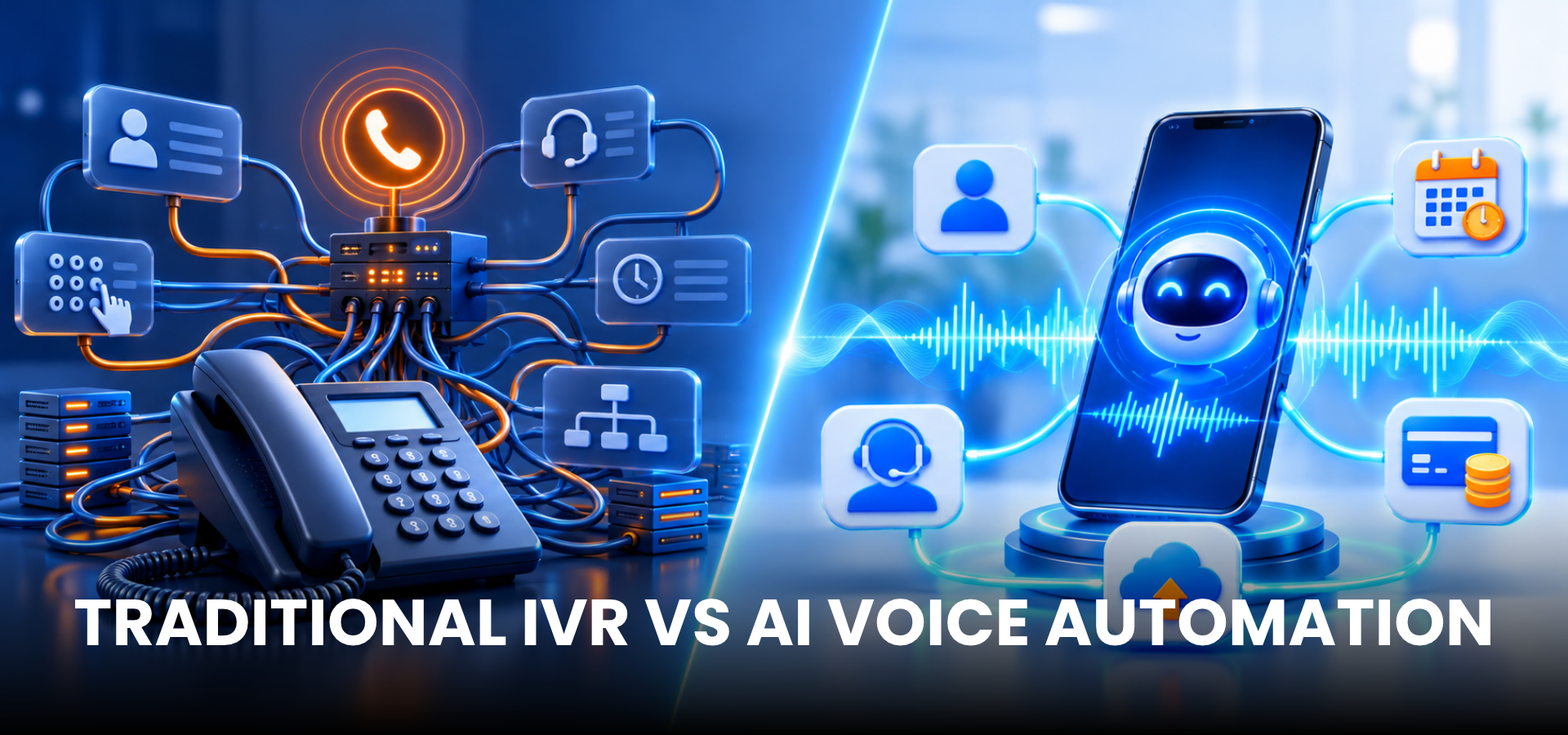
Many businesses already use Interactive Voice Response systems, commonly known as IVR.
Traditional IVR systems allow customers to navigate telephone menus by pressing numbers or selecting predefined options.
These systems remain useful for basic call routing and recorded announcements.
However, customers may need to navigate several menu levels before reaching the appropriate department.
AI Voice Automation allows customers to explain their requirements more naturally.
Traditional IVR | AI Voice Automation |
Uses predefined telephone menus | Supports natural spoken conversations |
Often requires keypad inputs | Understands supported spoken requests |
Provides recorded responses | Generates relevant responses |
Follows fixed decision paths | Adapts to changing customer requirements |
Mainly supports call routing | Supports connected customer workflows |
Limited conversation context | Maintains relevant conversation details |
Basic integration capabilities | Can connect with multiple business applications |
Why Traditional Telephone Menus Can Be Difficult
Customers do not always know which department is responsible for their problem.
For example, someone experiencing an issue with an online order may be unsure whether to contact billing, delivery support, or general customer service.
Selecting the wrong department can result in additional transfers and longer waiting times.
Through AI Call Automation, customers can describe their problem directly.
The system can identify the general purpose of the request and route the conversation appropriately.
Can Businesses Keep Their Existing IVR?
Introducing AI does not necessarily require businesses to replace their existing telephone infrastructure.
Some organizations may continue using traditional IVR for basic department selection while introducing AI voice agents for selected customer activities.
Others may use a voice agent as the initial point of contact before transferring customers to existing support queues.
The appropriate approach depends on the organization's communication infrastructure and operational requirements.
Why Do Businesses Need AI Customer Support?
Customer support influences how people experience a business.
Customers expect timely responses, accurate information, and convenient access to assistance.
As organizations grow, maintaining these expectations can become increasingly challenging.
AI Customer Support Automation can help businesses address several common operational difficulties.
Increasing Customer Enquiries
Business expansion often leads to additional customer communication.
New products, services, locations, and marketing campaigns can increase the number of enquiries received.
Without suitable support systems, employees may struggle to manage growing call volumes.
Voice automation can handle selected repetitive enquiries while maintaining human support for more complex situations.
Repetitive Customer Questions
Customer service teams frequently answer similar questions throughout the day.
These may involve operating hours, delivery timelines, service availability, booking procedures, and general policies.
An AI voice agent connected to approved information can answer many of these questions.
Employees can then spend more time resolving unusual customer problems.
Missed Customer Calls
Small and medium-sized businesses may not always have employees available to answer incoming calls.
When a potential customer receives no response, the business may miss an opportunity to understand their requirements.
AI Voice Assistants can provide basic information and collect enquiries when employees are unavailable.
These enquiries can be recorded for appropriate follow-up.
Long Waiting Times
Customers may experience delays when all support employees are occupied.
Even a simple question can require the customer to remain in a telephone queue.
Voice automation can help manage suitable enquiries without waiting for an employee.
Customers requiring more detailed assistance can still be transferred to the appropriate support team.
Limited After-Hours Support
Not every business maintains customer support for employees throughout the day and night.
Customers may contact businesses during evenings, weekends, and holidays.
An automated voice agent can provide selected assistance outside normal operating hours.
This may include answering common questions, collecting service requests, and arranging callbacks.
Disconnected Customer Information
Customer support employees often need to access multiple applications during a conversation.
Information may be stored across CRM platforms, scheduling systems, order management software, and spreadsheets.
Through AI Integration Services, businesses can connect voice agents with relevant information sources.
This helps reduce repetitive searches and supports more connected customer communication.
Increasing Employee Workloads
Customer service employees often perform administrative activities alongside customer conversations.
They may update records, create support tickets, prepare notes, and assign requests to other departments.
Through Business Process Automation, selected activities can be completed automatically.
This allows employees to concentrate on customer requirements rather than spending unnecessary time transferring information between applications.
What Are the Benefits of AI Voice Automation?

The benefits of voice automation depend on how effectively the system is designed and implemented.
Businesses should evaluate actual customer outcomes rather than if introducing artificial intelligence automatically improves customer support.
When implemented appropriately, AI Voice Automation can support several important business objectives.
Faster Customer Responses
Customers frequently contact businesses because they need immediate information.
Waiting several minutes for a simple answer can create unnecessary frustration.
Voice agents can provide approved responses to suitable customer questions without requiring an available employee.
For example, a customer asking about business hours or appointment availability may receive assistance directly.
This can make routine customer interactions more convenient.
Improved Customer Support Availability
Voice automation can help businesses provide selected support services beyond regular operating hours.
Customers may be able to obtain information, submit requests, or complete supported activities at different times of the day.
This can be particularly useful for businesses serving customers across different regions.
However, continuous availability also depends on reliable telephone infrastructure, AI services, and connected business applications.
Reduced Manual Work
Customer support teams frequently perform repetitive activities such as collecting information, checking records, and creating service requests.
Intelligent Automation can help businesses connect these activities with existing operational workflows.
For example, a voice agent can collect information about a customer complaint and create a structured support ticket.
Employees can review the information rather than manually entering every detail.
Better Call Routing
Customers may not always understand how a business organizes its departments.
An AI voice agent can identify the purpose of a conversation and route the customer towards an appropriate support team.
This may reduce unnecessary transfers and help employees receive enquiries relevant to their responsibilities.
Consistent Customer Communication
Businesses often want customers to receive consistent information about services, policies, and operational procedures.
Voice agents can retrieve responses from approved knowledge sources.
This helps reduce variations in routine customer communication.
However, businesses must maintain accurate information whenever policies, prices, or service requirements change.
Improved Customer Enquiry Management
Automated voice conversations can generate structured records of customer requirements.
Businesses can identify which questions customers ask most frequently, which services generate enquiries, and which problems regularly require employee assistance.
These insights can help organizations improve their customer communication processes.
For example, frequent calls about delivery status may indicate that customers need clearer shipment notifications.
Better Employee Productivity
Employees provide significant value when handling complex customer requirements, investigating problems, and maintaining customer relationships.
Repetitive enquiries may reduce the time available for these responsibilities.
Through AI-Powered Customer Service, businesses can distribute work between automated systems and human support teams more effectively.
Routine activities can be automated while employees focus on responsibilities requiring experience and judgment.
Improved Business Scalability
As businesses expand, customer support requirements may become more complex.
Organizations may introduce additional locations, services, departments, and customer communication channels.
Voice automation can support selected increases in customer enquiries without requiring every interaction to be managed manually.
Additional workflows can also be introduced as business requirements evolve.
Businesses should nevertheless evaluate infrastructure capacity, operating costs, integration reliability, and employee support requirements before expanding automation.
Can AI Answer Customer Questions?
AI voice agents can answer many customer questions when they have access to accurate business information.
General enquiries are often suitable for starting points because they involve clearly defined information and limited operational risk.
Product and Service Enquiries
Customers may contact businesses to understand product features, available services, operating locations, or booking procedures.
AI Voice Agents can retrieve approved information and communicate it through natural conversations.
For example, a customer contacting an automotive service center may want to understand available maintenance services.
The voice agent can explain the approved service information and offer appointment assistance.
Questions requiring specialist recommendations should be transferred to qualified employees.
Business Policy Questions
Customers frequently ask about cancellation procedures, return policies, delivery conditions, and service requirements.
A voice agent can retrieve relevant information from an approved knowledge base.
The system should distinguish between explaining a general policy and deciding about an individual customer dispute.
Exceptions and unusual circumstances may require employee review.
Questions Requiring Additional Information
Some customer questions cannot be answered without clarification.
A customer asking about delivery availability may need to provide a location.
Someone requesting an appointment may need to specify the required service.
Through Conversational AI, voice agents can ask relevant questions before retrieving information.
This helps reduce misunderstandings and improves response accuracy.
Questions Outside the System's Knowledge
A voice agent should not attempt to answer every possible question.
When information is unavailable or a request exceeds the system's capabilities, the customer should receive an appropriate explanation.
The system can offer human assistance or create a request for further support.
This is an important part of maintaining reliable customer communication.
Can AI Handle Incoming Calls?
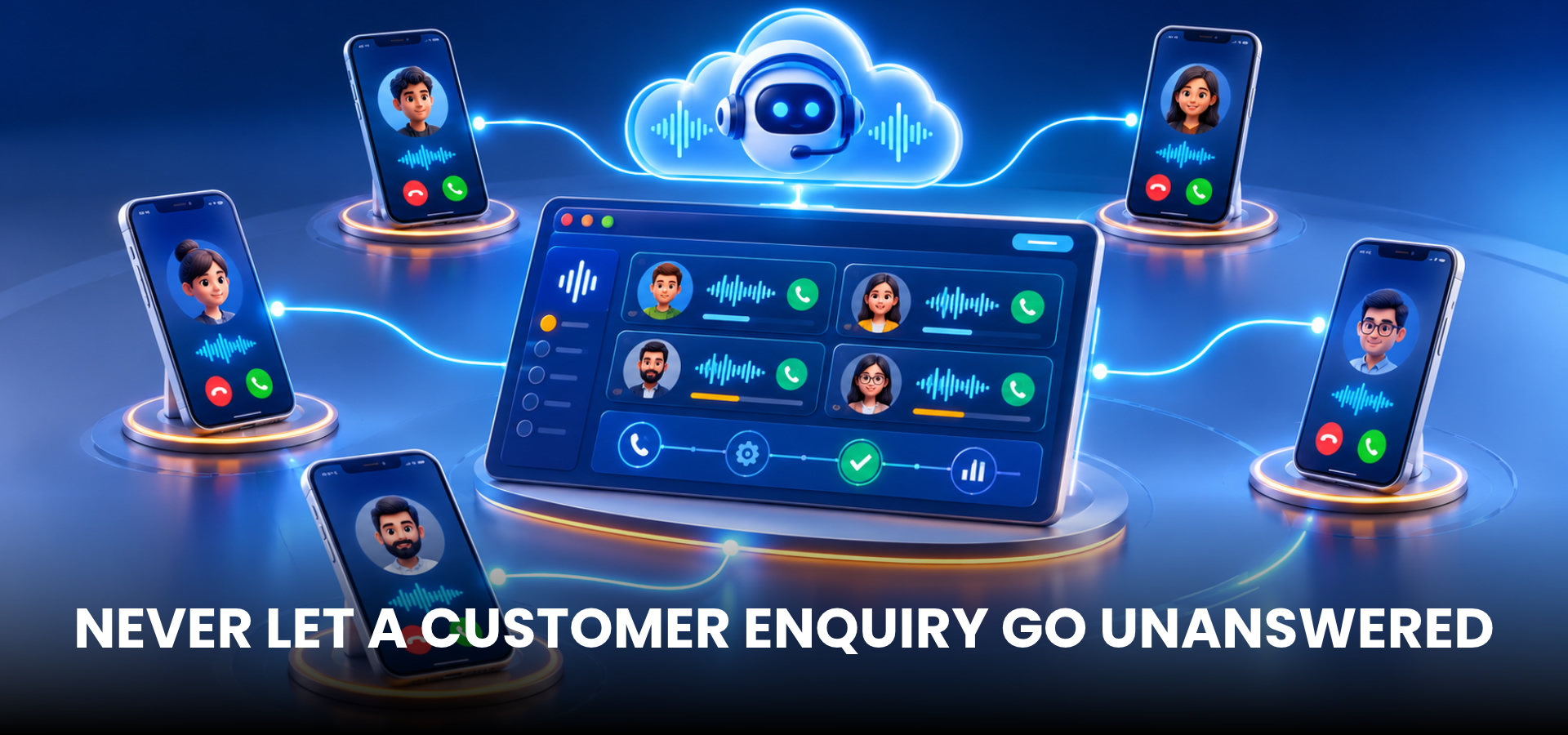
Incoming calls remain an important communication channel for businesses. Customers often prefer telephone conversations when they need immediate assistance, want to clarify information, or find online forms inconvenient.
However, managing incoming calls can become difficult when several customers contact a business simultaneously.
AI Call Automation enables businesses to manage selected incoming conversations without requiring employees to answer every call manually.
Answering General Enquiries
Customers frequently contact businesses to ask about operating hours, available services, business locations, and appointment procedures.
An AI voice agent can retrieve approved information and provide relevant answers.
This helps customers receive assistance while reducing repetitive responsibilities for employees.
Supporting Existing Customers
Existing customers may call to check appointments, order details, service requests, or previous enquiries.
Through AI Integration Services, voice agents can connect with customer management applications and retrieve relevant information after appropriate verification.
This allows businesses to provide more personalized assistance based on existing customer records.
Managing High Call Volumes
Businesses may experience increased call volumes during promotional campaigns, seasonal demand, or service interruptions.
During these periods, employees may struggle to answer every incoming call.
AI Voice Automation can help manage routine enquiries while directing more complex requests towards available employees.
For example, an online retailer experiencing delivery delays can use a voice agent to communicate approved shipment updates.
Customers requiring individual investigation can be transferred to the appropriate support team.
Handling After-Hours Calls
Customers may contact businesses outside of normal working hours.
Instead of receiving only a recorded message, customers can interact with an automated voice assistant that provides selected assistance.
The system may answer common questions, collect service requests, or arrange callbacks.
This helps businesses maintain communication with customers even when employees are unavailable.
Capturing New Customer Enquiries
Incoming calls may represent potential business opportunities.
When employees are unavailable, these enquiries can go unanswered.
Through AI Customer Support Automation, businesses can collect relevant customer details, understand service requirements, and record requests for follow-up.
The information can be transferred to a CRM application, allowing employees to review and manage enquiries during working hours.
Can AI Make Outgoing Calls?
Businesses frequently contact customers to provide reminders, communicate updates, collect feedback, and follow up on previous enquiries.
Managing these activities manually can consume considerable employee time, especially when organizations serve large numbers of customers.
AI Voice Agents can automate selected outgoing conversations while following approved communication procedures.
Unlike traditional recorded calls, AI-powered voice systems can respond to customer questions and collect relevant information during interaction.
Appointment Reminders
Appointment-based businesses often contact customers before scheduled visits.
An AI voice agent can communicate appointment details and ask whether the customer plans to attend.
Customers may confirm their attendance or request a different time.
When integrated with scheduling software, the system can update the appointment status according to the customer's response.
This helps businesses maintain accurate schedules and identify appointments requiring further attention.
Delivery Notifications
Retailers, manufacturers, and logistics companies frequently communicate delivery updates.
Through AI Call Automation, businesses can inform customers about expected deliveries, schedule changes, and collection arrangements.
The information should be retrieved from reliable operational applications.
Customers requiring additional assistance can be directed towards the appropriate support team.
Customer Follow-Up Calls
After receiving an enquiry, businesses may need to contact customers to understand whether they require additional information.
An automated voice assistant can conduct approved follow-up conversations and record customer responses.
For example, a customer who previously requested information about a service may indicate that they would like to arrange a consultation.
The voice agent can record this requirement and create a follow-up task.
Customer Feedback
Businesses can use voice automation to collect feedback after completing a service or delivering a product.
The system can ask approved questions about customer experience and record responses.
Through Business Process Automation, feedback can be transferred to reporting applications or customer support systems.
Employees can review recurring concerns and identify opportunities to improve service quality.
Requested Callbacks
Customers sometimes request callbacks because employees are unavailable or because they prefer to speak at a different time.
Voice automation can help businesses manage these requests.
The system may contact the customer at an agreed time and connect them with an appropriate representative.
Outgoing automated communication should always respect applicable consent requirements, customer preferences, and opt-out procedures.
Can AI Book Appointments?
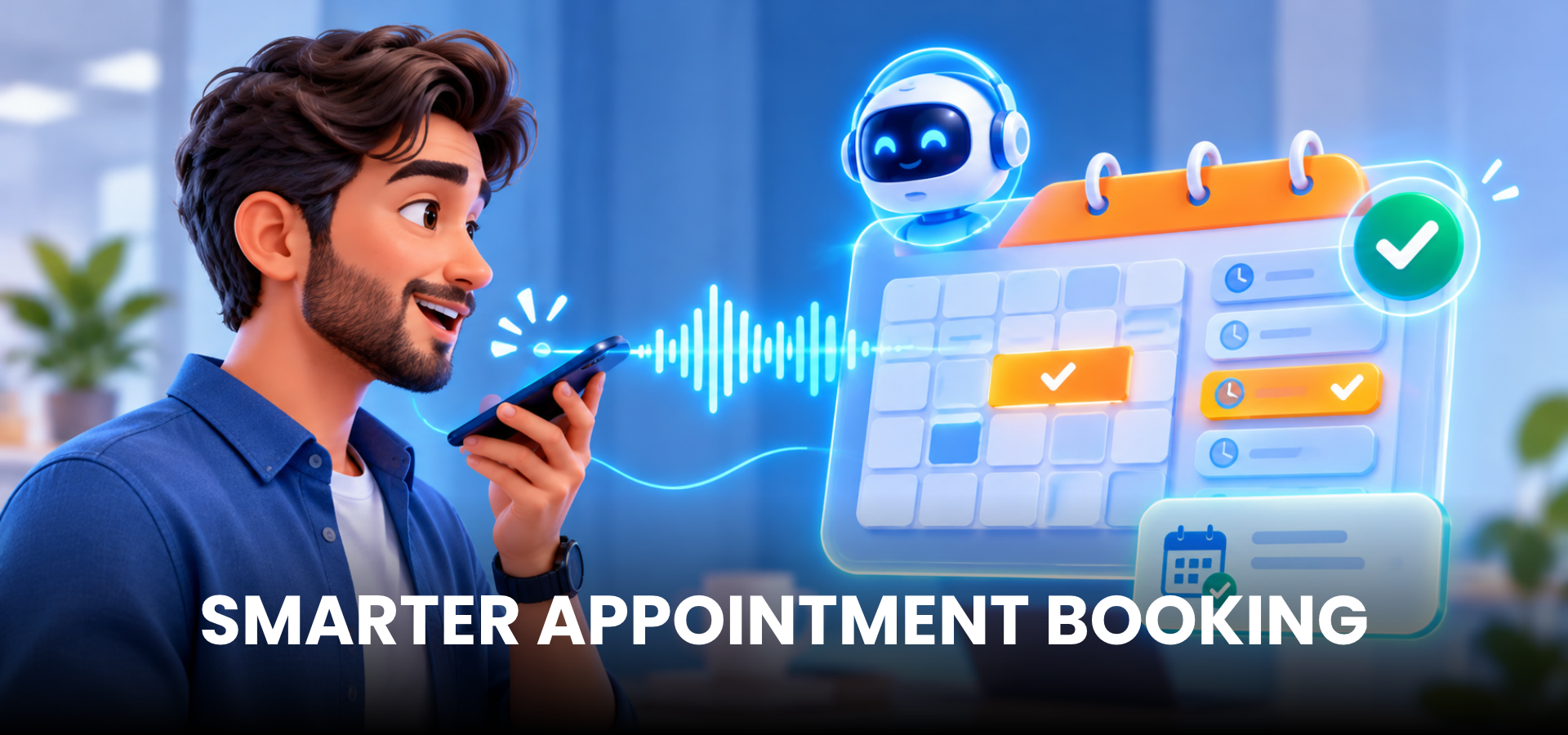
Appointment scheduling is one of the most practical applications of AI Voice Automation.
Healthcare providers, salons, automotive service centers, consulting firms, and other service-based businesses receive frequent calls from customers who want to schedule or change appointments.
Traditionally, employees must check schedules, collect customer information, create bookings, and communicate confirmations.
Voice automation can connect these activities into a single customer conversation.
Understanding Customer Requirements
The voice agent begins by identifying the requested service, preferred location, date, and time.
For example, a customer may request a vehicle maintenance appointment during the following week.
The system can ask relevant questions to understand the booking requirements.
It should collect only the information necessary to complete the appointment.
Checking Appointment Availability
Through AI Integration Services, the voice agent can connect with scheduling applications and retrieve available appointment times.
If the customer's preferred time is unavailable, the system can present suitable alternatives.
This allows customers to select an appointment without requiring employees to manually review schedules.
Confirming the Booking
Before creating an appointment, the voice agent should confirm important details, including the selected service, location, date, and time.
Once the customer confirms the information, the system can submit the booking through the connected application.
The appointment should only be communicated as confirmed after the scheduling system successfully completes the request.
Sending Appointment Confirmations
Businesses can connect voice automation with authorized messaging or email services.
After a successful booking, customers may receive written confirmation containing the appointment details and relevant instructions.
This creates a connected experience between telephone communication and digital customer support.
Rescheduling and Cancelling Appointments
Customers may also contact businesses to change or cancel existing appointments.
After appropriate verification, the voice agent can retrieve the booking and guide the customer through supported options.
The system should apply existing business policies, including cancellation restrictions and scheduling requirements.
Through AI Customer Support Automation, businesses can simplify appointment management while maintaining control over operational decisions.
Can AI Track Customer Orders?
Order tracking is a common reason customers contact businesses.
After purchasing a product, customers may want to know whether their order has been processed, dispatched, or delivered.
Employees often need to search for order management applications before providing this information.
AI Voice Automation can connect customer conversations directly with approved order information.
Retrieving Order Details
The voice agent can request an order reference or another approved identifier.
After appropriate verification, it can retrieve relevant information from an integrated order management system.
This may include the current order status, dispatch information, and available delivery estimates.
Providing Delivery Updates
Customers can receive information about whether an order is being prepared, shipped, or delivered.
The system should clearly distinguish between confirmed information and estimated delivery dates.
It should avoid making delivery commitments that are not supported by business records.
Handling Delayed Orders
When customers report delivery delays, the voice agent can retrieve available information and communicate approved updates.
If the delay requires investigation, the system can create a customer support request.
Through Business Process Automation, this request can be assigned to the relevant operational team.
Managing Missing or Incorrect Deliveries
Some delivery enquiries require more detailed investigation.
For example, a customer may report that an order has been marked as delivered but has not been received.
An AI voice agent can collect preliminary information and create a structured support ticket.
However, decisions involving refunds, replacements, or compensation should follow approved business procedures.
Supporting Order Changes
Customers may request changes to delivery addresses or contact information.
Whether these changes can be completed automatically depends on the order status and business policies.
Through AI Integration Services, the system can retrieve relevant records and determine which supported actions are available.
Requests requiring additional authorization should be transferred to employees.
Can AI Handle Customer Complaints?
Customer complaints often require more attention than routine enquiries.
Customers may report damaged products, incorrect invoices, delayed services, or unsatisfactory experiences.
Although AI cannot independently resolve every complaint, AI-Powered Customer Service can help businesses organize complaint management.
Understanding Customer Problems
The voice agent can listen to the customer's description and identify the general nature of the issue.
Complaints may be categorized according to billing, product quality, delivery, service performance, or another business activity.
This helps determine which department should review the request.
Collecting Complaint Information
A complaint may require an order of reference, invoice number, service date, or description of the problem.
The voice agent can collect this information during the conversation.
Through Conversational AI, the system can ask relevant follow-up questions when important details are missing.
This allows employees to receive more complete information before investigating the issue.
Creating Support Tickets
When connected to customer support software, an AI voice agent can create structured complaint records.
The record may include the customer reference, complaint category, reported problem, and requested assistance.
Employees can review these details through their existing support application.
Providing Complaint Updates
Customers may contact businesses to understand the progress of an existing complaint.
The voice agent can retrieve approved status information and explain whether the request has been received, assigned, or reviewed.
This can reduce repetitive enquiries without removing access to human support.
Transferring Complex Complaints
Some complaints involve sensitive circumstances, significant financial concerns, or emotional customer experiences.
These situations may require human judgment and personal attention.
Effective Intelligent Automation should recognize when automated assistance is no longer suitable and provide an appropriate escalation option.
Can AI Manage Customer Follow-Ups?
Customer follow-ups help businesses maintain communication after an enquiry, purchase, service appointment, or support interaction.
However, employees may find it difficult to manage every follow-up manually as customer numbers increase.
AI Voice Assistants can support selected follow-up activities through connected business applications.
Following Up on New Enquiries
Potential customers may contact businesses to request information before deciding.
An AI voice agent can conduct an approved follow-up conversation to understand whether the customer requires additional assistance.
The outcome can be recorded in a CRM application for employee review.
Following Up After Service Completion
Businesses may want to confirm whether customers are satisfied after receiving a service.
Voice automation can collect feedback and identify unresolved concerns.
If a customer reports a problem, the system can create a support request for the appropriate team.
Managing Pending Customer Requests
Some enquiries cannot progress until customers provide additional information.
For example, a quotation request may require details about the customer's preferred service or project requirements.
Through Business Process Automation, voice agents can collect the missing information and update the relevant business records.
Maintaining Follow-Up Records
When voice automation connects with CRM software, businesses can maintain records of completed calls, customer responses, and pending activities.
This helps employees understand previous conversations and avoid unnecessary repeated communication.
Where Is AI Voice Automation Used?

Businesses across different industries depend on effective customer communication.
Although operational requirements vary, many organizations experience similar challenges involving repetitive enquiries, appointment scheduling, information retrieval, and service coordination.
AI Voice Automation can be adapted to support different industry requirements.
Industry | Common voice automation applications |
Healthcare | Appointment scheduling and administrative enquiries |
Hospitality | Room service, reservations, and guest assistance |
Retail | Product availability and customer enquiries |
E-commerce | Order tracking and return requests |
Logistics | Shipment updates and delivery scheduling |
Banking | General enquiries and secure call routing |
Insurance | Claim status and renewal reminders |
Real estate | Property enquiries and viewing appointments |
Education | Admission enquiries and counselling bookings |
Automotive | Vehicle service scheduling and updates |
Manufacturing | Distributor enquiries and service requests |
Telecommunications | Service information and technical support routing |
Professional services | Client enquiries and consultation scheduling |
The most suitable applications depend on customer requirements, available business information, software integration capabilities, and operational responsibilities.
How Is AI Voice Automation Used in Healthcare?
Healthcare organizations receive frequent calls from patients seeking appointment information, facility details, and administrative assistance.
Employees often manage these conversations alongside registration, scheduling, and other responsibilities.
AI Customer Support Automation can help healthcare organizations manage selected non-clinical activities.
Patient Appointment Scheduling
Patients can contact a voice agent to request an appointment.
The system can collect information about the required department, preferred location, and appointment date.
Through integration with scheduling software, it can retrieve available options and complete supported bookings.
Appointment Reminders
Healthcare providers can use voice automation to communicate with approved appointment reminders.
Patients may confirm their attendance or request rescheduling.
This helps administrative teams maintain updated appointment records.
General Patient Enquiries
Patients frequently ask about operating hours, available departments, facility locations, and registration procedures.
An AI voice agent can retrieve approved information and provide relevant assistance.
This allows administrative employees to concentrate on requests requiring individual attention.
Maintaining Patient Privacy
Healthcare communication may involve sensitive personal information.
Voice agents should access only the information necessary for authorized administrative activities.
Questions involving symptoms, diagnosis, medication, treatment recommendations, or urgent medical concerns should follow appropriate clinical escalation procedures.
Through responsible AI Development Services, healthcare organizations can explore automation while maintaining suitable privacy and operational controls.
How Is AI Voice Automation Used in Hotels?
Hotels receive customer enquiries before arrival, during a guest's stay, and after departure.
Guests may request information about reservations, room service, housekeeping, dining facilities, and transportation.
During busy periods, employees may need to manage several requests simultaneously.
AI Voice Agents can help hotels organize selected guest interactions.
Hotel Reservations
Potential guests may contact hotels to understand room availability, facilities, and reservation procedures.
A voice agent can provide approved information and retrieve supported availability details from reservation applications.
Complex booking requirements can be transferred to hotel employees.
Room Service Requests
Guests can contact room service through an existing hotel telephone system.
An AI voice agent can communicate available menu information, collect the guest's order, and confirm selected items.
Through AI Integration Services, the request can be transferred to the appropriate hotel application.
Special dietary requirements and allergy-related concerns should receive appropriate staff confirmation.
Housekeeping Requests
Guests frequently request additional towels, toiletries, or room cleaning.
These activities often follow predictable operational procedures.
Through Business Process Automation, a voice agent can create a housekeeping request and notify the relevant team.
This helps hotel employees manage requests through structured workflows.
Guest Information
Guests may ask about breakfast timings, swimming pool hours, gym facilities, or check-out procedures.
An AI voice agent can retrieve approved hotel information and help.
Hotel Management System Integration
Hotels often depend on property management systems, reservation applications, point-of-sale software, and guest service platforms.
Connecting voice automation with these systems can help transform guest conversations into operational activities.
The objective is to improve service coordination while maintaining the personal attention expected in hospitality.
How Is AI Voice Automation Used in Retail?
Retail businesses receive customer enquiries about products, prices, availability, store locations, and returns.
During promotional campaigns, these enquiries may increase significantly.
AI Customer Support Automation can help retailers manage suitable repetitive conversations.
Product Information
Customers may want to understand product features, available colors, sizes, or specifications.
A voice agent can retrieve approved product information from connected applications.
Questions requiring specialist recommendations can be transferred to employees.
Stock Availability
Customers frequently contact retailers to determine whether a product is available.
Through AI Integration Services, voice agents can retrieve supported inventory information.
For businesses operating multiple locations, the system may also provide store-specific availability.
Store Information
Voice agents can answer questions about operating hours, store locations, collection procedures, and available services.
These enquiries often require reliable information rather than individual employee assistance.
Returns and Exchanges
An automated voice assistant can explain approved return and exchange policies.
It may also collect information required to create a return request.
Refund approvals and policy exceptions should remain subject to established business procedures.
How Is AI Voice Automation Used in E-Commerce?
E-commerce businesses manage customer interactions across websites, mobile applications, email, messaging platforms, and telephone support.
Customers may still prefer speaking directly when they experience delivery problems or need additional assistance.
AI Call Automation can provide another convenient customer support channel.
Order Tracking
Voice agents can retrieve approved order information and communicate current delivery status.
This can help reduce repetitive order tracking enquiries.
Return Requests
Customers may contact support to understand return procedures or initiate a product of return.
The voice agent can explain relevant policies and collect the necessary information.
Requests involving disputes or unusual circumstances can be transferred to employees.
Delivery Enquiries
Customers can receive information about delivery schedules, supported address changes, and shipment updates.
Through Conversational AI, the system can identify the customer's specific requirements and follow the appropriate workflow.
Managing Seasonal Demand
Online businesses may experience significant increases in customer enquiries during seasonal sales.
Voice automation can support selected routine requests, allowing employees to concentrate on payment disputes, missing deliveries, and other complex situations.
How Is AI Voice Automation Used in Logistics?
Logistics companies manage shipments, delivery schedules, transportation activities, and customer communication.
Providing accurate information may require employees to access several operational applications.
AI Voice Automation can connect suitable customer conversations with logistics information.
Shipment Tracking
Customers can contact a voice agent and provide an appropriate shipment reference.
The system can retrieve approved tracking information and communicate the current shipment status.
Delivery Scheduling
Some logistics businesses allow customers to select delivery dates or collection times.
An integrated voice agent can retrieve available options and record the customer's preferred schedule.
Delivery Instructions
Customers may need to provide additional delivery instructions.
Voice automation can collect relevant information and update supported operational records.
Managing Delivery Problems
When shipments experience delays or unsuccessful delivery attempts, customers may contact support.
The voice agent can provide available information and create a support request when further investigation is required.
Through AI Integration Services, logistics companies can connect voice agents with transport management systems, warehouse applications, and shipment tracking platforms.
This helps businesses provide customer updates based on actual operational information.
How Is AI Voice Automation Used in Banking?
Banks and financial service organizations receive customer enquiries about branch services, account procedures, applications, and financial products.
Because these conversations may involve sensitive information, voice automation requires appropriate security controls.
General Banking Enquiries
AI voice agents can provide approved information about branch locations, operating hours, and general service procedures.
These enquiries may not require access to sensitive account information.
Application Status
Customers may contact banks to understand the progress of an application.
After appropriate verification, the voice agent can retrieve authorized status information.
Call Routing
Banking organizations often have separate departments for cards, loans, account services, and other financial activities.
Through Conversational AI, voice agents can identify the general purpose of a call and direct customers towards relevant departments.
Financial Security
Sensitive financial activities require stronger authentication and appropriate authorization.
Voice agents should not independently approve financial decisions, bypass security controls, or provide unsupported financial recommendations.
Through Custom Software Development, organizations can establish controlled workflows that support customer convenience without compromising security.
How Is AI Voice Automation Used in Insurance?
Insurance companies manage customer conversations involving policies, claims, renewals, and administrative procedures.
Many enquiries follow established workflows, making selected activities suitable for automation.
Policy Enquiries
A voice agent can communicate approved information about general policy procedures and available services.
Questions involving individual coverage interpretations should receive appropriate professional review.
Claim Information Collection
Customers may contact insurance companies to begin a claim.
The voice agent can collect preliminary information and create a structured request for employee review.
Claim Status Updates
After appropriate verification, customers can receive approved information about the progress of existing claims.
This can reduce repetitive status enquiries.
Renewal Reminders
Through AI Call Automation, insurance companies can communicate authorized renewal reminders and collect customer responses.
The system can record whether customers require further assistance from a representative.
How Is AI Voice Automation Used in Real Estate?
Real estate businesses receive enquiries from customers looking to purchase, rent, or learn about properties.
Employees often spend considerable time collecting customer preferences and arranging property visits.
AI Voice Assistants can support preliminary customer communication.
Property Enquiries
Potential customers may ask about property locations, available facilities, pricing, or viewing arrangements.
A voice agent can retrieve approved information from connected applications.
Collecting Customer Preferences
The system can collect relevant details about preferred locations, property types, budgets, and other requirements.
Through CRM integration, this information can be recorded for employee review.
Scheduling Property Viewings
Voice automation can retrieve available viewing appointments and help customers schedule suitable visits.
The system should confirm the appointment details before completing the booking.
Managing New Leads
Real estate enquiries may arrive outside normal working hours.
A voice agent can provide approved information and collect requests for further assistance.
Through Business Process Automation, these enquiries can be assigned to relevant sales representatives.
How Is AI Voice Automation Used in Education?
Educational institutions receive enquiries from prospective students, parents, and existing students.
During admission periods, employees may experience increased communication workloads.
AI Customer Support Automation can help institutions manage selected administrative conversations.
Admission Enquiries
Prospective students may ask about admission procedures, application deadlines, and required documents.
A voice agent can provide approved information and direct complex eligibility questions towards appropriate employees.
Course Information
Students may request details about available programmed, schedules, and learning formats.
The system can retrieve information from approved institutional sources.
Counselling Appointments
Through AI Integration Services, voice agents can retrieve available counselling appointments and complete supported bookings.
Administrative Support
Existing students may contact institutions about general administrative procedures.
Voice automation can provide relevant guidance while directing sensitive student-related enquiries towards authorized employees.
How Is AI Voice Automation Used in Automotive Services?
Automotive businesses frequently receive customer calls about maintenance, repair progress, service appointments, and general enquiries.
AI Voice Automation can help manage suitable customer communication activities.
Vehicle Service Booking
Customers can contact a voice agent to schedule vehicle maintenance.
The system can collect service requirements and retrieve available appointment options.
Service Progress Updates
Customers may want to know whether their vehicle maintenance or repair has been completed.
Through integration with service management applications, the voice agent can retrieve approved progress information.
Maintenance Reminders
Automotive businesses can use authorized outgoing calls to communicate upcoming service appointments and maintenance reminders.
General Service Enquiries
Voice agents can provide approved information about service center locations, operating hours, and available maintenance services.
Technical vehicle diagnosis and safety-related recommendations should remain with qualified professionals.
How Is AI Voice Automation Used in Manufacturing?
Manufacturing businesses communicate with customers, distributors, suppliers, and service partners.
These conversations may involve order status, product availability, equipment maintenance, spare parts, and delivery schedules.
Employees often need to retrieve information from enterprise applications before responding.
AI Voice Agents can help connect selected customer conversations with existing manufacturing workflows.
Distributor Enquiries
Distributors may contact manufacturers to understand product availability or shipment progress.
A voice agent can retrieve approved information from connected operational applications.
Equipment Service Requests
Customers using industrial equipment may contact manufacturers to request maintenance assistance.
The voice agent can collect equipment for references, service locations, and preliminary descriptions of the issue.
Through Business Process Automation, this information can be converted into a maintenance request.
Technical diagnosis and safety decisions should remain with qualified specialists.
Spare Parts Information
Manufacturers may receive enquiries about replacement components.
A voice agent can retrieve approved catalogue information and support stock availability.
Questions involving component compatibility or engineering requirements should be transferred to the relevant technical team.
ERP Integration
Manufacturing businesses often use ERP systems to manage production, inventory, purchasing, and order fulfilment.
Through AI Integration Services, voice agents can retrieve selected information from these systems.
This can improve communication between manufacturers, distributors, and business customers.
How Is AI Voice Automation Used in Telecommunications?
Telecommunication companies receive frequent enquiries involving connectivity, service plans, billing, installation, and technical assistance.
Some requests require detailed investigation, while others involve routine information.
Service Plan Enquiries
Voice agents can communicate approved information about available plans, service features, and subscription procedures.
Installation Scheduling
Customers requesting new services may need to arrange installation appointments.
Through scheduling integration, the voice agent can retrieve available options and create supported bookings.
Service Interruption Updates
During known service interruptions, customers may contact businesses for information.
An AI voice agent can communicate approved operational updates without making unsupported restoration commitments.
Technical Support Routing
Through Conversational AI, the system can identify the general nature of a technical problem and collect preliminary information.
Customers can then be directed towards the appropriate support team.
How Is AI Voice Automation Used in Professional Services?
Professional service businesses include consulting companies, accounting firms, engineering organizations, legal offices, and other specialist service providers.
These businesses often receive enquiries that require preliminary information before an employee can provide detailed assistance.
New Client Enquiries
An AI voice agent can collect relevant information about a potential client's requirements.
The information can be recorded within a CRM application for employee review.
Consultation Scheduling
Through AI Integration Services, voice agents can retrieve available consultation times and complete supported bookings.
Administrative Enquiries
Customers may ask about office hours, meeting procedures, available services, and document submission requirements.
Voice automation can provide approved administrative information.
Professional advice and important client decisions should remain with qualified specialists.
Can Small Businesses Use AI Voice Automation?
Voice automation is not limited to large enterprises.
Small businesses often have employees managing customer support, administration, sales, and service delivery simultaneously.
When employees are busy, incoming calls may go unanswered.
AI Voice Automation can help small businesses manage selected customer conversations without immediately establishing a dedicated customer support department.
Managing Calls During Busy Hours
A salon employee may be assisting a customer when another person calls to book an appointment.
Similarly, a service technician may be unable to answer a telephone enquiry while completing an existing job.
An AI voice agent can provide basic assistance or collect a callback request.
Supporting After-Hours Enquiries
Customers may contact small businesses during evenings or weekends.
Voice automation can answer approved questions and record customer requirements for further assistance.
Simplifying Appointment Management
Small service businesses often spend considerable time scheduling, confirming, and rescheduling appointments.
Through AI Voice Agents, these activities can relate to scheduling applications.
This helps employees reduce repetitive administrative work.
Starting With Basic Automation
Small businesses do not necessarily require complex AI solutions.
They can begin with a focused application that answers common questions and collects enquiries.
Additional capabilities, such as appointment scheduling, CRM integration, and customer follow-ups, can be introduced as business requirements evolve.
Can Large Businesses Use AI Voice Automation?
Large organizations often manage customer communication across multiple departments, locations, products, and service channels.
Their customer support operations may depend on contact centers, enterprise applications, and specialized support teams.
AI Customer Support Automation can help enterprises organize selected customer interactions within these existing environments.
Managing Multiple Departments
Voice agents can identify the purpose of incoming calls and direct customers towards appropriate departments.
This can help reduce unnecessary transfers between customer support, sales, billing, and technical teams.
Supporting Multiple Locations
Businesses operating across several locations may have different operating hours, available services, and scheduling requirements.
An integrated voice agent can retrieve information specific to the customer's preferred location.
Connecting Enterprise Systems
Through AI Integration Services, voice automation can connect with CRM, ERP, inventory, scheduling, and customer support applications.
These integrations allow enterprises to provide information based on approved business records.
Maintaining Consistent Communication
Large businesses can use centralized knowledge sources to maintain approved information across departments.
This helps voice agents provide consistent responses about business policies, services, and operational procedures.
Managing Operational Performance
Enterprise voice automation requires monitoring, reporting, security controls, and ongoing maintenance.
Through Intelligent Automation, organizations can connect customer conversation outcomes with wider operational reporting.
This helps managers understand enquiry patterns, unresolved requests, and opportunities for improvement.
Can AI Voice Agents Speak Different Languages?
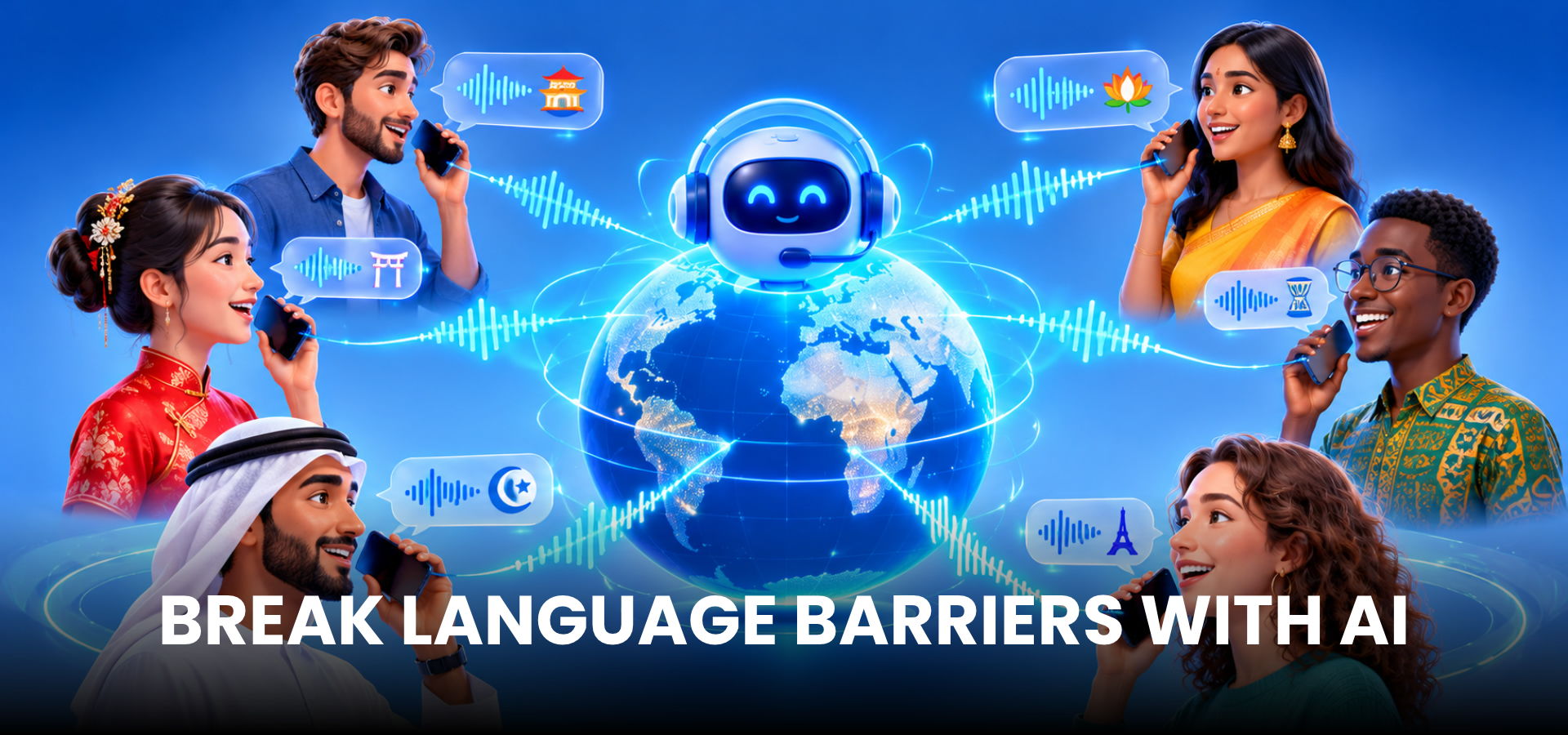
Businesses increasingly serve customers who communicate in different languages.
Providing multilingual support can be challenging when employees have limited language capabilities.
Modern AI Voice Agents may support conversations across several languages, depending on the selected technologies.
Understanding Customer Language Preferences
A voice agent can ask customers which language they prefer before continuing the conversation.
Some systems may also identify the language being spoken.
Customers should be able to correct the selected language when necessary.
Understanding Regional Accents
People speaking the same language may have different accents and pronunciation patterns.
For example, English pronunciation may vary across India, the Middle East, Europe, and other regions.
Businesses should evaluate voice systems using conversations that reflect their actual customers.
Supporting Mixed-Language Conversations
Customers sometimes combine words from different languages during a single conversation.
They may use their preferred regional language while including English product names, service descriptions, or technical terms.
Through Conversational AI, some voice systems can support these interactions.
However, businesses should test recognition accuracy before introducing mixed-language support.
Maintaining Information Accuracy
Providing multilingual customer support involves more than translating spoken responses.
Business policies, product information, and service instructions should communicate the same meaning across supported languages.
Important information should receive appropriate reviews to prevent misunderstandings.
Providing Human Assistance
When the voice agent cannot understand a customer reliably, it should request clarification or offer human assistance.
Customers should not be required to continue an unsuccessful automated conversation.
Can AI Understand Natural Customer Conversations?
Traditional automated telephone systems often require customers to follow predefined instructions.
However, real customer conversations are rarely predictable.
People may interrupt responses, change their requirements, ask several questions, or provide incomplete information.
Conversational AI helps voice agents manage these variations within supported workflows.
Understanding Different Questions
Customers may express the same requirement using different words.
For example, a customer who cannot attend an appointment may want to cancel or reschedule it.
The voice agent should identify the intended action and confirm the customer's preference before proceeding.
Handling Customer Interruptions
Customers may interrupt the voice agent to correct information or change a request.
A well-designed voice system should recognize these interruptions and adjust the conversation accordingly.
This can make automated communication more convenient.
Remembering Conversation Details
Customers should not need to repeat information unnecessarily during the same conversation.
Voice agents can maintain relevant context, such as selected services, preferred dates, and previously provided references.
This helps support more connected customer interactions.
Asking Relevant Questions
When customer information is incomplete, the voice agent can ask additional questions.
For example, a customer requesting an appointment may need to specify the preferred location.
Clarification helps reduce operational errors and improves conversation reliability.
Can AI Personalize Customer Conversations?
Customers often appreciate assistance that reflects their individual requirements.
AI Voice Automation can support appropriate personalization when connected to authorized customer information.
Recognizing Existing Customers
After appropriate verification, the voice agent may retrieve relevant customer records.
For example, a customer contacting a service business may already have an upcoming appointment.
The system can ask whether the enquiry relates to that booking.
Understanding Customer Preferences
Businesses may maintain information about preferred service locations, communication languages, or appointment preferences.
Voice agents can use these details when authorized to make supported interactions more convenient.
Providing Relevant Information
Customers may contact businesses about previously purchased products or services.
Through AI Integration Services, the voice agent can retrieve relevant records and provide information connected to the customer's actual requirements.
Protecting Customer Information
Personalization should not involve unnecessary access to personal information.
Businesses should establish clear rules about which customer details can be retrieved during each conversation.
Responsible AI-Powered Customer Service should improve convenience while maintaining customer privacy and trust.
How Does AI Voice Automation Work With CRM?
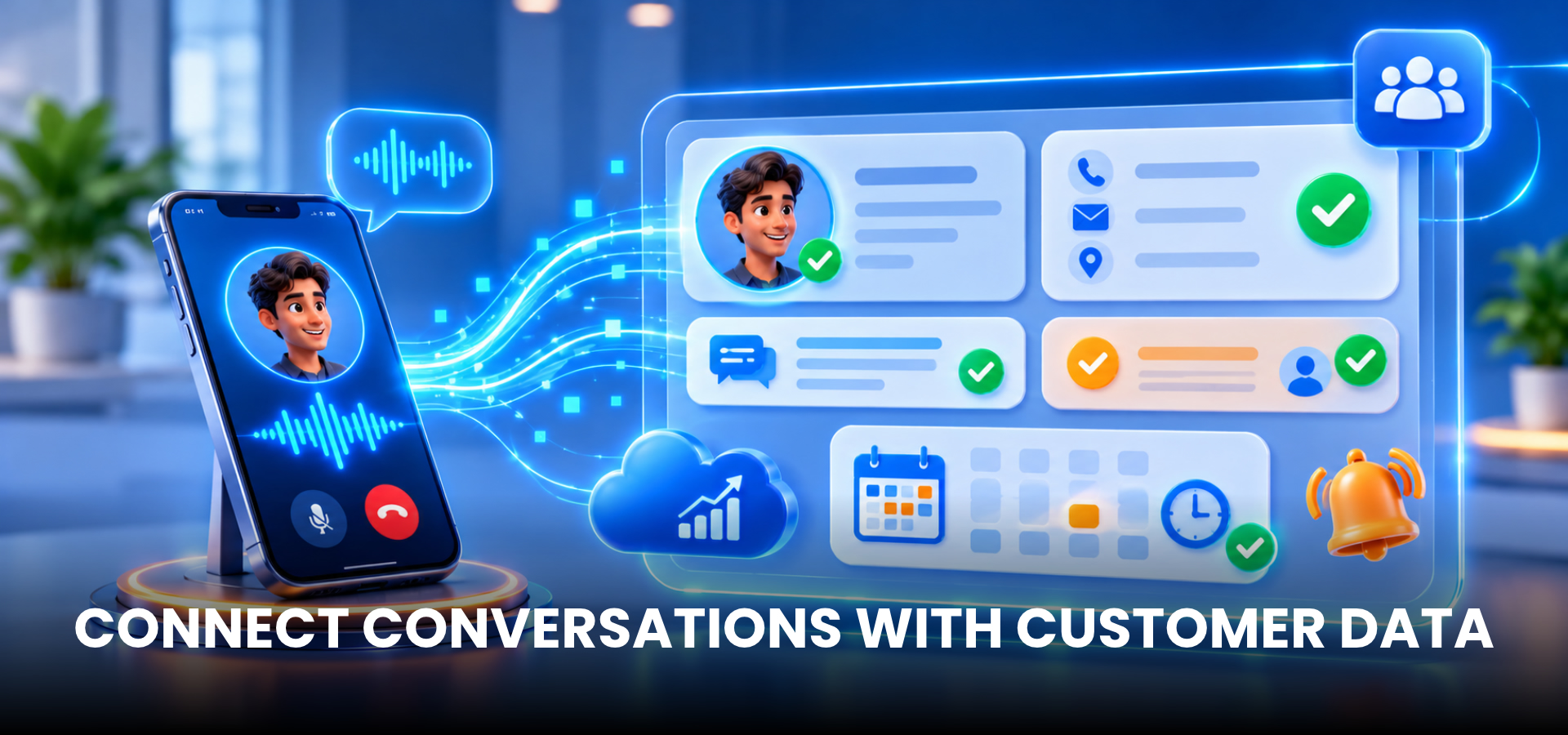
Customer Relationship Management (CRM) software helps businesses organize customer information, manage enquiries, track sales opportunities, and maintain communication records.
However, employees often need to update CRM records manually after every customer conversation. This can increase administrative workloads and create gaps in customer information.
Through AI Integration Services, businesses can connect voice automation with their existing CRM applications.
This allows customer conversations to become part of a connected customer management process.
Accessing Customer Information
When an existing customer contacts a business, an AI voice agent can retrieve relevant customer information after appropriate verification.
This may include previous enquiries, service requests, appointment details, and communication preferences.
Access to relevant information helps the voice agent understand the customer's requirements without repeatedly asking for the same details.
Creating New Customer Records
When a potential customer contacts a business for the first time, the voice agent can collect necessary information.
This may include the customer's name, contact details, service requirements, and preferred callback time.
Through Business Process Automation, the information can be transferred directly to the CRM application.
Employees can then review the enquiry and continue the conversation.
Updating Customer Records
Customer conversations frequently contain information that needs to be recorded.
For example, a customer may request a different appointment date, express interest in another service, or ask for additional information.
An integrated voice agent can update supported CRM fields and create relevant follow-up activities.
This reduces the need for employees to manually transfer conversation details into customer records.
Managing Sales Enquiries
Businesses can use AI Voice Agents to collect preliminary information from potential customers.
The system can identify the service they are interested in, understand their general requirements, and record their preferred communication method.
Sales representatives can review this information before contacting the customer.
This creates a more organized approach to managing incoming business opportunities.
Tracking Customer Conversations
Voice automation can generate structured conversation summaries that help employees understand previous customer interactions.
Instead of reviewing an entire call recording, employees may be able to access a summary containing relevant information, completed activities, and pending requirements.
These summaries should be reviewed when important decisions depend on their accuracy.
Connecting AI Customer Support Automation with CRM software helps businesses maintain more complete customer communication records.
How Does AI Voice Automation Work With ERP?
Enterprise Resource Planning (ERP) systems help businesses manage operational activities such as inventory, purchasing, finance, production, and order fulfilment.
Customer support employees frequently depend on information stored within these systems.
For example, a customer requesting an order update may require information from inventory, warehouse, and delivery applications.
Through AI Integration Services, voice agents can retrieve approved information from ERP systems and communicate it during customer conversations.
Checking Product Availability
Customers may contact businesses to determine whether a product is available.
An integrated voice agent can retrieve supported inventory information from the ERP system.
This helps customers receive information based on available business records rather than general assumptions.
Providing Order Updates
ERP systems often contain information about order processing, dispatch, and fulfilment.
Voice agents can retrieve relevant records and communicate approved updates to customers.
When information is unavailable or requires investigation, the system can create a request for employee assistance.
Supporting Distributor Communication
Manufacturers and wholesale businesses frequently receive enquiries from distributors regarding product availability, order status, and delivery schedules.
AI Voice Automation can help manage these conversations through controlled ERP integration.
Distributors can receive selected operational information without requiring employees to manually search for multiple applications.
Creating Operational Requests
Customer conversations may lead to activities such as maintenance requests, product enquiries, or service requirements.
Through Business Process Automation, voice agents can initiate supported workflows within connected applications.
For example, an industrial equipment customer requesting maintenance assistance can provide preliminary information during a call.
The system can create a service request for the relevant department.
Maintaining Data Accuracy
ERP integration requires careful validation because incorrect information can affect several business departments.
Voice agents should only access authorized records and perform approved activities.
Businesses should also maintain audit records to understand when information is retrieved or updated.
Effective Intelligent Automation connects customer communication with business operations while maintaining appropriate operational controls.
Can AI Work with Existing Telephone Systems?
Many businesses already use telephone numbers, office communication systems, IVR platforms, and contact center applications.
Introducing artificial intelligence does not necessarily require replacing this infrastructure.
Depending on technical compatibility, AI Call Automation can be integrated with existing communication systems.
Using Existing Business Numbers
Businesses may be able to continue using their established customer support telephone numbers.
Incoming calls can be routed towards an AI voice agent based on configured communication rules.
This allows customers to continue contacting the business through familiar channels.
Connecting With Cloud Telephone Systems
Cloud-based telephone platforms can provide integration capabilities for automated voice applications.
Businesses can configure call routing, department transfers, operating hours, and communication workflows.
Through AI Development Services, these capabilities can be combined with voice automation and business applications.
Managing Call Transfers
Customers should have access to human assistance when their requirements cannot be completed automatically.
Voice agents can transfer calls towards relevant employees or support departments.
Where supported, the system can also provide a summary of the customer's request to the receiving employee.
This helps reduce unnecessary repetition during customer conversations.
Supporting Existing Contact Centers
Organizations operating contact centers can introduce voice automation for selected enquiries.
For example, an AI voice agent may handle routine order tracking requests while existing employees manage complaints and complex customer requirements.
This approach allows businesses to introduce automation gradually without immediately changing their entire support operation.
Maintaining Backup Communication
Businesses should establish alternative communication procedures when automated systems experience technical difficulties.
Backup arrangements may include traditional telephone routing, employee assistance, or callback requests.
Reliable AI Voice Automation requires both effective automation and dependable communication infrastructure.
Can AI Improve Customer Experience?
Customer experience depends on how easily people can access information, receive assistance, and resolve problems.
Customers generally value clear communication, convenient service, and reliable responses.
When implemented appropriately, AI-Powered Customer Service can help businesses improve these aspects of customer communication.
Reducing Unnecessary Waiting
Customers contacting businesses for routine information may not need to speak directly with an employee.
Voice automation can provide immediate assistance for supported questions.
This helps customers obtain information without spending unnecessary time in telephone queues.
Making Communication More Convenient
Not every customer prefers navigating websites, mobile applications, or online forms.
Voice-based communication provides another way to interact with business services.
Customers can explain their requirements naturally and receive relevant assistance.
This can be particularly useful for customers who find digital interfaces difficult to navigate.
Providing Consistent Information
Customers may become confused when different employees provide different explanations of the same policy.
Voice agents connected to approved knowledge sources can communicate consistent information.
Businesses must maintain these sources to ensure responses remain accurate.
Improving Problem Resolution
Customer problems often require information from several business applications.
Through AI Integration Services, voice agents can retrieve relevant details and create structured support requests.
Employees can then concentrate on resolving the issue rather than repeatedly collecting preliminary information.
Maintaining Human Support
Customer experience can decline when people are unable to reach an employee during a difficult situation.
Businesses should therefore avoid forcing customers to complete every interaction through automation.
A balanced approach combines the convenience of AI Voice Assistants with access to appropriate human support.
Can AI Improve Employee Productivity?

Customer support employees perform several activities beyond speaking with customers.
They may need to search records, update applications, prepare summaries, create service requests, and coordinate with other departments.
These administrative responsibilities can reduce the time available for more valuable work.
AI Customer Support Automation can help reduce selected repetitive activities.
Reducing Repetitive Conversations
Employees frequently answer similar questions about operating hours, appointment availability, delivery of information, and general policies.
Voice agents can handle many of these enquiries when reliable information is available.
Employees can then concentrate on situations requiring investigation or individual attention.
Reducing Manual Data Entry
Customer conversations often generate information that needs to be entered into business applications.
Through Business Process Automation, supported information can be transferred directly into CRM platforms, scheduling applications, and customer support systems.
This can reduce repetitive data entry and improve information availability.
Improving Department Coordination
Customer requests may involve several departments.
For example, a delivery complaint may require assistance from customer support, warehouse operations, and logistics teams.
Voice automation can create structured requests and route them according to established business workflows.
This helps departments receive relevant information more efficiently.
Supporting Employee Decision-Making
Conversation summaries and structured customer records can help employees understand previous interactions.
Employees can review the available information before contacting customers or investigating problems.
This helps them prepare for conversations and focus on resolving outstanding requirements.
Can AI Voice Agents Replace Human Employees?
One common question business asks when exploring voice automation is whether artificial intelligence can completely replace customer support employees.
Although AI Voice Agents can manage many routine activities, human employees remain important for complex customer interactions.
Tasks Suitable for AI
Voice automation is generally suitable for activities that follow established procedures.
These include answering frequently asked questions, checking appointment availability, providing order updates, collecting customer information, and creating support requests.
Such activities often involve predictable information and clearly defined workflows.
Tasks That Require Human Employees
Some customer situations require empathy, professional judgment, negotiation, or detailed investigation.
Examples include complex complaints, unusual financial disputes, sensitive personal situations, and exceptions to business policies.
Human employees are better positioned to understand these circumstances and make appropriate decisions.
Creating a Balanced Support System
Businesses can combine automated assistance with human customer support.
The voice agent manages suitable routine activities, while employees concentrate on more complex responsibilities.
The objective of Intelligent Automation should be to improve how work is completed rather than automate every activity regardless of its suitability.
How Much Does AI Voice Automation Cost?
The cost of implementing AI Voice Automation varies depending on business requirements, communication volumes, integration complexity, and the selected technologies.
A basic voice assistant designed to answer common questions may require fewer resources than a complete enterprise solution connected to several operational applications.
Businesses should consider both implementation expenses and ongoing operating costs.
Business Requirements
The number and complexity of supported activities influence development costs.
A system designed only for general enquiries may be relatively straightforward.
A solution that manages appointments, retrieves customer records, updates orders, and creates service requests requires additional development and testing.
Call Volume
Voice automation systems consume communication and computing resources during customer interactions.
Businesses receiving higher call volumes may require additional infrastructure and service capacity.
Average conversation duration and simultaneous call requirements can also influence operating expenses.
Software Integration
Connecting voice automation with CRM, ERP, scheduling, and other applications may require additional technical work.
Existing applications with suitable integration interfaces may be easier to connect.
Older or highly customized systems may require Custom Software Development.
Language Requirements
Businesses requiring multilingual support may need additional conversation design, testing, pronunciation adjustments, and language-specific knowledge sources.
The number of supported languages can influence implementation and maintenance requirements.
Security and Compliance
Organizations handling sensitive customer information may require additional authentication, monitoring, access controls, and data protection measures.
These requirements should be considered during the initial planning stage.
Ongoing Maintenance
Voice automation is not necessarily a one-time implementation.
Business information changes, new services are introduced, and customer requirements evolve.
Organizations should plan for knowledge updates, technical maintenance, performance monitoring, and workflow improvements.
Through suitable AI Development Services, businesses can develop solutions based on their actual operational needs and available budgets.
How Do Businesses Measure AI Voice Automation?
Introducing voice automation is only the beginning.
Businesses should regularly evaluate whether the system is improving customer communication and supporting operational objectives.
Performance measurement helps identify successful workflows and areas requiring improvement.
Customer Satisfaction
Businesses can collect customer feedback after automated interactions.
Feedback can help identify whether customers received useful information, understood the responses, and completed their intended activities.
Call Resolution
Organizations should monitor how frequently the voice agent successfully completes supported customer requests.
A completed conversation does not necessarily mean that the customer's problem has been resolved.
Businesses should evaluate actual outcomes rather than simply counting completed calls.
Customer Waiting Time
Voice automation may reduce waiting times for routine enquiries.
Businesses can compare customer waiting experiences before and after implementation.
They should also monitor waiting times for customers requiring human assistance.
Call Transfer Performance
Some conversations need to be transferred to employees.
Businesses should review whether transfers reach the appropriate departments and whether customers receive suitable assistance.
Frequent unnecessary transfers may indicate problems with conversation understanding or workflow design.
Employee Workload
Organizations can evaluate whether automation reduces repetitive conversations, administrative activities, and manual data entry.
Employees can also provide feedback about whether automated processes help them complete their responsibilities more effectively.
Response Accuracy
Businesses should review whether the voice agent provides information that matches approved business records and policies.
Incorrect responses should be investigated and corrected.
Business Performance Indicators
Performance indicator | What businesses can evaluate |
Customer satisfaction | Quality of the customer experience |
Call resolution | Successful completion of customer requests |
Waiting time | How quickly customers receive assistance |
Call transfers | Effectiveness of department routing |
Missed calls | Availability of customer support |
Response accuracy | Reliability of information provided |
Employee workload | Reduction in repetitive responsibilities |
Operating costs | Overall communication and automation expenses |
Customer complaints | Recurring problems with automated assistance |
Workflow completion | Reliability of connected business activities |
Regular monitoring helps businesses improve AI Customer Support Automation based on actual customer and operational outcomes.
Is AI Voice Automation Secure?
Security is an important consideration when implementing voice automation.
Customer conversations may contain personal information, account details, order references, appointment records, and other sensitive business information.
Organizations must establish appropriate controls to protect this information.
Customer Verification
Before providing customer-specific information, the voice agent should complete appropriate verification procedures.
The required verification depends on the sensitivity of the information and the requested activity.
For example, providing general operating hours requires fewer controls than accessing confidential account records.
Controlled Data Access
Voice agents should only access the information necessary to complete authorized activities.
A system designed to schedule appointments does not necessarily require access to unrelated financial records.
Through AI Integration Services, businesses can establish controlled connections between voice agents and operational applications.
Data Encryption
Businesses should consider appropriate encryption measures when transmitting and storing customer information.
These measures help protect information as it moves between telephone infrastructure, AI applications, and business systems.
Call Recording and Consent
Some organizations record customer conversations for quality monitoring, training, or operational purposes.
Businesses should inform customers about recording where required and follow applicable consent and privacy regulations.
Organizations should also establish suitable policies for storing, accessing, and deleting conversation records.
Preventing Unauthorized Activities
Voice agents should operate within clearly defined permissions.
They should not independently perform activities that exceed their authorization.
Sensitive requests, unusual transactions, and exceptions to business policies may require additional verification or employee approval.
Monitoring System Activity
Businesses should maintain appropriate records of automated activities.
Monitoring can help identify unusual access attempts, failed transactions, incorrect responses, and technical problems.
Responsible AI Development Services should incorporate security and privacy considerations throughout solution development.
What Are the Challenges of AI Voice Automation?
Although voice automation offers several potential benefits, businesses should understand its limitations before implementation.
Successful automation requires reliable technology, accurate information, suitable workflows, and ongoing monitoring.
Understanding Different Accents
Customers may speak with different accents, pronunciation patterns, and speaking speeds.
Background noise and poor telephone connections can also affect recognition of accuracy.
Businesses should test voice agents using realistic customer conversations.
Incorrect AI Responses
AI systems may occasionally generate responses that are incomplete or inaccurate.
This can create problems when customers rely on information to make decisions.
Voice agents should retrieve information from approved sources and avoid unsupported assumptions.
Integration With Existing Software
Some businesses operate older applications that may not provide suitable integration capabilities.
Connecting these applications with voice automation can require additional development.
Through Custom Software Development, businesses can address selected integration challenges.
Managing Complex Conversations
Customers may explain several problems during the same call.
Some situations require detailed investigation or decisions that cannot be handled through standard workflows.
Voice agents should recognize these limitations and provide suitable human assistance.
Maintaining Updated Information
Business policies, service availability, operating hours, and product details can change frequently.
Outdated information can result in incorrect customer responses.
Organizations should establish clear responsibilities for maintaining approved knowledge sources.
Customer Acceptance
Some customers may prefer speaking directly with employees.
Businesses should consider customer preferences when introducing automated support.
Providing a clear option for human assistance can help maintain customer confidence.
Technical Reliability
Voice automation depends on communication infrastructure, AI services, and connected applications.
Technical interruptions can affect customer support availability.
Businesses should establish monitoring procedures and backup communication options.
Addressing these challenges helps organizations develop more reliable AI-Powered Customer Service solutions.
How Do You Choose an AI Voice Automation Solution?
Selecting the right voice automation solution requires an understanding of business requirements rather than focusing only on available AI features.
Organizations should evaluate how the system will support their existing customer communication processes.
Understand Customer Requirements
Businesses should identify the most common reasons customers contact them.
This helps determine which conversations are suitable for automation and which require human assistance.
Review Existing Applications
Organizations should evaluate their current CRM, ERP, telephone, scheduling, and customer support applications.
Understanding existing infrastructure helps identify integration requirements.
Evaluate Conversation Quality
Voice agents should communicate clearly, understand supported customer requests, and ask relevant clarification questions.
Businesses should test conversation quality under realistic operating conditions.
Check Integration Capabilities
A voice agent that cannot connect with necessary business applications may have limited operational value.
Businesses should evaluate whether the solution can retrieve information and complete supported activities reliably.
Consider Future Requirements
Customer communication requirements may change as businesses introduce new services, locations, and operational processes.
A suitable solution should support reasonable expansion without unnecessary redevelopment.
Evaluate Security and Support
Organizations should review data protection measures, access controls, monitoring capabilities, maintenance arrangements, and technical support.
Choosing suitable AI Integration Services and development capabilities can help businesses establish a solution aligned with their long-term requirements.
How Do Businesses Implement AI Voice Automation?
Implementing voice automation requires careful planning.
Businesses should begin with clearly defined objectives and introduce automation gradually.
A structured implementation approach helps organizations identify technical requirements, manage operational risks, and evaluate customer outcomes.
Step 1: Identify Repetitive Customer Activities
The first step is understanding existing customer communication.
Businesses should review common enquiries, missed calls, waiting times, administrative activities, and recurring customer problems.
This helps identify suitable opportunities for AI Customer Support Automation.
Step 2: Define Automation Objectives
Organizations should establish what they want the voice agent to achieve.
Objectives may include improving appointment management, reducing repetitive enquiries, capturing new customer requests, or providing after-hours assistance.
Clear objectives help guide development and performance evaluation.
Step 3: Select Initial Use Cases
Businesses do not need to automate every customer's conversation immediately.
Starting with a limited number of clearly defined activities can make implementation easier.
For example, an organization may initially automate general enquiries and appointment scheduling before introducing additional capabilities.
Step 4: Prepare Business Information
Voice agents require accurate information about services, policies, operating hours, and customer support procedures.
Businesses should organize and review this information before making it available to the system.
Knowledge sources should have clearly assigned maintenance responsibilities.
Step 5: Design Customer Conversations
Conversation design determines how the voice agent communicates with customers.
Businesses should define greetings, clarification questions, confirmation procedures, response styles, and escalation options.
Through Conversational AI, these conversations can remain flexible while following approved business requirements.
Step 6: Integrate Business Applications
The voice agent may require connections with CRM, ERP, scheduling, inventory, and customer support applications.
Through AI Integration Services, businesses can establish these connections and define permitted activities.
Each integration should be tested to ensure information is retrieved and updated correctly.
Step 7: Test the Voice Agent
Testing should include different customer requirements, accents, speaking speeds, background noise, and unusual conversation patterns.
Businesses should also test incorrect inputs, unavailable applications, failed transactions, and requests requiring employee assistance.
Testing helps identify problems before the system becomes available to customers.
Step 8: Launch a Pilot Programmed
A pilot implementation allows businesses to introduce voice automation within a controlled environment.
The system may initially support selected departments, customer groups, or enquiry types.
Organizations can collect feedback and improve workflows before expanding availability.
Step 9: Monitor Customer Outcomes
After implementation, businesses should monitor response accuracy, customer satisfaction, workflow completion, and technical reliability.
Employees should also have opportunities to report problems and recommend improvements.
Step 10: Expand Automation Gradually
Once initial workflows demonstrate reliable performance, businesses can introduce additional capabilities.
These may include multilingual support, outgoing calls, advanced integrations, and more complex customer activities.
A gradual approach to Intelligent Automation helps businesses manage implementation effectively while maintaining service quality.
Why Is Custom AI Voice Automation Important?
Every business has different customers, operational procedures, communication requirements, and software applications.
A standard voice automation solution may support basic activities, but it may not address every organization's requirement.
This is where Custom Software Development is important.
Supporting Unique Business Workflows
A hotel may require room service automation, while a manufacturing business may need distributor order enquiries.
A healthcare provider may focus on appointment scheduling, while a logistics company may require shipment tracking.
Custom solutions can be designed around these specific requirements.
Connecting Existing Business Applications
Organizations frequently use a combination of standard and customized software.
Custom integration can help connect voice automation with these applications without unnecessarily replacing existing systems.
This allows businesses to build on their current technology investments.
Maintaining Business Rules
Businesses often have specific approval procedures, scheduling restrictions, service policies, and customer verification requirements.
Custom voice automation can incorporate these rules into supported workflows.
This helps ensure automated activities remain aligned with business procedures.
Creating Brand-Appropriate Communication
Different businesses communicate with customers in different ways.
A professional consulting firm may require a formal communication style, while a retail business may prefer a more conversational approach.
Custom AI Voice Assistants can be configured to reflect suitable communication standards.
Supporting Future Business Growth
As organizations expand, their automation requirements may become more complex.
Custom solutions can be designed with future integrations, additional departments, and new customer workflows in mind.
Through AI Development Services, businesses can develop voice automation that supports both current requirements and future operational needs.
What Is the Future of AI Voice Automation?
Artificial intelligence continues to influence businesses to communicate with customers.
Improvements in language understanding, speech recognition, software integration, and conversation management are creating new opportunities for customer support automation.
More Natural Customer Conversations
Future voice systems are likely to become better at managing interruptions, clarification questions, changing requirements, and different speaking styles.
These improvements may make automated conversations more convenient for customers.
Better Multilingual Support
Businesses operating across different regions may benefit from improvements in language recognition and regional accent support.
More reliable multilingual communication could help organizations serve a wider range of customers.
Greater Business System Integration
Voice automation is likely to become more closely connected with operational applications.
Instead of functioning only as a customer communication tool, voice agents may increasingly support connected business workflows.
Through Business Process Automation, customer conversations can become starting points for authorized operational activities.
Connected Customer Communication
Businesses increasingly communicate through telephone calls, websites, mobile applications, email, and messaging platforms.
Future solutions may provide better continuity between these channels, subject to appropriate privacy controls.
Customers may be able to continue supported interactions without repeatedly providing the same information.
Improved Human and AI Collaboration
The future of customer support is likely to involve continued collaboration between automated systems and human employees.
AI Voice Automation can support routine communication, while employees contribute professional knowledge, judgment, and personal attention.
Businesses that focus on reliable implementation and customer outcomes may be better positioned to benefit from these developments.
How Can Approlabs Help with AI Voice Automation?
Implementing voice automation requires more than introducing an AI-powered telephone assistant.
Businesses need solutions that understand customer requirements, connect with existing applications, follow operational procedures, and support reliable communication.
With expertise in artificial intelligence, software engineering, cloud integration, and business automation, Approlabs can help businesses explore and develop solutions aligned with their operational requirements.
Custom AI Voice Automation Solutions
Approlabs can help businesses design and develop AI Voice Automation solutions based on their customer communication requirements.
These solutions can support selected incoming calls, customer enquiries, appointment scheduling, service requests, and follow-up activities.
AI Voice Agent Development
Through AI Development Services, Approlabs can help develop voice agents that understand supported customer requests and communicate relevant responses.
Solutions can be designed around approved business information, conversation requirements, and operational workflows.
Conversational AI Development
Approlabs can help businesses explore Conversational AI solutions that support natural customer interactions.
Conversation design can include clarification questions, customer confirmations, multilingual requirements, and human escalation procedures.
CRM and ERP Integration
Through AI Integration Services, Approlabs can help connect voice automation with existing CRM, ERP, scheduling, inventory, and customer support applications.
These integrations can enable voice agents to retrieve approved information and complete supported business activities.
Business Workflow Automation
Approlabs can help organizations identify repetitive activities suitable for Business Process Automation.
Customer conversations can relate to workflows involving enquiry management, appointment scheduling, support ticket creation, and service coordination.
Custom Software Development
Businesses with unique operational requirements may need applications that go beyond standard automation capabilities.
Approlabs provides Custom Software Development services that can support tailored business applications, system integrations, dashboards, and workflow management.
Cloud Integration
Approlabs can help businesses explore cloud-based infrastructure for voice automation and connected applications.
Suitable infrastructure can support communication availability, application integration, monitoring, and future expansion.
Ongoing Solution Improvement
Customer communication requirements continue to evolve.
Approlabs can help businesses evaluate opportunities for improving existing solutions, introducing additional workflows, and adapting automation to changing operational needs.
By combining product engineering, artificial intelligence, and Intelligent Automation, Approlabs can help organizations develop customer communication solutions that fit their business requirements.
Frequently Asked Questions
1. What Is AI Voice Automation?
AI Voice Automation uses artificial intelligence to manage spoken customer conversations, answer questions, retrieve information, and complete supported business activities through voice-based interactions.
2. What Is an AI Voice Agent?
An AI voice agent is a software application that understands spoken customer requests and provides relevant responses. It can also connect with business applications to perform authorized activities.
3. Can AI Answer Customer Calls Automatically?
Yes. AI voice agents can answer incoming calls, understand supported customer requests, provide approved information, and transfer complex enquiries to employees.
4. Can AI Make Outgoing Customer Calls?
Yes. AI Call Automation can support authorized outgoing calls for appointment reminders, customer follow-ups, delivery notifications, and feedback collection.
5. Can AI Voice Agents Book Appointments?
Yes. When connected to scheduling applications, voice agents can check availability, collect customer information, and complete supported appointment bookings.
6. Can AI Voice Automation Work 24/7?
Voice automation can provide round-the-clock assistance when the necessary communication infrastructure, AI services, and connected business applications remain available.
7. Can AI Voice Agents Speak Multiple Languages?
Yes. Many modern voice systems support multiple languages. Businesses should evaluate language accuracy, regional accents, and pronunciation before implementation.
8. Can AI Voice Automation Work with CRM Software?
Yes. Through AI Integration Services, voice agents can retrieve authorized customer information, create enquiry records, update supported fields, and manage follow-up activities.
9. Can AI Voice Automation Integrate with ERP Systems?
Yes. Voice agents can connect with suitable ERP applications to retrieve approved information about orders, inventory, deliveries, and other operational activities.
10. Is AI Voice Automation Suitable for Small Businesses?
Yes. Small businesses can begin with basic voice automation for general enquiries, appointment scheduling, and customer callback requests before introducing more advanced capabilities.
11. Can AI Voice Agents Handle Customer Complaints?
AI voice agents can collect complaint information, create support tickets, and provide approved status updates. Complex complaints should be transferred to human employees.
12. Is AI Voice Automation Expensive?
Costs depend on call volumes, business requirements, software integrations, supported languages, infrastructure, and maintenance needs. Businesses can begin with focused implementations and expand gradually.
13. Is AI Voice Automation Secure?
Voice automation can incorporate security measures such as customer verification, controlled data access, encryption, and activity monitoring. Security depends on system design and implementation.
14. Can AI Replace Customer Support Employees?
AI can automate selected repetitive customer support activities. However, human employees remain important for complex problems, sensitive conversations, professional judgment, and customer relationships.
15. How Can Approlabs Help Businesses Implement AI Voice Automation?
Approlabs can help businesses explore custom voice automation, AI Voice Agents, Conversational AI, business workflow automation, CRM and ERP integration, and custom software solutions based on their operational requirements.
Conclusion
Customer communication plays an important role in business growth, customer satisfaction, and operational efficiency.
As customer expectations evolve, businesses need more convenient and reliable ways to manage conversations.
AI Voice Automation offers opportunities to transform routine telephone interactions into connected business activities.
From answering customer questions and scheduling appointments to tracking orders and managing service requests, AI Voice Agents can help businesses reduce repetitive work and improve customer support availability.
Through AI Customer Support Automation, organizations can create a more balanced working environment where automated systems manage suitable routine activities, and employees concentrate on responsibilities requiring human judgment.
Connecting voice agents with CRM, ERP, scheduling, and customer support applications through AI Integration Services can further improve the flow of information across business operations.
However, successful implementation requires accurate information, reliable integrations, appropriate security controls, and ongoing performance monitoring.
Businesses should focus on developing solutions that address actual customer requirements rather than introducing automation simply because the technology is available.
With expertise in AI Development Services, Custom Software Development, and Business Process Automation, Approlabs can help businesses explore practical voice automation solutions that support their customer communication and operational objectives.
The goal is not simply to automate customer conversations. It is to make every conversation more useful, convenient, and connected.
MAKE EVERY CUSTOMER CALL COUNT.
Connect with Approlabs to explore AI-powered voice automation solutions.
AUTHOR

Marketing team.